ISLAMABAD: One of the ways to get into the Aiwan-e-Sadr, or Presidential Palace, in Islamabad used to be elected president of the Islamic Republic of Pakistan. But on Saturday, an easier way was offered to the capital's public to enter the home of the head of state: simply visit between 9a.m. and 4p.m.
On Thursday, much to the excitement of the capital's residents, the government confirmed reports that the Presidential Palace, which sits on Islamabad’s Constitution Avenue, home to major government buildings and the Supreme Court, would be open on Saturday to visitors.
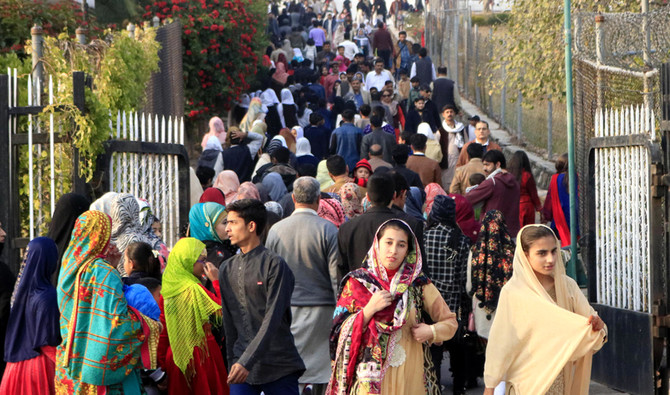
Two days later, the boulevards of Constitution Avenue, usually quiet and void of pedestrians outside of rush hours, came alive with the buzz of families, couples, groups of school children, many on school field trips and accompanied by teachers, and young and old Pakistanis alike eager to get a glimpse of the historic building.
"I never thought I would get the chance to see the inside," said Shaista Saleem whose two daughters left work early to accompany their mother on the tour. "I’ve come with both my daughters because we thought we should take advantage of this opportunity to see this beautiful place on the inside and beyond the large gates."
"I think that it’s important for [building] trust between [the government and us]," she added.
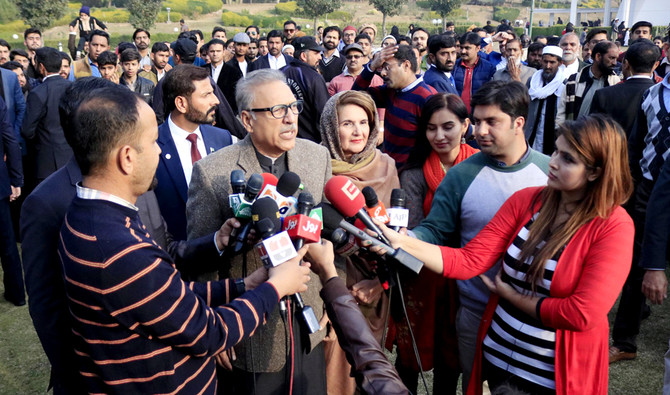
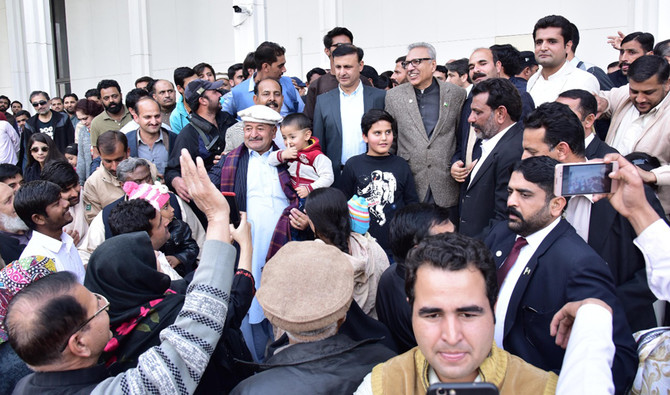
Pakistan’s current president Arif Alvi was also present to greet visitors and eventually delivered an address before the crowd.
"I want people to come look at this historic space, and feel pride in their country and the sound foundations of democracy that have been laid down here," Alvi said in a recorded message in Urdu.
On a regular day, Constitution Avenue is heavily guarded, with poker-faced policemen and paramilitary soldiers stationed at checkpoints to inspect passing cars. But on Saturday, even the grim-looking law enforcement officials were all smiles, giving lost travellers directions and cheerfully leading enthused visitors on their way. On loudspeakers, announcements were made encouraging people to stay in line, mind their space and leave their cell phones behind. Because the visitors were not allowed cell phones beyond the parking lot, this area quickly became the hot spot for selfies.
Past the parking, a valid national ID card gave you quick entry into the presidential grounds. Beyond them lay vast white-tiled verandahs fitted with towering wooden doors. Inside, giant chandeliers lit up most of the open halls lined with rooms choke full of dark wood furniture, wood and crown moldings, ivory and cream fabrics in sateen finishes, omnipresent tapestries and sprawling carpets in dark reds and muted hues.
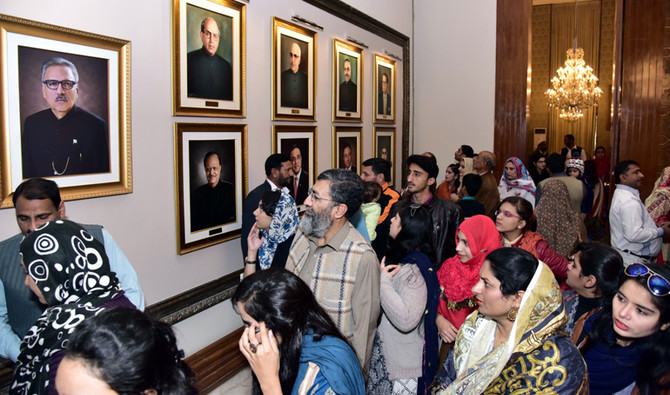
A hallway lined with portraits of past presidents saw high traffic where young educators and students pointed at pictures and quizzed each other with the question: "Do you know who that is?"
The walk-through ended with a double staircases where President Alvi had earlier addressed visitors on a large veranda overlooking manicured green hedges and lawns wrapped around white water fountains and foot paths that led you back out through the gates.
The open house is a part of a larger effort by the current administration to open government buildings to the public. In September the Governor House in the port city of Karachi was also opened to the public.


![]()
![]()
![]()
![]()
![]()
![]()
![]()

The President’s Welcome: Aiwan-e-Sadr opens its doors to the public

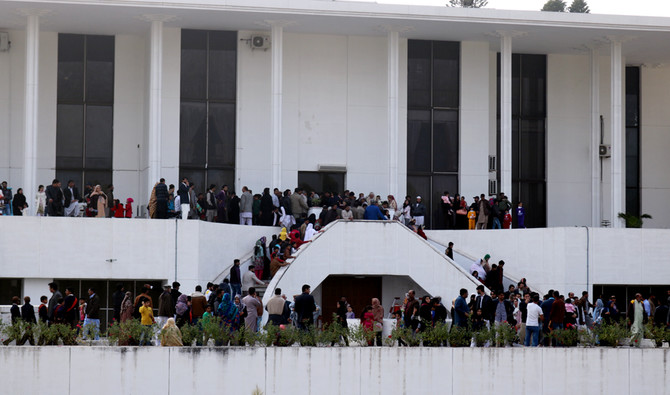
The President’s Welcome: Aiwan-e-Sadr opens its doors to the public
- The government confirmed earlier that the doors to Aiwan-e-Sadr would be open on Saturday Dec. 08 to the public
- "I want people to come look at this historic space, and feel pride in their country" - President said in a recorded message


Latest updates


© 2026 SAUDI RESEARCH & PUBLISHING COMPANY, All Rights Reserved And subject to Terms of Use Agreement.