CPEC enters next phase of development

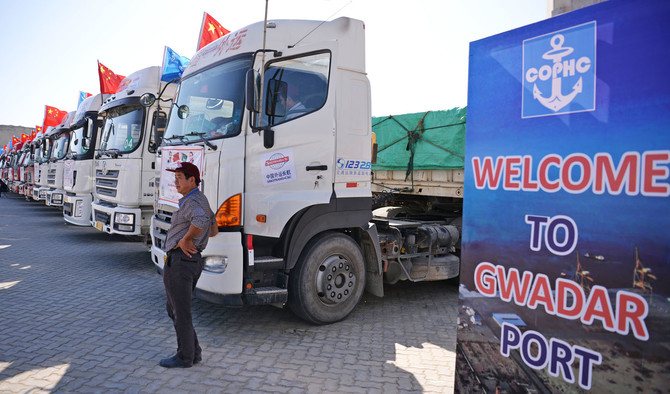
In this file photo, Chinese worker stands near trucks carrying goods during the opening of a trade project in Gwadar port, some 700 km west of the Pakistani city of Karachi on Nov. 13, 2016. (AFP)
Updated 17 November 2018
Follow

CPEC enters next phase of development

  • The best of CPEC is yet to come, says Sen. Mushahid Hussain
  • The two sides agree to focus on new Gwadar airport, socioeconomic development

ISLAMABAD: Islamabad and Beijing on Thursday decided to prioritize the conclusion of projects under the China-Pakistan Economic Corridor (CPEC) that are associated with Pakistan’s port city of Gwadar, ahead of a Joint Cooperation Committee (JCC) session scheduled tentatively for the first week of December in Beijing.
The JCC is CPEC’s lead policymaker. Seven ministerial sessions of the committee have been held since the project’s inception.
The two sides agreed to focus on the new Gwadar international airport, socioeconomic development, a hospital, and professional and technical institutes.      
Pakistan has emphasized improvement of its railways, special economic zones and third-country participation, which will be discussed at the eighth JCC meeting.
Sen. Mushahid Hussain, chairman of the Pakistan-China Institute, told Arab News: “The best of CPEC is yet to come. Total outlay as of now is $61 billion, which is the single biggest bilateral project between two countries since World War II.”
He said: “The next phase of CPEC includes agriculture, culture, tourism, information technology, education and youth exchanges.”
Li Xiguang, director of China’s Tsinghua University, told Arab News that if both governments negotiate a mutually beneficial deal on Pakistani agricultural exports, especially cotton and sticky rice, “that would sell very well in China and fetch a high price.”      
Li praised soil quality across the four provinces of Pakistan, whose agriculture sector makes up to 20 percent of its gross domestic product (GDP) and has attracted Chinese entrepreneurs seeking land for farming since CPEC’s inception.
Hussain said: “You’re looking at job creation, manufacturing, and a better tomorrow for our people.”


UN experts concerned by treatment of Palestine Action-linked hunger strikers

Updated 26 December 2025
Follow

UN experts concerned by treatment of Palestine Action-linked hunger strikers

  • Eight prisoners awaiting trial for alleged offences connected to the group have taken part in the protest

LONDON: UN human rights experts have raised concerns about the treatment of prisoners linked to Palestine Action who have been on hunger strike while on remand, warning it may breach the UK’s international human rights obligations.

Eight prisoners awaiting trial for alleged offences connected to the group have taken part in the protest, reported The Guardian on Friday.

Among them are Qesser Zuhrah and Amu Gib, who were on hunger strike at HMP Bronzefield from Nov. 2 to Dec. 23, and Heba Muraisi, held at HMP New Hall. Others include Teuta Hoxha, Kamran Ahmed and Lewie Chiaramello, who has refused food on alternate days due to diabetes.

Zuhrah and Gib temporarily resumed eating this week because of deteriorating health but said they plan to resume the hunger strike next year, according to Prisoners for Palestine.

In a statement issued on Friday, UN special rapporteurs, including Gina Romero and Francesca Albanese, said the handling of the prisoners was alarming.

“Hunger strike is often a measure of last resort by people who believe that their rights to protest and effective remedy have been exhausted. The state’s duty of care toward hunger strikers is heightened, not diminished,” they said.

Three of the prisoners were in hospital at the same time on Sunday, with Ahmed admitted on three occasions since the hunger strike began.

The experts said: “Authorities must ensure timely access to emergency and hospital care when clinically indicated, refrain from actions that may amount to pressure or retaliation, and respect medical ethics.”

Prisoners for Palestine has alleged that prison staff initially denied ambulance access for Zuhrah during a medical emergency last week, with hospital treatment only provided after protesters gathered outside the prison.

“These reports raise serious questions about compliance with international human rights law and standards, including obligations to protect life and prevent cruel, inhuman or degrading treatment,” the experts said, adding: “Preventable deaths in custody are never acceptable. The state bears full responsibility for the lives and wellbeing of those it detains. Urgent action is required now.”

Families and supporters have called for a meeting with Justice Secretary David Lammy, while lawyers claim the Ministry of Justice has failed to follow its own policy on handling hunger strikes.

Government officials are understood to be concerned about the prisoners’ condition but cautious about setting a wider precedent.