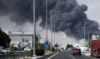
ISLAMABAD: Criticizing Prime Minister Imran Khan’s government for agreeing to a five-point deal to end the protests of the past few days, the opposition said on Thursday that the move sends out the wrong message by encouraging anyone, who doesn’t agree with the law of the land, to hold the country ransom to it.
Leading the protests were supporters of the Tehreek-e-Labbaik Pakistan (TLP), a far-right party objecting to the Supreme Court’s verdict last week to acquit a Christian woman accused of blasphemy. The deal included a pledge to have Aasia Bibi, 51, placed on the country’s Exit Control List, among other conditions.
Objecting to the move, opposition member Sherry Rehman, from the Pakistan People’s Party said that the entire nation “was at a standstill” for the past few days. “If we start to examine [what prevailed], they [the federation] will say ‘This was also done before; the state entered a similar agreement last year as well,” she said.
Reasoning that the opposition didn’t intend to “taunt or challenge” the government, she questioned what kind of a message was being sent out by striking a deal with demonstrators after the government had failed to protect its citizens.
Khan had earlier said in a televised speech that the state would protect people’s lives and properties, adding no vandalism or traffic chaos would be allowed.
But around 1,200 people have been arrested and more than 135 cases of vandalism have been registered.
Political analyst and former ministerial adviser Mosharraf Zaidi said Khan should have not spoken with such confidence if he was not going to follow through on his instructions.
“It sends a message that the PTI is not interested in being a dominant political force for the next generation,” Zaidi told Arab News, rather the ruling party is “interested in welcoming the TLP as a mainstream political force.”
Information Minister Fawad Chaudhry defended the decision to strike a deal, telling a foreign channel: “We need to take steps against extremism…we need to come up with a permanent solution. This is just firefighting…our government is committed to the cure.”
But one analyst, former military man Amjad Shuaib, said the government was wise to accede to the TLP’s demands.
“Public perception would have turned against PTI because those that were defending the message of the Prophet are being assaulted,” he said.
The agreement could have been better and improved upon, Shuaib told Arab News. Given the circumstances, such as the religious spin of the demonstrations, any standoff would have had a devastating effects on the ruling party, he said.


Government faces flak over TLP deal

Government faces flak over TLP deal
- Opposition criticism moves for sending out wrong message to protesters
- Deal ended days of violence in Pakistan following Aasia Bibi’s acquittal


Pakistan’s president defends ongoing strikes in Afghanistan, urges Kabul to dismantle militants
- Afghanistan on Thursday launched attacks in retaliation for Pakistani airstrikes the previous Sunday
- Pakistan’s military says it is only targeting Afghan military installations to avoid civilian casualties
ISLAMABAD: Pakistan’s president on Monday defended his country’s ongoing military strikes in neighboring Afghanistan, saying Islamabad tried all forms of diplomacy before targeting militants operating from Afghan territory, and called on the Taliban government in Kabul to disarm groups responsible for attacks in Pakistan.
Pakistan earlier said it is in “open war” with Afghanistan, alarming the international community. The border area remains a stronghold for militant organizations including Al-Qaeda and the Daesh (Islamic State) group.
“(The Afghan Taliban) must choose to dismantle the terror groups that survive on conflict and its war economy,” Asif Ali Zardari said during a speech to lawmakers, adding that “no state accepts serial attacks on its soil.”
Afghanistan on Thursday launched attacks in retaliation for Pakistani airstrikes the previous Sunday. Since then, Pakistan has carried out operations along the border, with Information Minister Attaullah Tarar claiming the killing of 435 Afghan forces and the capture of 31 Afghan positions.
Kabul has denied such claims.
In Afghanistan, the deputy government spokesman Hamdullah Fitrat said Pakistan’s military fired mortar shells at a refugee camp in eastern Kunar province, killing three children and injuring three others.
Afghanistan’s defense ministry said Afghan forces carried out strikes targeting a Pakistani military facility near Paktia province, causing “substantial losses and heavy casualties.”
Pakistan’s military did not respond to questions. It has said Pakistan is only targeting Afghan military installations to avoid civilian casualties.
Pakistan has witnessed a surge of violence in recent months and blames it on the outlawed Pakistani Taliban, known as Tehreek-e-Taliban Pakistan or TTP. It operates both inside Pakistan and from Afghan territory.
Islamabad accuses Afghanistan’s Taliban government of providing safe havens for the TTP, which Kabul denies.
The latest cross-border fighting ended a ceasefire brokered by Qatar and Turkiye in October. The two sides failed to reach a permanent agreement during talks in Istanbul.
Zardari reiterated Pakistan’s call for talks, saying, “We have never walked away from dialogue.”
The Pakistani leader again accused Afghanistan of acting as a proxy for India by sheltering militant groups.
“Stop being used by another country as a battlefield for their ambitions,” he said.
Zardari cited a recent report from the United Nations Security Council’s monitoring team that described the presence of militant groups in Afghanistan as an extra-regional threat.