WASHINGTON: The Justice Department announced charges Thursday against a fugitive Malaysian financier and two former Goldman Sachs bankers accused in a money laundering and bribery scheme that pilfered billions of dollars from a Malaysian investment fund created to spur economic development projects in that country.
A three-count indictment charges Low Taek Jho, also known as Jho Low, with misappropriating money from the state-owned fund and using it for bribes and kickbacks to foreign officials, to pay for luxury real estate, art and jewelry in the United States and to help finance Hollywood movies, including “The Wolf of Wall Street.”
Also charged was a former Goldman Sachs banker, Tim Leissner, who pleaded guilty to money laundering conspiracy and to conspiring to violate foreign bribery laws. Another former bank official, Ng Chong Hwa, 51, also known as Roger Ng, was arrested earlier Thursday in Malaysia and accused of circumventing internal accounting controls, prosecutors said.
Leissner’s attorney did not return messages seeking comment. It was not clear if Ng had a lawyer.
A spokesman for Goldman Sachs, which the indictment says raised about $6.5 billion through bond offerings for the fund, said the firm “continues to cooperate with all authorities investigating this matter.”
Police in Malaysia said in July that Low had fled Macau to an unknown destination. Before facing criminal charges, Low became well known in the New York City and Los Angeles club scenes. In 2012, he threw a lavish 31st birthday bash attended by Leonardo DiCaprio, Kim Kardashian and other celebrities that The Wall Street Journal called the “wildest party (Las) Vegas ever saw.”
Low, who remains at large, issued a statement through a spokesman maintaining his innocence.
“Mr. Low simply asks that the public keep an open mind regarding this case until all of the evidence comes to light, which he believes will vindicate him,” the statement said.
Leissner acknowledged paying millions of dollars in bribes and kickbacks to government officials in Malaysia and Abu Dhabi, according to court records. He was ordered to forfeit $43.7 million as part of his guilty plea.
The set of charges represent the first criminal prosecutions in the US arising from the epic corruption scandal at the state investment fund known as 1MDB. The Justice Department in 2016 moved to recover more than $1 billion that it said had been stolen, filing a civil complaint that sought the forfeiture of property, including a Manhattan penthouse, a Beverly Hills mansion, a luxury jet and paintings by Vincent Van Gogh and Claude Monet.
In a speech last year in Washington, US Attorney General Jeff Sessions denounced the scandal as “kleptocracy at its worst.” The pilfered funds were used on a “lavish spending spree,” the attorney general said, including a $265 million yacht and a $100 million investment in the music label EMI.
“In total, 1MDB officials allegedly laundered more than $4.5 billion in funds through a complex web of opaque transactions and fraudulent shell companies with bank accounts in countries ranging from Switzerland and Singapore to Luxembourg and the United States,” Sessions said.
The fund, 1Malaysia Development Berhad, was set up in 2009 by then-Prime Minister Najib Razak to promote economic development. It relied primarily on debt to fund investment and economic development projects and was overseen by senior Malaysian government officials, according to court records.
Najib chaired its advisory board and as finance minister held veto power over its activities. Low, a friend of Najib’s stepson Riza Aziz, had no official role at 1MDB but had considerable influence over its dealings and was in frequent contact with Najib, US authorities have said.
“As noted in the indictment today, Mr. Low held no formal position at 1MDB, nor was he ever employed by Goldman Sachs, or the Governments of Malaysia or Abu Dhabi,” Low’s spokesman said.
The scandal has already had major political ramifications in Malaysia, where Najib in 2015 sacked his attorney general and a deputy prime minister for demanding answers about 1MDB. A parliamentary inquiry found many irregularities but had no mandate to prosecute.
Former leader Mahathir Mohamad, outraged over the scandal, came out of retirement and the opposition united behind him in the national elections, leading to Najib’s ouster in May.
Najib and his former treasury chief were charged last week with criminal breach of trust involving 6.64 billion ringgits ($1.6 billion), charges that came on top of 32 earlier counts of corruption, breach of trust and money laundering that Najib faces in connection with the 1MDB scandal.
Najib and Mohamad Irwan Serigar Abdullah, the former treasury secretary-general, pleaded not guilty to misappropriating government funds between December 2016 and December 2017. Police have also seized hundreds of luxury handbags, jewelry and cash — worth more than $266 million — during raids on apartments linked to Najib’s family.
An attorney for Najib, Shafee Abdullah, dismissed the latest charges as “foolish.”


![]()

US charges Malaysian financier in multibillion-dollar 1MDB corruption scandal
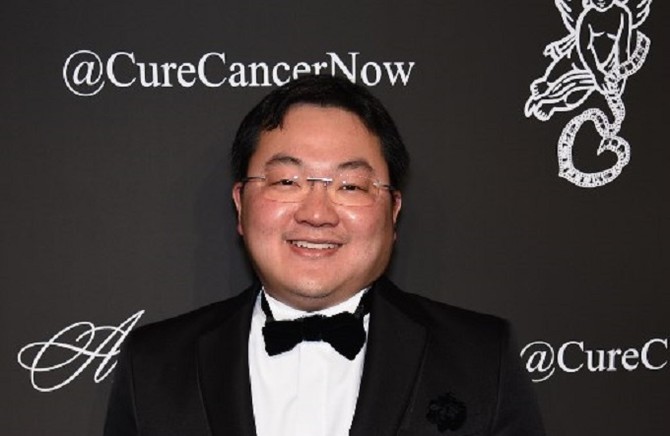
US charges Malaysian financier in multibillion-dollar 1MDB corruption scandal
- A three-count indictment charges against Low Taek Jho, also known as Jho Low, was announced
- The set of charges represent the first criminal prosecutions in the US arising from the epic corruption scandal at IMDB


Latest updates


© 2026 SAUDI RESEARCH & PUBLISHING COMPANY, All Rights Reserved And subject to Terms of Use Agreement.