

Russia fund boss sees no drop in foreign investment to Saudi Arabia

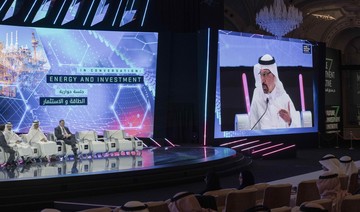
Kirill Dmitriev said FII is a great platform to drive opportunities and transformation. (SPA)
Updated 23 October 2018
Follow

Russia fund boss sees no drop in foreign investment to Saudi Arabia

  • We believe Saudi Arabia has a lot of investment potential and supports the process of transformative and historical reforms in the Kingdom, said Dmitriev
  • From the Russian perception, Saudi Arabia is a great partner, said RDIF’s head

RIYADH: The head of the Russian Direct Investment Fund (RDIF) believes that the events of the past few weeks have made little impact on Saudi Arabia’s attractiveness to global investors, and is preparing to invest “billions of dollars” in the Kingdom.

Kirill Dmitriev, the RDIF chief executive, told Arab News on the sidelines of the Future Investment Initiative (FII) in Riyadh that the event was a big success and “a great platform to drive opportunities and transformation.”

He added that the FII’s opening day had been well attended by chief executives from across the Middle East, Europe and the US, with a “big Russian delegation.”

Dmitriev expressed his regrets at the tragedy in Istanbul, in which journalist Jamal Khashoggi was killed at the Saudi Consulate, and welcomed the actions taken by the Kingdom to investigate the case. 

“It is too early to talk about any kind of shortfall in Western investment in Saudi Arabia, despite the tragic events in Istanbul. The Saudi market is more attractive now than it was three or four years ago, and I don’t think there has been any change over recent weeks,” he said.

“We believe Saudi Arabia has a lot of investment potential and supports the process of transformative and historical reforms in the Kingdom. In particular, we support Vision 2030, which is significant not only for the economy and people of the Kingdom but for the Middle East region and the whole world.”

Earlier at the FII, Dmitriev told a gathering of business executives and policy-makers that the goal of the RDIF was “economic development through partnership.” He said such partnerships include links with Saudi Arabia’s PIF and Aramco, with which RDIF has embarked on a number of initiatives in energy and infrastructure.

Last year, the three established a platform for Russian-Saudi energy investment, which aims to identify attractive investment opportunities in Russia. This was accompanied by a joint platform for technology investment, Dmitriev explained.

“From the Russian perception, Saudi Arabia is a great partner. It is not just about energy and oil, but about the historic vision and transformation,” he said.

RDIF has been actively collaborating with PIF since 2015. They have invested over $2 billion together and are now considering over 10 new projects totaling more than $1 billion, Dmitriev said.

“The industries benefitting from these investments range from sectors including … petrochemicals, industrial manufacturing, logistics, infrastructure and technology,” he added.

“Currently, we are discussing the opportunity to jointly implement some projects in Saudi Arabia in different sectors. The projects are related to the localization of petrochemical production, the provision of service contracts and the subsequent creation of joint ventures. RDIF and our partners can bring billions of dollars of investment to the Kingdom.”

Saudi Arabia, Japan trade rises 38% between 2016 and 2024, minister says

Updated 11 January 2026
Follow

Saudi Arabia, Japan trade rises 38% between 2016 and 2024, minister says

RIYADH: Trade between Saudi Arabia and Japan has increased by 38 percent between 2016 and 2024 to reach SR138 billion ($36 billion), the Kingdom’s investment minister revealed.

Speaking at the Saudi-Japanese Ministerial Investment Forum 2026, Khalid Al-Falih explained that this makes the Asian country the Kingdom’s third-largest trading partner, according to Asharq Bloomberg.

This falls in line with the fact that Saudi Arabia has been a very important country for Japan from the viewpoint of its energy security, having been a stable supplier of crude oil for many years.

It also aligns well with how Japan is fully committed to supporting Vision 2030 by sharing its knowledge and advanced technologies.

“This trade is dominated by the Kingdom's exports of energy products, specifically oil, gas, and their derivatives. We certainly look forward to the Saudi private sector increasing trade with Japan, particularly in high-tech Japanese products,” Al-Falih said.

He added: “As for investment, Japanese investment in the Kingdom is good and strong, but we look forward to raising the level of Japanese investments in the Kingdom. Today, the Kingdom offers promising opportunities for Japanese companies in several fields, including the traditional sector that links the two economies: energy.”

The minister went on to note that additional sectors that both countries can also collaborate in include green and blue hydrogen, investments in advanced industries, health, food security, innovation, entrepreneurship, among others.

During his speech, Al-Falih shed light on how the Kingdom’s pavilion at Expo 2025 in Osaka achieved remarkable success, with the exhibition receiving more than 3 million visitors, reflecting the Japanese public’s interest in Saudi Arabia.

“The pavilion also organized approximately 700 new business events, several each day, including 88 major investment events led by the Ministry of Investment. Today, as we prepare for the upcoming Expo 2030, we look forward to building upon Japan’s achievements,” he said.

The minister added: “During our visit to Japan, we agreed to establish a partnership to transfer the remarkable Japanese experience from Expo Osaka 2025 to Expo Riyadh 2030. I am certain that the Japanese pavilion at Expo Riyadh will rival the Saudi pavilion at Expo Osaka in terms of organization, innovation, and visitor turnout.”

Al-Falih also shed light on how Saudi-Japanese relations celebrated their 70th anniversary last year, and today marks the 71st year of these relations as well as how they have flourished over the decades, moving from one strategic level to an even higher one.