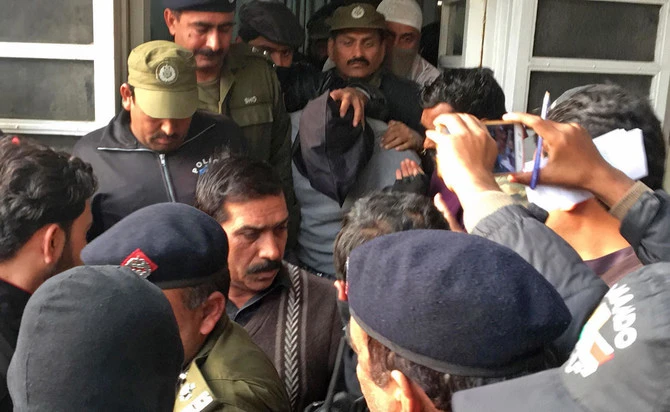
- Imran Ali was convicted of raping and killing Zainab Ansari in Kasur, near Lahore
- The girl's parents were in Saudi Arabia for Umrah at the time of the horrific crime
ISLAMABAD/LAHORE: Pakistan’s government hanged a man on Wednesday for raping and murdering a six-year-old girl.
Imran Ali, 24, who was arrested after Zainab Ansari’s body was found in a garbage dump in Kasur, more than 50 km away from Lahore, was executed in Kot Lakhpat jail, Lahore, at 5.30 a.m.
Officials handed over Ali’s body to his family for the last rites to be performed in Kasur.
Speaking to the local media soon after the execution, Zainab’s father, Amin Ansari, told Arab News: “Justice is served. I am satisfied … We are relieved today that the criminal has finally met his fate. The whole family is devastated. We miss our daughter … We can’t believe, even today, that she is no longer with us.”
The murder that shook the nation began on Jan. 4, when Zainab left her house for Qur’an studies at a madrassa nearby. Her parents were away in Saudi Arabia to perform Umrah, leaving her under the supervision of her aunt.
Unable to trace her whereabouts, Zainab’s uncle lodged a complaint with the police about his missing niece the next day. Four days later, on Jan. 9, Zainab’s body was recovered from a dumping ground.
The gruesome rape and murder led to nationwide protests, with people taking to social media to express outrage over the incident. It resulted in #JusticeForZainab becoming one of the top trends on Twitter at the time. Riots also broke out in the Kasur district after Zainab’s battered body was recovered, with people urging law enforcement agencies to bring the culprit to book.
Then Punjab Chief Minister Shehbaz Sharif constituted a joint investigation team (JIT) to probe and resolve the case. “I will not rest until justice has been served to the affected family,” he said at the time.
The high-profile nature of the case brought several law enforcement agencies together; and amid pressure from civil society groups and the media, police were able to arrest Ali two weeks after the incident.
They had relied on CCTV footage that showed Zainab walking with Ali in a neighborhood alleyway. The National Database and Registration Authority (NADRA) was called upon to identify the suspect based on a sketch, but failed to deliver any leads. Using the DNA tests of 1,150 men between the ages of 20 and 45 who matched the suspect’s age and were living within 2 km of Zainab’s house, the JIT finally zeroed in on Ali.
Ali had already been detained by the police in the initial stages of the case, but was released after Zainab’s family had intervened, reasoning that he was someone they knew and trusted. He further cemented their conviction by joining the team leading the search for Zainab.
Following his arrest, investigators conducted two other tests on Ali before confirming his involvement in Zainab’s rape and murder and those of four other girls from the same locality.
With all his appeals for clemency rejected by the superior courts and the president, Ali was finally convicted in February this year after a four-day trial.
Zainab’s father, who was present at the jail to witness Ali’s execution, said: “He didn’t look remorseful or ask for forgiveness. Perhaps he was aware of the gravity of the crime he had committed.”
Ansari had appealed to the Lahore High Court to publicly hang Ali as a lesson to others, but his request was denied. “Zainab cannot come back, but we hope that her killer’s execution will serve as a strong deterrent in the society,” he said.
Zainab’s murder was one among 12 to take place in Kasur since last year.
In 2015, a gang of pedophiles was arrested following allegations that it was responsible for abducting and sexually assaulting more than 280 children in the area.