Preserved history enhances the image of a country. It is a treasure the value of which cannot be measured in financial terms. Saudi Arabia has a rich history, preserved in the tales of the many communities that have lived in the region throughout the centuries, and the artifacts they left behind. After long being ignored, many Saudi historical sites have been rediscovered in recent years, attracting curious minds from all over the world.
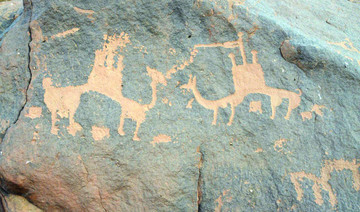
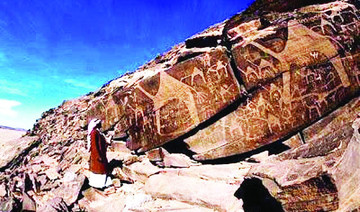
One such site that encapsulates history is the rock art in the Hail region. It includes two components: Umm-Sinman mountain in the city of Jubbah, and Al-Manjoor and Raat at Shuwaymis. The sites contain some of the best examples of Neolithic rock art. The petroglyphs — images created by carving away part of the rock — include images of the men and women from an era dating back as far as 10,000 years, providing clues to their activities, hairstyles and clothing. Differences in social status is also suggested by a few large figures wearing unique ornamentation, and there are images of animals and hunters.
All of this helps us to understand the past and make connections to modern-day cultural norms that might have originated in that era. These petroglyphs are very well executed and detailed and must have taken a considerable amount of time and effort to carve.
The Om Sinman Mountain site, near the city of Jubbah, is the better known of the two sites. There are relics there that suggest there was once a river in the southern part of the Great Narfoud that was a source of fresh water for the people of the area.
In 1879, Lady Anne Blunt, the daughter of Lord Byron, summed up the location and its rich array of ancient art in her quote: “Jubbah is one of the most curious places in the world and to my mind one of the most beautiful.”
This site was added to UNESCO’s World Heritage List in 2015, and the Saudi Commission for Tourism and National Heritage has made further efforts since 2016 to preserve the site, such as increasing the buffer zone, repainting and refurbishing the petroglyphs and developing a monitoring system.
Saudi Arabia already has five sites already on the World Heritage List — Al-Ahsa Oasis (added in 2018), Al-Hijr Archaeological site (Madain Saleh) (2018), At-Turaif District of Ad-Dir’iyah (2010), Historic Jeddah (2014) and the rock art of the Hail Region (2015) — and is working to double that number by 2030.
The rock art site is a great resource to help us understand the significance of life and appreciate the fact that the imprints of people endure through the generations, and also to awaken a sense of belonging, as such culturally rich places help to tell an epic tale of the journey of humans as citizens of the world.