Qureshi leaves for US to attend UNGA

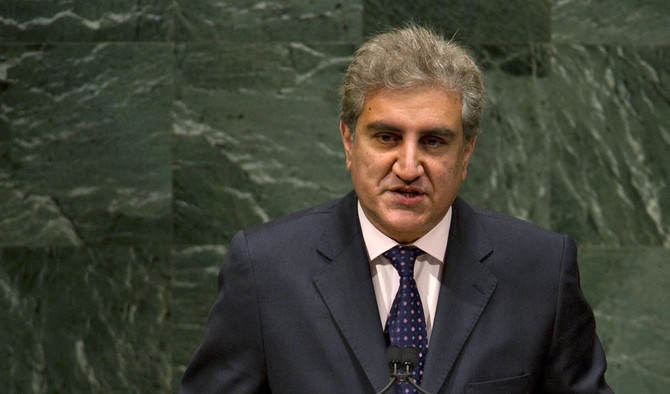
Pakistani Foreign Minister Shah Mehmood Qureshi. (AFP/File)
Updated 22 September 2018
Follow

Qureshi leaves for US to attend UNGA

  • Pakistan Foreign Minister to meet several leaders, including those from Trump administration
  • PM Khan skips session to focus on economy

ISLAMABAD: Pakistan’s Foreign Minister Shah Mahmood Qureshi left for the United States on Saturday to participate in the 73RD session of the UN General Assembly (UNGA) in New York.
Accompanying him on his week-long visit from Islamabad was Foreign Secretary Tehmina Janjua, where the delegation is expected to discuss Islamabad’s stance on a host of issues, including the Kashmir dispute.
As per reports by state-run Radio Pakistan, Prime Minister Imran Khan had decided to skip the event to focus on the country’s economy, delegating the charge to Qureshi instead. Foreign Minister Qureshi will also hold meetings with leaders from various countries including with some from the US administration, in addition to interacting with the overseas Pakistani community residing there, Radio Pakistan reported.
The UNGA is held every year in September at the General Assembly Hall at the UN headquarters in New York and is the main deliberative body of the UN. It is one of six organs of the UN and makes decisions on important questions concerning peace and security.
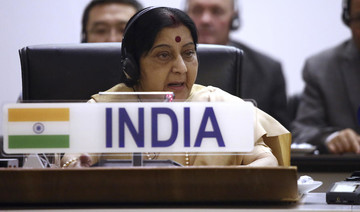
Qureshi was expected to hold talks with his Indian counterpart, Sushma Swaraj, on the sidelines of the UNGA, but the plans were called off by New-Delhi citing the recent violence in Indian-occupied Kashmir that led to the death of three soldiers.


Pakistan mulls enforcing remote work, online classes rules to conserve energy amid Mideast crisis

Updated 5 sec ago
Follow

Pakistan mulls enforcing remote work, online classes rules to conserve energy amid Mideast crisis

  • Government committee reviews contingency plans as Iran closes Strait of Hormuz, disrupting global oil supply
  • Petroleum Division official warns fuel costs may rise if Pakistan is forced to import oil from longer routes

ISLAMABAD: Pakistan is considering a range of options to conserve energy which include ordering corporate offices to ensure work-from-home facility for staff and directing universities to shift classes online, a senior official confirmed on Thursday as the ongoing Middle East conflict threatens to disrupt the global supply of petroleum products. 

These proposals were discussed by a cabinet committee constituted by Prime Minister Shehbaz Sharif to monitor petroleum prices on Wednesday. The committee meets daily to review the stock of petroleum products in Pakistan and assess the evolving regional situation.

Tensions in the Middle East have surged since Saturday after the US and Israel’s coordinated strikes against Iran and Tehran’s retaliatory attacks against both and Gulf nations. Iran has closed the crucial Strait of Hormuz waterway, through which roughly 20 percent of global oil and gas supply passes through. 

Pakistan relies heavily on Middle Eastern crude oil, with the majority of its energy imports typically transiting through the strait, making any disruption a major risk to domestic fuel supplies.

“Yes, proposals such as work-from-home for corporate offices and online classes for higher education institutions were discussed in the high-level committee,” a senior official of the finance ministry told Arab News on condition of anonymity, as he was not authorized to speak to the media.

“However, final decisions will be taken in a couple of days after the action plan is finalized based on priority areas.”

The official said the government may also advise the public to avoid unnecessary travel, adding that fuel supplies would be ensured for various industries and other critical sectors.

Meanwhile, Pakistani authorities have imposed a ban on the export of petroleum condensate, a chemical used by oil refineries, to secure its domestic supply in case the Middle East crisis worsens further.

A senior official from Pakistan’s Petroleum Division told a Senate committee on Wednesday that the country currently has petroleum reserves sufficient to last around one month.

“The country has around one month of refined petroleum products available, along with more than ten days’ worth of crude oil stocks,” the official said, also requesting anonymity. 

He added that the government is working on contingency planning to meet future energy requirements if the conflict continues.

“Pakistan is exploring options to import fuel from Saudi Arabia through the Red Sea to ensure uninterrupted supplies,” he said. 

Pakistan’s petroleum ministry confirmed the same in a statement on Wednesday, following Petroleum Minister Ali Pervaiz Malik’s meeting with Saudi Ambassador Nawaf bin Said Al-Malki. 

The official warned that petroleum product prices may rise in line with global market trends, particularly if supplies have to be transported through alternative, longer routes.

He added that in the event of a prolonged conflict, Pakistan may consider importing fuel from the US and other countries.