MOSCOW: Moscow and Beijing lashed out on Friday at Washington’s new anti-Russian sanctions that also target China for the first time, warning the US could face consequences.
President Vladimir Putin’s spokesman accused Washington of playing unfairly and using new measures to squeeze Moscow out of the global arms market, after the United States slapped sanctions on China for buying Russian warplanes and missiles and threatened to target its other clients.
“This is unfair competition, dishonest competition, an attempt to use non-market methods that run counter to norms and principles of international trade to squeeze the main competitor of US makers out of the markets,” said Kremlin spokesman Dmitry Peskov.
Peskov said that “Washington’s continued sanctions hysterics” dealt a new blow to US-Russia ties but could not immediately say if Moscow would retaliate, or how.
On Thursday, Washington placed financial sanctions on the Equipment Development Department of the Chinese Defense Ministry, and its top administrator, for its recent purchase of Russian Sukhoi Su-35 fighter jets and S-400 surface-to-air missile systems.
It was the first time a third country has been punished under the CAATSA sanctions legislation for dealing with Russia, signalling Donald Trump’s readiness to risk relations with other countries over Moscow.
Beijing — which is locked in a trade war with the US — urged Washington to withdraw sanctions or “bear the consequences.”
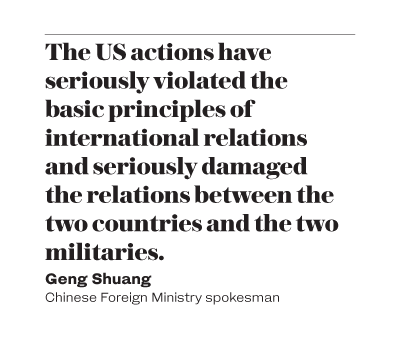
“The US actions have seriously violated the basic principles of international relations and seriously damaged the relations between the two countries and the two militaries,” said Chinese Foreign Ministry spokesman Geng Shuang.
“We strongly urge the US to immediately correct their mistake and withdraw their so-called sanctions, otherwise the US will have to bear the consequences.”
United in their resentment of America’s global influence, China and Russia have sought in recent years to tighten up their ties and this month conducted week-long joint military drills, Moscow’s largest ever war games.
Russian Foreign Minister Sergei Lavrov warned that Russia would act to end its dependency on the US dollar.
“We will do everything to stop being dependent on the countries who behave toward their partners in this way,” Lavrov said on a visit to Sarajevo.
His deputy, Sergei Ryabkov, earlier said Washington was rocking global stability and said sarcastically that placing sanctions on Russia has become Washington’s favorite “pastime.”
“It would be good for them to remember there is such a concept as global stability which they are thoughtlessly undermining by whipping up tensions in Russian-American ties,” said Ryabkov.
“Playing with fire is silly, it can become dangerous,” he said in a statement, noting the latest round of anti-Russian measures was the 60th since 2011.
Arms exports are an important source of revenue for the country and last year Russia sold more than $14 billion worth of arms overseas.
US officials said that the US could consider similar action against other countries taking delivery of Russian fighter jets and missiles.
Turkey, which is embroiled in a dispute with Washington over the detention of a US pastor, is in talks to buy S-400 missile systems from Russia.
Alexander Gabuev, head of the Russia in the Asia-Pacific Program at the Carnegie Moscow Center, said the new US measures could bring Moscow and Beijing even closer.
“The move is very unlikely to stop growing arms trade between Moscow and Beijing,” he said on Twitter.
The State Department also placed 33 Russian intelligence and military-linked actors on its sanctions blacklist.
All of them — defense related firms, officers of the GRU military intelligence agency, and people associated with the Saint Petersburg-based Internet Research Agency disinformation group — have been on previous US sanctions lists.
Twenty eight of them have already been indicted by Robert Mueller, the US Special Counsel who is investigating election meddling by Russia.
A senior US administration official, speaking on condition of anonymity, insisted the ultimate target was Russia and not “the defense capabilities” of third countries.
CAATSA, or the Countering America’s Adversaries Through Sanctions Act, was passed in 2017 as a tool that gives Washington more ways to target Russia, Iran and North Korea with economic and political sanctions.
The US official said Washington had spent “an enormous amount of time” seeking to discourage prospective buyers of Russian arms.
The new sanctions came as the US and China are in the heat of a trade war.
The two countries will launch new tariffs on Monday, with Washington targeting $200 billion in Chinese exports and Beijing hitting $60 billion worth of American products.

China and Russia slam US sanctions, warn of consequences
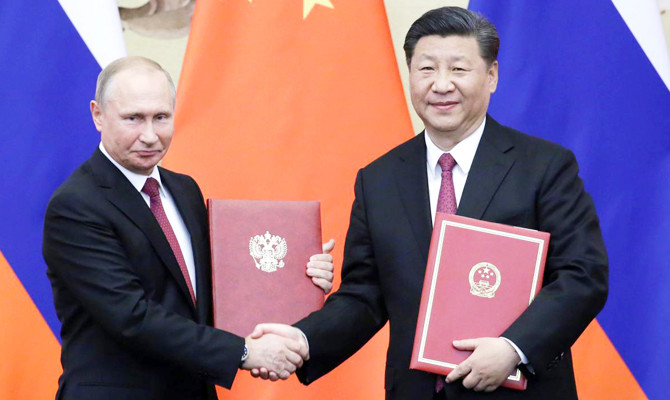
- The Trump administration imposed sanctions on the Chinese military for buying fighter jets and missile systems from Russia
- Russian Deputy Foreign Minister Sergei Ryabkov said in a statement it seemed to Moscow that imposing sanctions on Russia had become a national US pastime
Costa Rica’s Grynspan pledges reform in bid for UN chief job
GENEVA: Rebeca Grynspan is upbeat about her chances of becoming the next head of the United Nations, which she insists must become more agile in tackling the world’s crises.
The Costa Rican former vice president said she wanted to rebuild global trust in the United Nations if she becomes its next secretary-general.
“We are very optimistic. I think that I am more than a viable candidate,” Grynspan said on Friday, her last working day before stepping aside as head of the UN trade and development agency UNCTAD to focus on her campaign.
The second term of current UN chief Antonio Guterres expires at the end of the year.
“My profile is right for this moment. I know the UN enough to reform it and enough to defend it,” she told the UN correspondents’ association ACANU.
“I have a lot of experience in my political life, taking decisions under a lot of stress and in complex situations. I have been in the highest positions in the UN.”
It is Latin America’s turn next for the top UN job and two other candidates are running: former Chilean president Michelle Bachelet, and Rafael Grossi, the Argentinian head of the International Atomic Energy Agency.
Founded in 1945, the UN has never had a woman secretary-general.
Grynspan, an economist, is not looking to be chosen on that basis.
“I don’t need any favors to be elected for the secretary-general; I just need people not to discriminate me for being a woman,” the 70-year-old said.
“If the competition will be fair, with no biases, I will make it. I have the CV; I have the merits.”
- Rebuilding trust -
Last month, Guterres warned that the UN was facing financial collapse and could run out of cash by July, with member states neither paying in full nor or time.
“The UN has to change,” said Grynspan.
There are far greater capacities in civil society and the private sector than in 1945, “and we need to be able to harness that: we don’t have to do everything in the UN.”
As for peace and security, “prevention and mediation are essential. But they need agility and flexibility from the structures of the UN. And I don’t think we have that right now.”
US President Donald Trump has slashed funding to some UN agencies and has repeatedly questioned the UN’s relevance and attacked its priorities, setting up his own “Board of Peace.”
“The UN is unique because it’s the only legitimate, universal organization,” said Grynspan.
“We need to rebuild trust with the member states. We need to regain the belief that the UN is useful to solve problems,” she said, vowing to bring her personal qualities to the task.
“I am able to reach to people not only with logic, but also with inspiration, optimism and hope,” she said.
“We need more of that too, because we need to connect again much more with people. We will need to conquer the hearts and minds again.”
- Leadership style -
The UNCTAD chief said her leadership style revolved around being “direct, honest, and evidence-based... There have to be reasons, not only emotions.”
Grynspan recounted that her parents, who were from Poland, “barely survived” World War II. Her maternal grandparents were killed in the Holocaust.
Her parents went “with nothing” to Costa Rica, a country that “allowed them to have a good life.”
“Costa Rica has taught me a lot. It’s a country that I not only love dearly, but I admire,” she said.
“I am not an impetuous person. I think things through. I have the serenity not to lose it under tension and under pressure. I consult. I hear. And I am brave. I take risks.”
rjm/ceg
The Costa Rican former vice president said she wanted to rebuild global trust in the United Nations if she becomes its next secretary-general.
“We are very optimistic. I think that I am more than a viable candidate,” Grynspan said on Friday, her last working day before stepping aside as head of the UN trade and development agency UNCTAD to focus on her campaign.
The second term of current UN chief Antonio Guterres expires at the end of the year.
“My profile is right for this moment. I know the UN enough to reform it and enough to defend it,” she told the UN correspondents’ association ACANU.
“I have a lot of experience in my political life, taking decisions under a lot of stress and in complex situations. I have been in the highest positions in the UN.”
It is Latin America’s turn next for the top UN job and two other candidates are running: former Chilean president Michelle Bachelet, and Rafael Grossi, the Argentinian head of the International Atomic Energy Agency.
Founded in 1945, the UN has never had a woman secretary-general.
Grynspan, an economist, is not looking to be chosen on that basis.
“I don’t need any favors to be elected for the secretary-general; I just need people not to discriminate me for being a woman,” the 70-year-old said.
“If the competition will be fair, with no biases, I will make it. I have the CV; I have the merits.”
- Rebuilding trust -
Last month, Guterres warned that the UN was facing financial collapse and could run out of cash by July, with member states neither paying in full nor or time.
“The UN has to change,” said Grynspan.
There are far greater capacities in civil society and the private sector than in 1945, “and we need to be able to harness that: we don’t have to do everything in the UN.”
As for peace and security, “prevention and mediation are essential. But they need agility and flexibility from the structures of the UN. And I don’t think we have that right now.”
US President Donald Trump has slashed funding to some UN agencies and has repeatedly questioned the UN’s relevance and attacked its priorities, setting up his own “Board of Peace.”
“The UN is unique because it’s the only legitimate, universal organization,” said Grynspan.
“We need to rebuild trust with the member states. We need to regain the belief that the UN is useful to solve problems,” she said, vowing to bring her personal qualities to the task.
“I am able to reach to people not only with logic, but also with inspiration, optimism and hope,” she said.
“We need more of that too, because we need to connect again much more with people. We will need to conquer the hearts and minds again.”
- Leadership style -
The UNCTAD chief said her leadership style revolved around being “direct, honest, and evidence-based... There have to be reasons, not only emotions.”
Grynspan recounted that her parents, who were from Poland, “barely survived” World War II. Her maternal grandparents were killed in the Holocaust.
Her parents went “with nothing” to Costa Rica, a country that “allowed them to have a good life.”
“Costa Rica has taught me a lot. It’s a country that I not only love dearly, but I admire,” she said.
“I am not an impetuous person. I think things through. I have the serenity not to lose it under tension and under pressure. I consult. I hear. And I am brave. I take risks.”
rjm/ceg
© 2026 SAUDI RESEARCH & PUBLISHING COMPANY, All Rights Reserved And subject to Terms of Use Agreement.


