



PESHAWAR: A bike-sharing scheme is to start up in the capital of Khyber-Pakhtunkhwa province as part of a Bus Rapid Transit project.
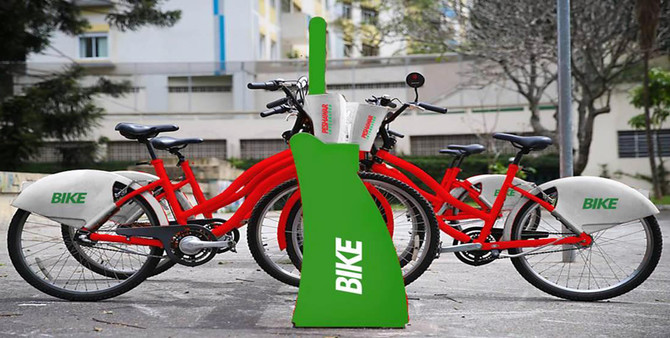
A UK-style cycling track is being constructed in the provincial capital that will be served by 360 bicycles for hire, to be parked in frames around the track for easy accessibility.
General Manager Operations for TransPeshawar Muhammad Imran Khan explained: “Thirty bicycle stands will be set up across the BRT route and anyone interested in using the facility will have the option to use either the bus or a bicycle.”
The bicycles are also meant to help commuters reach a particular bus station to board a bus in time, he added.
The Peshawar Development Authority (PDA) Director General Israrul Haq told Arab News that the cycling track will be operational at the end of December.
“The entire project, including the BRT corridor, the buses, the cycling track, the bicycles and all facilities related to the project will cost approximately Rs66million and is being funded in its entirety by the Asian Development Bank.”
The PDA is responsible for all the infrastructural aspects of the project, including maintenance and running costs.
TransPeshawar spokesperson Nauman Manzoor explained that the bikes will be used via a BRT card. “Upon swiping the card in a machine a bicycle is unlocked and the passenger is then allowed to park the bicycle at any station along the corridor,” he added.
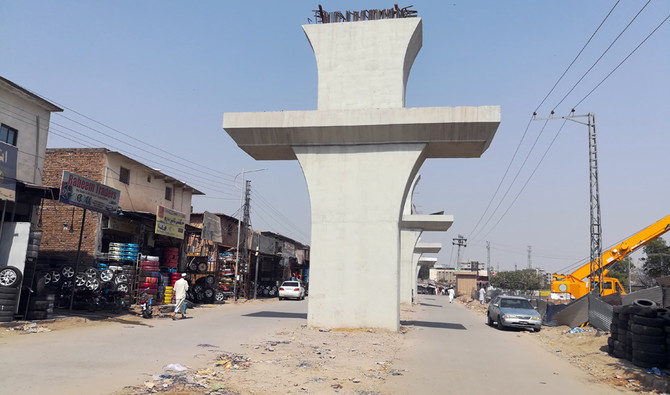
During a visit to the Reach-II of the BRT, Assistant Director of the PDA Riffat Ullah told Arab News that the cycling track in Reach-II is elevated from the ground, running beneath the main BRT corridor.
“Three plazas, being set up one each in three different reaches, will be equipped with shops and parking facilities for public vehicles and the BRT buses,” he added.
The government has high hopes that the initiative will help reduce pollution. However, critics of the project have warned that women are unenthusiastic about the project.
Aneela Shaheen, a journalist told Arab News: “Women in Peshawar are hesitant speaking in front of a camera, how then will they ride a bicycle on the BRT track?”
Mehwish Ghani, a student at Peshawar University, told Arab News that for women in Peshawar it is difficult to use bicycles. “I, along with several of my other friends rode bicycles to our intermediate (college) classes but stopped cycling when the law and order situation in the city deteriorated,” she said.
“My parents are afraid of me cycling because when a girl is on her own she is likely to face difficulties in the form of harassment and even abduction,” she added.
While it still remains to be seen whether women in the city will use the cycling track, Oreen Jasia, a tennis player based in Peshawar told Arab News: “In the developed world, cycling facilities are available and it will be great for us to also have it. I, for one, can’t wait to use it once it is operational.”
Khan, however, is convinced that the track will encourage both genders to use bicycles. “Our aim is to ensure that the cycling track is appropriate for both men and women,” and he added that the National University of Science and Technology in Islamabad “already has a bicycle-sharing service for its male and female students and it is working well there. We are also going to launch awareness campaigns, particularly at universities to enable students to use the BRT.”
Shakeel Ahmed, who has lived in the UK for several years, told Arab News that bike-sharing is an idea already implemented in London. “I used to ride bicycles in London, even to cover long distances, because it would reduce travel cost and would also take me to places where cars and other public transport could not reach.”
Wasiq Billah, a student of Peshawar University, said he was excited at the thought of the new project tackling the public transport shortage, but has doubts over the workability of the project. “Though cycling will facilitate students in the university, the government authorities should also raise awareness among students about the bicycles’ use in order to prevent accidents and also properly maintain the system,” Billah said.


