DUBAI: Aldar Properties, the Abu Dhabi-government controlled real estate group, is to spin off its property assets into a new company that could eventually list separately on a stock exchange in an initial public (IPO) offering worth billions of dollars.
The developer — which has been responsible for some of the biggest projects in the emirates, including the F1 track on Yas Island — announced the creation of Aldar Investments, as a fully owned subsidiary that will hold property assets valued at 20 billion dirhams ($5.4 billion).
The move “is designed to drive greater operational and capital efficiencies that will unlock value for shareholders and create the foundation for a new phase of accelerated growth,” Aldar said at a launch event at Abu Dhabi Global Market (AGDM), the UAE’s capital’s financial free zone, where the new company will be based.
“The creation of Aldar Investments allows Aldar to spin off its recurring-revenue assets into a 100 percent-owned separate entity, with greater independence, focused governance and a more efficient cost structure,” the statement added.
Although the statement did not mention the possibility of an IPO, Aldar Properties chief executive Talal Al-Dhiyebi told journalists that it could consider a market listing at some stage in the future. “We are ready to monetize this business at the right time if it’s going to deliver more shareholder growth,” he said on CNBC television.
An IPO is not the only possible structure, however. One financier close to the company — who did not want to be named — said: “This is piece of financial engineering, but an honest one that creates value. It has all the features of a real estate investment trust, and that could imply long-term asset management rather than a market listing. It gives them a lot of options and is a smart way to go.”
Shares in Aldar Properties, currently listed on the Abu Dhabi Securities Exchange (ADX), fell just over 2 percent on the announcement.
The new vehicle, which owns some of Abu Dhabi’s most recognized assets such as Yas Mall, The Gate Towers and over 2,400 hotel rooms near the F1 track, as well as the distinctive “coin” headquarters building, has been assigned a Baa1 rating by Moody’s ratings agency — the highest rating for a non-government corporate in the region and one notch above its parent company.
“Aldar Investments can access capital on more favorable terms, independently of Aldar, and intends to issue a new sukuk in the near term. Aldar Investments has set formal debt and dividend policies consistent with the current asset management business providing further clarity for investors,” the parent company said.
Mohamed Khalifa Al-Mubarak, chairman of Aldar Properties, called the move “another significant milestone in Aldar’s history.”
He added: “As the owner of 20 billion dirhams of prime real estate assets, Aldar Investments provides an opportunity for investors to benefit from Abu Dhabi’s AA rated economy.”
The move is also a boost for ADGM, bringing billions of dollars of assets within its jurisdiction on Al Maryah Island. Ahmed Al-Sayegh, the chairman of ADGM, said: “We are delighted that ADGM is continuing to be utilized not only as a platform for international business, but also to support our domestic businesses in their ongoing development and expansion.”
This move follows the recent Abu Dhabi Executive Council Decree, extending full onshore real estate ownership rights to Aldar Properties and its subsidiaries in Abu Dhabi.
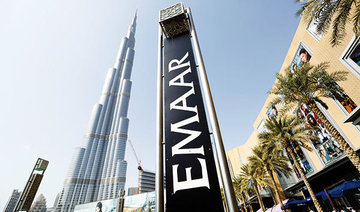
Aldar recently announced significant joint ventures with its Dubai counterpart, Emaar, which has launched separate IPOs of its property, hotels and leisure businesses in recent years.


![]()

Abu Dhabi’s Aldar creates $5.4bn real estate giant
Abu Dhabi’s Aldar creates $5.4bn real estate giant
- New unit could eventually list shares in IPO
- Property company owns some of Abu Dhabi's top landmarks

Latest updates




© 2026 SAUDI RESEARCH & PUBLISHING COMPANY, All Rights Reserved And subject to Terms of Use Agreement.