ISLAMABAD: The UN High Commissioner for Refugees (UNHCR) Filippo Grandi on Saturday thanked Pakistan for hosting millions of Afghan refugees for the past four decades.
“Pakistan is an indispensable partner of the UNHCR. We look forward to working together on just, lasting solutions to the plight of refugees,” a statement released by the UNHCR’s Pakistan office said quoting Filippo Grandi.
Grandi and Mark Lowcock, the UN Under-Secretary-General for Humanitarian Affairs and Emergency Relief Coordinator conclude their three-day visit to the country on Saturday.
The two UN officials met Prime Minister Imran Khan on Friday and expressed their gratitude to the people and government of the country – acknowledging Pakistan’s generosity in hosting one of the world’s largest refugee populations for decades.
“Prime Minister Khan affirmed his government’s commitment to refugee repatriation remaining voluntary despite the internal challenges that Pakistan faces,” the statement said.
Lowcock confirmed his determination to mobilize greater international support for areas hosting refugees and other communities affected by the displacement.
“There is a major opportunity now to help the people of the tribal districts to improve their lives. The international community must do all it can to support the government in this,” he said.
Earlier, on Thursday, Foreign Minister Shah Mahmood Qureshi received Grandi at the Foreign Office.
Qureshi shared Pakistan’s perspective and its priorities with regard to Afghan refugees in terms of the global and regional context.
“While underscoring Pakistan’s commitment to a dignified and voluntary return of Afghan refugees, the Foreign Minister underlined the need for continued demonstration of international solidarity, based on the long-standing principle of shared responsibility,” Pakistan’s Foreign Office said in a statement.
The High Commissioner agreed to work with Pakistan and Afghanistan for building support and mobilize finance for Afghan refugees and thier host communities.
Pakistan’s Foreign Secretary Tehmina Janjua also held detailed discussions with the two visiting dignitaries and their accompanying delegations.
“The Foreign Secretary described the creation of requisite pull factors in Afghanistan as essential for dignified return of refugees to their homeland. The visiting dignitaries were also briefed on Pakistan’s efforts and measures to support peace, reconciliation, stability and development in Afghanistan,” the statement read.
According to the statistics released by the UNHCR in 2002, around 4.3 million Afghan refugees have returned home from Pakistan with the UNHCR’s assistance.
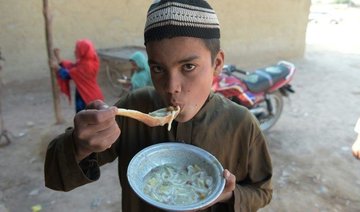
“The country still hosts some 1.4 million Afghan refugees. Some 67 percent live in urban or rural areas, while 33 percent reside in 54 refugee villages,” the body said.


![]()

UNHCR sees Pakistan as an ‘indispensable’ partner
UNHCR sees Pakistan as an ‘indispensable’ partner
- Grandi thanks Islamabad for hosting Afghan refugees
- The two UN officials met with Prime Minister to discuss way forward

Latest updates




© 2026 SAUDI RESEARCH & PUBLISHING COMPANY, All Rights Reserved And subject to Terms of Use Agreement.