

Top UAE lawyer Habib Al-Mulla: ‘Dubai is under the spotlight. It is not North Korea ...’

Illustration by Luis Grañena
Updated 02 September 2018
Follow

Top UAE lawyer Habib Al-Mulla: ‘Dubai is under the spotlight. It is not North Korea ...’

DUBAI: Habib Al-Mulla is used to media attention, but last Wednesday he had even more than his usual share of interaction with the world’s news outlets.

He had just successfully defended his client in one of the most high-profile legal cases to come out of the UAE in years — the long-running saga of the decline and fall of Abraaj, and its founder and CEO Arif Naqvi.

Al-Mulla, the doyen of Emirati lawyers, was called in by Naqvi to defend criminal charges brought by Sharjah business leader Hamid Jafar after checks totalling $300 million written by the Abraaj CEO were dishonored on presentation.

After weeks of shuttle diplomacy between Dubai and London, where Naqvi had remained to avoid the threat of imprisonment in the UAE, Al-Mulla clinched a deal with Jafar that lifted the criminal charges — in exchange for Naqvi handing over millions of dollars of personal assets. 
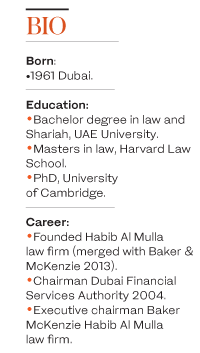
“I’ve been calling for action on bounced checks for years now,” said Al-Mulla. “In the Abraaj case, it was clearly a commercial issue that was converted into criminal proceedings. It’s a big problem for the UAE legal and financial system. I believe it leads to people leaving the country with huge debts left behind.” 

The system of using personal and corporate checks as security in financial transactions is one of the characteristics of the UAE business scene, but has been increasingly criticized as a legal blunt instrument, unsuited to the country’s “smart” entrepreneurial ambitions. 

Last year Emirati policymakers changed some details of the law to make it less draconian, as part of the plan to bring in a modern bankruptcy structure in the UAE. Al-Mulla thinks it still has not gone far enough.

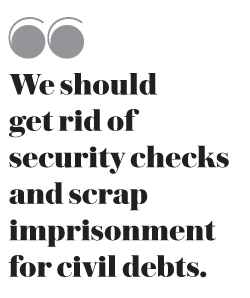
“What is the point of a bankruptcy law if it cannot protect a defaulter while he restructures his business? For smaller checks there is no automatic imprisonment, and that is an important refinement. But it’s a half-cooked solution. I think we should do like other jurisdictions in the world, and decriminalize it entirely. I think we should get rid of security checks altogether and scrap imprisonment for civil debts,” he said.

He does not agree with the UAE banks which argue that security checks impose a financial discipline on the country’s business culture. “Banks and finance companies will always want to continue with the current status because it is in their interests to do so, regardless of what dangers the economy faces as a result,” he said.

“I don’t believe the criminalization of debt leads to financial discipline. It just means that less due diligence is done on a client or business partner before a transaction, because the banks believe they have the security of a paper cheque,” he said.

The criminalization of checks is one of a number of measures weakening the UAE legal system’s global image, Al-Mulla believes. Barely a week goes by without some outcry in the international media about a perceived injustice in the UAE. 
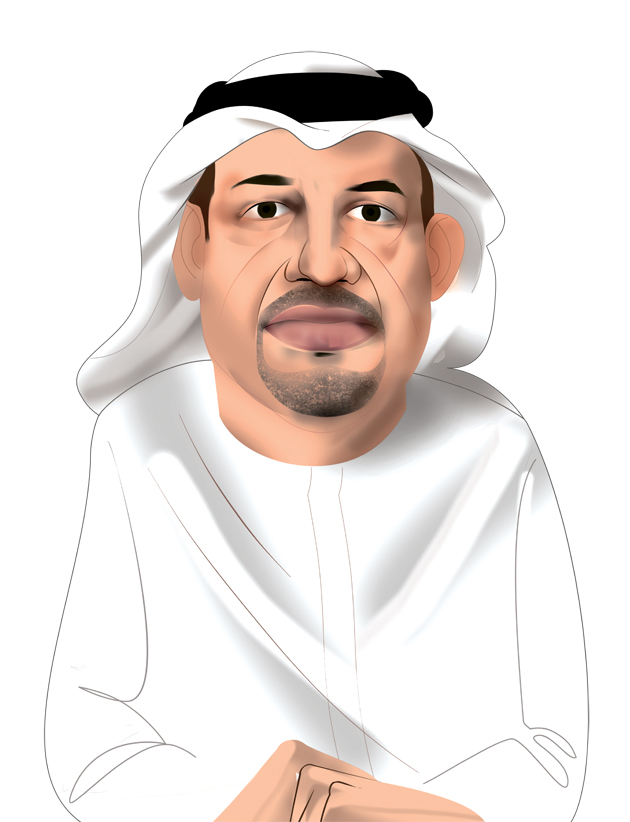


Illustration by Luis Grañena

“Does the Dubai legal system get a bad press? Yes, I think it does, and the main reason is that there is no government spokesman on legal issues. The Media Office (the official government communications agency) has no legal expertise. The response to any specific case is always reactive, when what is needed is a proactive media strategy to deal with cases as they arise. They need to deal with it on the spot, to engage with journalists here and abroad, not ignore them,” he said.

“Dubai is always under a spotlight; it is not North Korea, where things happen in the dark. Dubai always has to engage with the outside world,” he said.

Some legal experts argue that the UAE legal system’s poor image is a consequence of having English common law existing side by side with a Shariah-based system, and Al-Mulla agreed that was a factor.

“I think some tension between these two systems is inevitable, but it is a good thing because it will eventually enrich the legal system here. There will be a coming together between the two systems. It will take years, but slowly it will build a legal system combining the two, and that is a good thing,” he said.

Al-Mulla, as the first chairman of the Dubai Financial Services Authority (DFSA) in 2004, was instrumental in setting up the common law structure of the Dubai International Financial Center, but has been intermittently critical of the way it has been run since.

“The DFSA is the only regulator I know that is chaired by a person who does not have a legal or regulatory background. I think the outgoing chief executive, Ian Johnston, has had a good term, but as a body it has not come up with any new initiatives for the regulatory set-up here in UAE,” he said, insisting however that he did not want to be involved in the DFSA again.
Despite the global interest in the Abraaj affair, he does not believe it has caused serious damage to the image of Dubai or the DIFC, which regulated some parts of Abraaj’s global operations.

“I don’t believe Dubai’s reputation has been damaged. The DIFC entity is not involved. There are various Abraaj entities which are subject of different jurisdictions. Even some developed jurisdictions have encountered worse issues, like the Madoff scandal and the collapse of Lehman Brothers, and have survived,” he said.

There are big legal changes underway in the UAE’s business set-up, with plans to allow foreign companies to own 100 percent of businesses, currently only permitted in free zones. 

Al-Mulla believes this is a good thing, but warns of the damage it might do to the free zones, which have been one of the main drivers of the UAE’s economic growth over nearly 20 years.

“Back in 1996 I said that the UAE should do three things: Allow foreign ownership of real estate, permit long-term residency for investors and certain other suitable foreigners, and allow full ownership by foreigners of onshore companies. Just now, we are seeing progress on all three, but it has taken a long time,” he said.

“The free zones will definitely be affected when full foreign ownership is allowed. They will lose one of their most competitive advantages, and will need to find another if they are to continue to thrive — they will have to reduce fees, make the registration process more efficient, make it more digital.

“I think in 10 years’ time the free zones will struggle to continue as they are now. Maybe there will not be as many of them as there are today,” he added.
The recent moves on full foreign ownership were part of a government stimulus package implemented to reboot the UAE economy ahead of the Expo 2020 event, but Al-Mulla takes a positive view of the business scene in the country.“I don’t believe the recent changes have been forced on the government by the economic situation. Otherwise they would have introduced them 10 years ago, during the global financial crisis, when things were a lot more serious. The whole global economy is slow, but in the long run, I’m optimistic, as long as oil stays above $70. Dubai is a service center for oil-dependent economies so a high oil price is good for the emirate,” he said.

Nonetheless, Al-Mulla expects further government initiatives, and possibly an extension of general taxation heralded by the introduction of value added tax at the start of the year.

“They say that only two things are certain in life — death and taxes — and we’ve already got VAT. I think corporation tax is going to happen some time, but it has to be gradual and slow. We have to allow businesses time to get used to it. And of course government fees will have to be reduced from their present level if corporation tax is to be introduced,” he said.

His firm, now part of the global Baker & McKenzie law empire, was one of the first foreign firms to open in Saudi Arabia, about 35 years ago, and it offers the full range of corporate law services from offices in Riyadh and Jeddah.

“I’m positive about the changes going on in Saudi Arabia, but it will take some time before we see the full results of the Vision 2030 strategy,” he said.

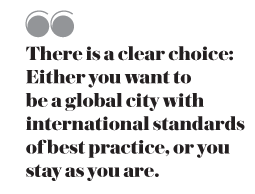
The Kingdom can learn from the Dubai experience, he believes. “There is a clear choice: Either you want to be a global city with international standards of best practice, or you stay as you are. Dubai in the past has never been content just to stand still,” he said.


GCC offering investors ‘safe’ PPP deals; Saudi pipeline nears 300: FII

Updated 20 February 2026
Follow

GCC offering investors ‘safe’ PPP deals; Saudi pipeline nears 300: FII

RIYADH: Global investors can find a “safe harbor” in the Gulf Cooperation Council as the bloc’s public-private partnerships pipeline offers “compelling” opportunities, according to a new report.

The latest document from the Future Investment Initiative Institute highlights how economies in the region are currently driving the next wave of PPP growth. 

It cites findings from Partnerships Bulletin, which ranks Saudi Arabia as second in the global emerging markets pipeline for PPP projects up to July 2025, and also places Dubai in the top 10.

While that analysis claims the Kingdom has 98 PPP projects either formally published or announced, FII says Saudi Arabia has a further 200 currently awaiting approval.

The findings align with the goals outlined in the Kingdom’s National Privatization Strategy, launched in January, which aims to raise satisfaction levels with public services across 18 target sectors, create tens of thousands of specialized jobs, and exceed 220 PPP contracts by 2030. 

The strategy also aims to increase private sector capital investments to more than SR240 billion ($63.99 billion) by 2030.

The FII report says that around 90 percent of FDI into Saudi Arabia now flows into non-oil sectors, from advanced manufacturing and tourism to green energy and digital infrastructure. 

“That shift reflects deliberate policy choices to open markets, standardize regulatory frameworks and use public capital to de-risk new value chains,” says the document, adding: “The result is a kind of safe harbor in an otherwise low-growth, high-uncertainty world.”

It continues: “While global FDI has stagnated or declined in many regions, the GCC’s pipeline of planned infrastructure and industrial projects now exceeds $2.5 trillion, according to Boston Consulting Group data, with PPPs playing a central role in structuring and financing them. For global investors searching for yield, diversification and inflation-linked income, this represents a compelling proposition.”

Commenting on the FII Institute report, Sally Menassa, partner at international management consulting firm Arthur D. Little, said PPPs are a strategic necessity for delivering infrastructure at speed and scale, and described Saudi Arabia’s pipeline as a “powerful execution and financing tool.” 

She added: “The Kingdom’s PPP momentum must remain focused on impact, value creation and execution excellence. PPPs should not be viewed merely as a funding mechanism, but as a structural tool to enhance infrastructure performance, attract investment and support sustainable economic growth in line with Vision 2030.” 

Menassa said that Saudi Arabia’s National Privitization Strategy marks a shift from a project-by-project approach to institutionalization of efforts and value creation.

“By clarifying sector priorities, strengthening project selection criteria, and formalizing governance and investor pathways, the Strategy reduces uncertainty. This clarity enhances investor confidence and improves pipeline quality,” said the Arthur D. Little official. 

Sally Menassa, partner at international management consulting firm Arthur D. Little. Supplied.

She added: “PPP and privatization efforts in Saudi Arabia are not about divestment or the state shifting execution to the private sector, it is really about becoming more productive as a nation. It enhances efficiency, raises service standards, mobilizes private and SME participation, and attracts capital.” 

Menassa further said that the strategy could help the Kingdom achieve stronger fiscal sustainability and higher private sector GDP contribution, both of which are critical components to accelerate the Kingdom’s economic transformation under Vision 2030.

Vijay Valecha, chief investment officer at Century Financial, believes input from the private sector across all stages, from design to construction and operations, improves the efficiency of project delivery and long-term operations in Saudi Arabia. 

“Tighter governance through centralized management at the National Center for Privatization and PPP and a more streamlined process, including template contracts, a clearer regulatory environment, and a transparent pipeline, is likely to improve delivery speed,” said Valecha. 

He added: “This means faster delivery of big projects like Red Sea resorts or Neom, with private firms handling operations to drive innovation. Ultimately, the strategy supercharges diversification by making the private sector the main engine of growth, aligning perfectly with Saudi Arabia’s push for a vibrant, non-oil economy.” 

The FII Institute added that the global flow of FDI is increasingly concentrated in the Gulf Cooperation Council region, driven by ambitious national transformation agendas and deep pools of sovereign wealth.

Tony Hallside, CEO of STP Partners, outlined several factors that are boosting the PPP landscape in the region, which include large infrastructure demand from Vision-level programs and urbanization. 

“Government frameworks that standardise PPP procurement are making projects bankable. Strong regional capital pools and sovereign support will mitigate risk and attract global players. In the GCC, Saudi Arabia’s pipeline itself is one of the largest in the Middle East, indicating strong investor interest,” added Hallside. 

Underscoring the role of growing PPP in Saudi Arabia, the FII report said: “A decade ago, the Kingdom’s solar capacity was negligible, despite its vast solar resource. Through early anchor investments, long-term power purchase agreements and support for national champions, the state seeded a competitive renewables market that now attracts global players on purely commercial terms.” 

Valecha said that clearer PPP laws, standardised contracts and dedicated PPP units have reduced execution risks and made projects more bankable for global infrastructure funds and developers in the GCC region. 

He added that rapid urbanization, a young and growing population, rising data center power demand and energy transition projects create predictable, long-duration cash flows in the region. 

“This combination of policy support, fiscal necessity and structural growth is why the GCC is emerging as one of the fastest-growing PPP markets globally,” said Valecha. 

Vijay Valecha, chief investment officer at Century Financial. Supplied

Key Saudi PPP projects

Yanbu 4 Independent Water Project - supplying water to Medina and Makkah

Location Yanbu, Red Sea coast

Companies involved: Engie, Mowah, Nesma, Saudi Water Partnership Co.

Cost: $826.5 million

Expected delivery date: Operational as of 2024

Hadda Independent Sewage Treatment Plant

Location: Makkah Province

Companies involved: Metito Utilities, Etihad Water and Electricity, SkyBridge Limited Co., Saudi Water Partnership Co.

Expected delivery date: 2028 

As Sufun Solar PV Independent Power Project

Location: Hail region

Companies involved: TotalEnergies, Aljomaih Energy & Water, Saudi Power Procurement Co.

Expected delivery date: Expected to connect to the grid in 2027

Construction of greenfield international airports

Location: Taif, Abha, Qassim, and Hail

Companies involved: Currently in the planning stage; investors are being sought

One-Stop Station Project

Location: Intercity road network across the Kingdom

Companies involved: Saudi Arabia’s Roads General Authority and National Center for Privatization & Public-Private Partnership announced a full list of qualified bidders in February.

King Salman Park

Location: Riyadh

Companies involved: King Salman Park Foundation, Ajdan Real Estate, Sedco Capital

Cost: $1 billion

Project: Madinah-3, Buraydah-2, and Tabuk-2 Independent Sewage Treatment Plants

Location: Madinah, Buraydah, and Tabuk

Companies involved: Acciona Agua, Tawzea, Tamasuk, Saudi Water Partnership Co.

Cost: $627 million combined

Riyadh Metro Line 2 Extension

Location: Riyadh

Companies involved: Royal Commission for Riyadh City, Arriyadh New Mobility Consortium, led by Webuild. Riyadh Metro Transit Consultants (JV between US Parsons and France’s Egis and Systra) as project management and construction supervision consultant.

Cost: Up to $900 million

Expected delivery date: 2032


The crucial role of emerging markets

According to the FII Institute report, the ability to deliver resilient infrastructure, expand digital connectivity and accelerate the energy transition will increasingly depend on the strength and legitimacy of PPPs, as fiscal space tightens and investment needs rise. 

FII estimates a $5 trillion global infrastructure financing gap by 2040. It also points to significant regional shortfalls, including an estimated $3.7 trillion gap in the US and an annual $130 billion to $170 billion gap across Africa. In this context, PPPs are moving from a transactional procurement route to a central model for financing and delivery.

The report highlighted that emerging markets, including Saudi Arabia, are currently driving the next wave of PPP growth, with spending across low-and middle-income countries reaching $100.7 billion in 2024, up 16 percent year on year, according to figures from the World Bank. 

Moreover, emerging markets now represent around 61 percent of global PPP activity by gross domestic product share.

According to Partnerships Bulletin’s findings up to July 31 2025, the Philippines leads the emerging-market pipeline with 230 projects, followed by Saudi Arabia with 98, Kyrgyzstan with 80, Bangladesh with 71, and Peru with 54 projects.

Greece has 42 projects in the pipeline, followed by Dubai at 28, Kenya at 25, Colombia at 24, and Pakistan at 14. 

PPP: An engine of growth

When capital was cheap, PPPs were often treated as an optional extra – a way to shift specific projects off the public balance sheet, or to import private-sector efficiency into construction and operations, the FII report said. 

However, now, nations consider PPPs as a central hub of their economic strategy, as they enable the state to stretch every dollar of public investment using private capital, while retaining strategic control over what gets built, where and to what standard.

“The real differentiator is complexity. When a project presents significant financial uncertainty or unpredictable demand, or if there’s a high level of climate exposure or technological risk, a PPP can give leaders the tools to manage those issues without slowing things down,” said Bob Willen, global managing partner and chairman of Kearney, said in the FII report. 

Erik Ringvold, chief business development officer at Regional Voluntary Carbon Market Co., was quoted in the report as saying that carbon markets will benefit through PPPs, as deepened public-private partnerships could help achieve progress toward national emissions targets, while simultaneously creating economic opportunity and catalyzing new green industries. 

“Saudi Arabia has made large strides toward an emissions compliance system, with an operational carbon standard in place, and an emissions trading system announced to be launched over the coming few years,” said Ringvold. 

He added: “At VCM, we see a clear future carbon vision for Saudi Arabia. One ecosystem. One marketplace. One iconic collaboration – with the PPP model at the heart of its success.” 

PPPs for investors and citizens 

For investors, infrastructure-backed PPPs offer long-duration, often inflation-linked cash flows at a time when public markets are volatile and dominated by a narrow set of mega-cap technology stocks. 

For citizens, well-designed PPPs can mean better services, more resilient infrastructure and faster progress toward climate and development goals, without unsustainable tax rises or austerity. 

FII, however, cautioned that public consent is becoming decisive. Across seven countries, only 23 percent of citizens agree that PPPs “equally benefit everyone”, compared with 41 percent of business and government leaders.

Tony Hallside, CEO of STP Partners. Supplied

Hallside said that public consent hinges on transparency, accountability, and visible service outcomes. 

He added that governments should publish clear procurement frameworks, communicate cost-benefit and performance expectations in plain language, and measure user satisfaction and service quality over time — “reinforcing that PPPs deliver tangible improvements in infrastructure and services.” 

Menassa echoed similar views and said that communication with the public is not sufficient, but the performance and execution phase holds the key to PPP projects. 

“Winning public opinion for PPPs is rather a marathon not a race. It starts with building awareness and trust by providing transparency and demonstrating value for money, ensuring affordability and service quality of public services is maintained through strong regulatory oversight, and ensuring competitive, transparent procurement processes,” added Menassa. 

According to the Arthur D. Little official, the public must see tangible improvements in service reliability, efficiency and accountability, and acceptance will follow.

“The world can’t afford to delay the infrastructure and energy transition investments that will determine prosperity – and planetary stability – for decades to come. Nor can it fund them through public budgets alone. Financing the future is, by definition, a joint endeavour,” added the FII report.