Saudi grand mufti praises MWL’s control of halal meat imports

MWL is performing its role to impose the Islamic halal slaughter. (SPA)
Updated 01 September 2018
Follow

Saudi grand mufti praises MWL’s control of halal meat imports

JEDDAH: Saudi Arabia’s grand mufti, Sheikh Abdul Aziz Al-Asheikh, who is also the head of the Supreme Council of Scholars, praised the efforts of the Muslim World League (MWL) to unify Muslims, advocate for their cause and protect them, making sure that everyone is aware of the league’s blessed efforts and great achievements.

Al-Asheikh said: “The Muslim World League is performing its role to impose the Islamic halal slaughter, by making sure animals are slaughtered according to the halal standards and trusted mechanisms.”

MWL reaffirmed its commitment to applying the highest standards of halal slaughter. When issuing halal certificates, MWL adheres to regulations and standards set by the GCC Standardization Organization. 

MWL recently suspended several abattoirs and slaughter companies around the world for violating the rules of halal slaughter.

A royal decree gave the MWL sole responsibly for issuing halal certificates, in recognition of its international-relations expertise in coordinating and cooperating with local and international bodies, and having met Shariah requirements for producing, manufacturing and marketing halal products.

The Supreme Council of Scholars issued a fatwa through the Ifta permanent committee, presided over by Al-Asheikh, stating that the only authority responsible for imported slaughtered halal products is the MWL, as it represents the older Islamic organization working in the field of halal and foods and has an expertise of more than 30 years as well as partners, centers and offices around the world.

The MWL works on finalizing the largest center for halal in the world, as part of its headquarters in Makkah. 

The center’s functions include supervising slaughter and the production of halal goods, and issuing certificates, directly or through its offices and representatives abroad, according to the halal certification mechanism and international standards.

The center also issues certificates for selling halal goods, provides technical and Islamic consultancy services and introduces businesses to halal food.

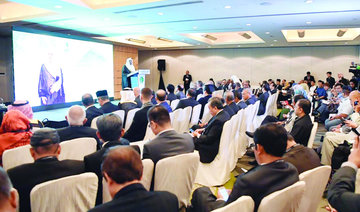
Foreign ministers chair Saudi-Omani coordination council meeting in Muscat

Updated 23 December 2025
Follow

Foreign ministers chair Saudi-Omani coordination council meeting in Muscat

MUSCAT: Saudi Foreign Minister Prince Faisal bin Farhan met with Oman’s Foreign Minister Sayyid Badr bin Hamad Al-Busaidi on Monday.

They reviewed bilateral relations between their nations and ways to enhance and develop them across various fields. Additionally, they discussed regional and international developments.

The ministers co-chaired the third meeting of the Saudi-Omani Coordination Council in the Omani capital, Muscat, with the participation of the heads of the Council’s subsidiary committees and the two heads of the Council’s General Secretariat teams.

The meeting comes as an affirmation of the keenness of Saudi and Omani leaders to strengthen ties and advance them toward greater prosperity for both nations.

In his remarks during the meeting, Prince Faisal affirmed that gathering builds on the previous council meeting, held last year in AlUla, and on its positive and fruitful outcomes within the framework of the approved recommendations and initiatives. 

He stressed the importance of continuing the work of the council’s subsidiary committees to complete the necessary procedures to implement the remaining initiatives, and of the General Secretariat’s role in follow-up and in addressing any challenges that may hinder implementation.

He also underscored the importance of developing and enhancing trade relations, stimulating investment, and strengthening cooperation between the public and private sectors.

He also praised the ongoing work to establish and launch the Coordination Council’s electronic platform, which aims to connect all committee work and initiatives to facilitate follow-up on the Council’s progress. 

Al-Busaidi affirmed in his remarks the qualitative progress in relations between the two countries and the notable development witnessed across numerous sectors toward achieving economic integration and enhancing intra-trade and joint investments. 

The Omani foreign minister also highlighted deeper cooperation in the security and judicial fields, as well as the cultural and tourism sectors, noting the advanced and continuous political cooperation, consultation, and coordination on regional and international issues.