

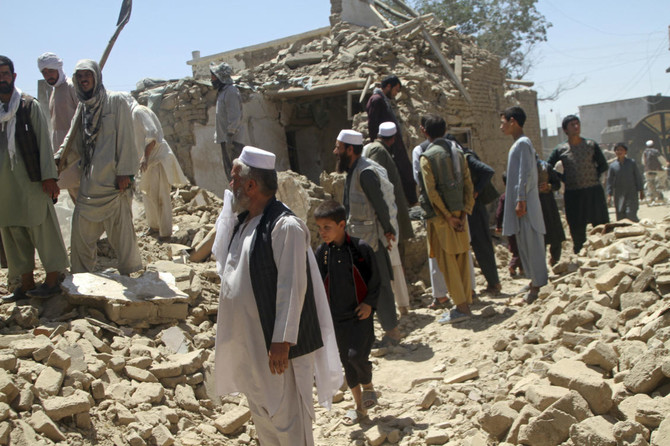
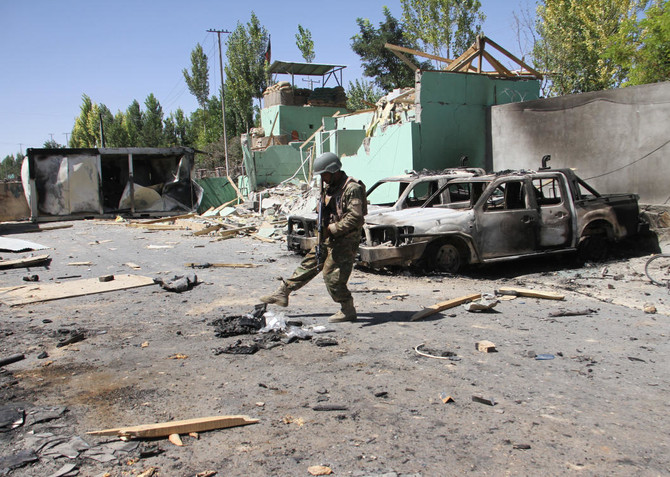
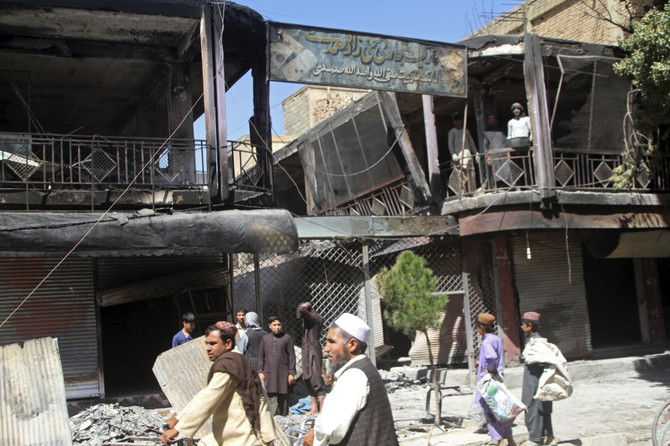
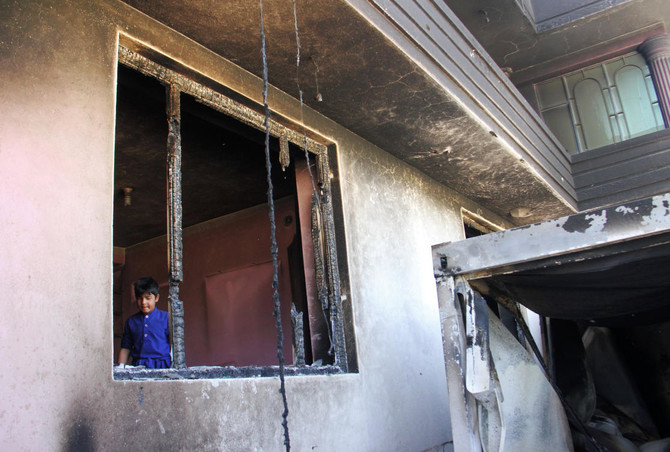
KABUL: Afghan government forces have regained control of Ghazni city after five days of intense fighting with Taliban militants.
National forces, backed by US-led troops, launched a combined operation on Wednesday to force the last of the Taliban fighters from the outskirts of the strategic city.
Afghan President Ashraf Ghani announced that the government was in control of Ghazni and was providing humanitarian aid for people affected by the fighting.
Telephone links and water supply had been restored in the city, and the bodies of those killed in the clashes removed, he said.
“The pain of (the people of) Ghazni is the pain of entire Afghanistan,” the Afghan leader said.
The city, which serves as a gateway to Kabul, almost fell to the insurgents after a major onslaught that sparked five days of intense fighting.
Additional troops were sent from Kabul and joint air attacks were conducted overnight, forcing the militants to abandon their last positions inside the city, as well as the northern and western outskirts, Sayed Ghafoor Javid, chief spokesman for the Defense Ministry, told Arab News.
“Now we conducting a clearing up operation and our focus is to reopen the highway (blocked by the Taliban) between Ghazni and Kandahar. There is no fighting in the city,” he said.
Several police centers that were overrun and destroyed by the militants have resumed operation, he said.
Residents of Ghazni and local reporters confirmed that the fighting had ended and life was returning to normal, with some shops reopening.
Up to 150 civilians and an unknown number of Taliban militants died in the fighting.
The UNs special envoy to Afghanistan, Tadamichi Yamamoto, said: “Reports indicate that the death toll in Ghazni is high, including government forces, Taliban fighters and civilians. Unconfirmed estimates range from 110 to 150 civilian casualties.”
Ghazni’s public hospital was struggling to cope with the continuous influx of injured government troops, Taliban fighters and civilians, he said.
Yamamoto said that the human suffering caused by the fighting in Ghazni highlighted the urgent need for the war in Afghanistan to end.
A Ghazni resident, Ahmad Shafi who traveled by bus to Kabul, told Arab News: “People are exhausted, frightened and have no confidence in the government.”
The Taliban launched their attack on Ghazni from four directions early on Friday. Residents had warned of growing Taliban influence and activity for several months. months.
Tens of thousands of Ghazni residents were trapped in their homes by the fighting — a large number without food, water, power or telephone connections.
Many could not flee because the Taliban had mined key routes out of the city.
The Defense Ministry rejected claims that the Taliban received inside help from government officials and security forces. Speculation grew after 1,000 Taliban militants outfought 4,000 heavily armed government troops.
Javid said it was not known if the government would go ahead with its plan for another truce with the Taliban during Eidul Adha.
A Palace spokesmen failed to respond to calls seeking a comment on the issue.
Ghani announced a two-week unilateral truce during Eid in June. The Taliban responded with a three-day cease-fire, with thousands of militants visiting government-held areas and cities, drinking tea and joining religious celebrations.
However, the Taliban ignored Ghani’s appeal to extend the truce and attacked government forces in areas that the militants had visited.
The truce raised hopes that the two sides were willing to end the war through peace talks. But the Taliban since have escalated their attacks and refused to hold talks with the government.
The Taliban instead held direct talks with US officials seeking ways to end the 17-year conflict.
A Taliban spokesman, Zabihullah Mujahid, told Arab News on Wednesday that the group’s leadership had yet to decide on an Eid truce.
More than 100 security forces, apart from the Ghazni fatalities, have been killed in a series of attacks in the past few days in Afghanistan. On Wednesday, 50 security forces, including 42 at a base in northern Baghlan province, were killed in two strikes, officials said.


