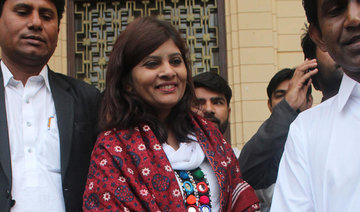
PESHAWAR: Dr. Sumera Shams broke a few stereoptypes on the way to becoming the youngest elected politicians in the history of Pakistan. The 26-year old, a member of Pakistan Tehrik-e-Insaf (PTI) who will soon take her seat in the Khyber Pakhtunkhwa provincial assembly, said she aims to help others to do likewise by working in her new position to help the nation’s youth and empower women.
She comes from Lower Dir, a remote and conservative district of KP where women traditionally have not been considered as candidates by political parties. Undeterred, she was determined to carry on the political legacy of her father, Shamsul Qamar Khan, an Awami National Party candidate who died of a heart attack on polling day in 2008.
“I have proven all the odds wrong that said a young woman, or any citizen at this age, cannot be a legislator,” she said.
A student at the time of her father’s death, Shams joined PTI soon after and began running the party’s female-student wing in KP.
“Student politics is the main nursery for those who want to be seasoned leaders,” she said. She went on to become head of the Insaf Students Federation, focusing in particular on the challenges confronting women and young people in the traditional society. She considers this the start of her political career.
“The only party at that time who welcomed and gave opportunities to young women from remote areas was PTI,” says Shams.
After PTI emerged from the 2018 general elections on July 25 as the biggest party in the center, and in the Punjab and KP assemblies, Shams was chosen by the party to join the KP assembly in a reserved seat for women.
She said that Dir, previously a stronghold of religious-political party Jamaat-e-Islami (JI), had not seen much economic progress or development under that regime, which is why women, in particular, largely rejected it in the latest elections.
“This time, JI chief Sirajul Haq lost by about 40,000 votes, which is the same number of women voters in the constituency,” she said, adding that women in the area had been encouraged and enabled to use their right to vote, and had done so to reject JI.
She said that Lower Dir is now a PTI stronghold because “no human or infrastructural development could be seen in Lower Dir despite repeated rules of JI.”
Shams is a member of PTI’s central women’s executive committee. She practices medicine in the public-health sector as a program coordinator in the Family Medicine Department of the Global Health Directorate-Indus Health Network, and intends to continue to do so, combining her career with her work as a member of the assembly.
Her youth-development priorities include civic education, leadership training and opportunities, and employment after graduation.
“For women, my aim is to establish a women’s university or campus in the underdeveloped Lower Dir district as soon as possible,” she added.


![]()

Youngest-ever Pakistani lawmaker vows to work for youth and empowerment of women
Youngest-ever Pakistani lawmaker vows to work for youth and empowerment of women
- Shams, who is about to take her seat in the Khyber Pakhtunkhwa Assembly at the age of 26, is the youngest legislator in the history of Pakistani politics
- She is from the remote district of Lower Dir, and said Pakistan Tehrik-e-Insaf was the only party to consider fielding a female candidate in the conservative area


Latest updates


© 2026 SAUDI RESEARCH & PUBLISHING COMPANY, All Rights Reserved And subject to Terms of Use Agreement.