


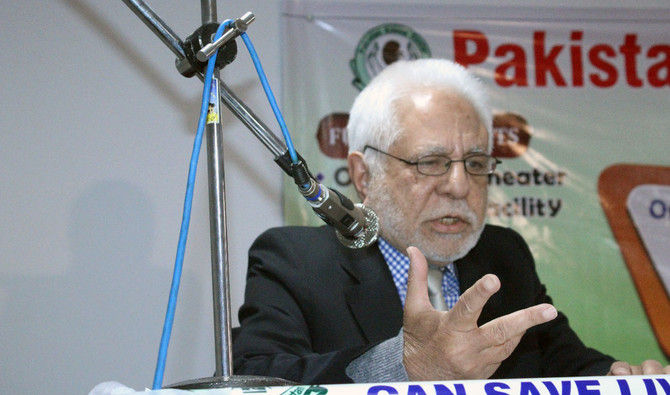
DUBAI: A Saudi doctor who runs a charity hospital near the Pakistan capital Islamabad believes it is his duty to give back to the society where he was born and educated.
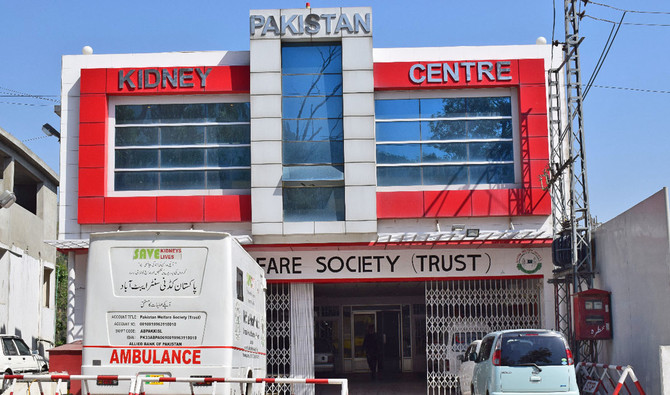
Dr. Farook Rasheed A. Farooki, a Saudi national of Pakistani origin, has opened a free-of-cost charity hospital, the Pakistan Kidney Center (PKC), for poor people in Pakistan.
Farook always wanted to do some charitable work in Pakistan. “I always felt I have a loan to pay to people where I was born, raised, and educated and became a doctor. Hence with the support of close friends, I decided to develop two medical projects back in Pakistan: one to treat kidney disease and the other to have a fleet of mobile units.”
PAKISTANI KIDNEY CENTER
According to the Pakistan Medical Association, Pakistan has the eighth highest number of deaths in the world caused by kidney disease, which cause 20,000 deaths every year while 20 million people suffer from the disease. Chronic kidney disease (CKD) is rapidly growing in Pakistan because of late diagnosis, kidney stone disease and an increasing number of patients suffering from diabetes and high blood pressure.
“There were no facilities for dialysis for kidney patients in my native birthplace, which is a mountainous region near Islamabad. Patients had to travel a long way to cities for treatment, which add to the cost. For a poor patient who depends on daily wages, it was next to impossible. So we decided to build our center in a small town, Muslimabad, which is on a highway from Islamabad to Abbottabad,” said Farook, who moved to the Kingdom in 1969.
The PKC started functioning in April 2015. With 14 machines; it performs 35-40 dialyzes every day. In the outpatient department (OPD), the Center receives 30 to 40 patients per day with kidney-related problems.
“We successfully started our OPD and 14 dialysis machines (which work in two shifts). All machines are fully busy, so much so that we are now considering the third shift of dialysis.”
Farook said it cost him about PKR200 million ($1.41 million) to set up the PKC. “Around PKR75 million was gathered through personal donations of board members and the rest came from friends and philanthropists in Saudi Arabia. Our current running cost is PKR2 to 2.5 million per month, 25 to 30 percent of which is generated by center revenue. The rest comes from donations.”
He said he is now focusing on starting the theater facility as early as possible. “We need at least $100,000 to be fully equipped and functional.
“After starting our theater; our next step is to make 25 beds for admissions and indoor treatment and to establish a research and training center.”
MOBILE HEALTH UNITS
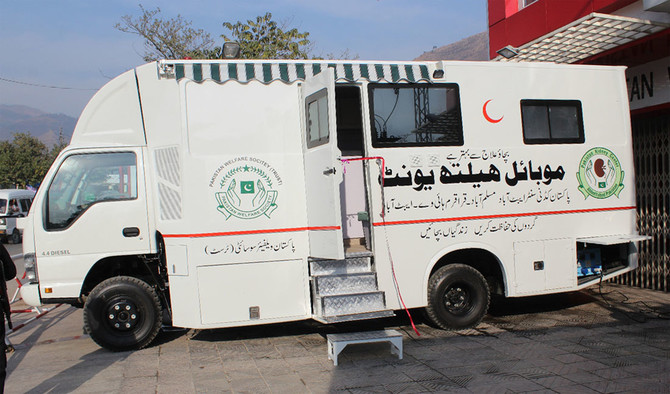
Farook’s other dream project is to establish a network of mobile health units in northern Pakistan. “The northern part of Pakistan consists of very high mountains and small valleys.
The population is huge but scattered. There are no big cities and or even villages. Hence basic facilities, especially health and education, are almost non-existent. So the only way to provide these people with medical care is through Mobile OPDs on a regular basis.”
He said that at present one mobile unit is running on an experimental basis to evaluate how many mobiles are required. He said one equipped mobile unit cost him PKR6 million. “Our mobile units travel to far-flung areas, organize medical camps, provide medicines and create health and disease awareness, spotting serious diseases and bringing the patients to the cities for treatment .”
“We have a long way to go. I have to work very hard. But I have faith in Allah! He will help me to achieve my dream,” said the 70-year old.


