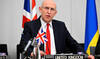
JEDDAH: The Israeli Knesset’s approval of the so-called “Jewish nation-state law” will disrupt international efforts to find a peaceful solution to the Israeli-Palestinian conflict, Abdullah Al-Asheikh, speaker of the Shoura Council, said.
Al-Asheikh called on the international community to assume its responsibilities and “reject this law or any other Israeli attempts aimed at devoting racial discrimination against the Palestinian people and the attempt to obliterate their national identity and their legitimate rights.”
In a speech during the opening session of the Arab Inter-Parliamentary Union at its 28th special session — held at the House of Representatives in Egypt — Al-Asheikh said that the emergency meeting was convened because of recent Israeli attacks on the Gaza Strip, the declaration of Jerusalem as the capital of Israel, and moving the American Embassy to Jerusalem.
The conference reflects the sense of gravity of the situation and its importance to the Palestinian cause, he said.
“Arabic, Islamic and peace-loving peoples hope that the solidarity with the Palestinian people translates into reality, providing Palestinians in general and Jerusalemites in particular safety, freedom and peace,” he said.
Al-Asheikh said that Saudi Arabia reaffirms the centrality of the Palestinian cause, the Arab identity of Jerusalem, the right of the state of Palestine to sovereignty over all the Palestinian territories occupied in 1967, including Jerusalem, and the inevitability of the withdrawal of Israel from all the occupied Arab territories, including the occupied Syrian Arab Golan.
He stressed the adherence to peace as a strategic option to resolve the Arab-Israeli conflict in accordance with the Arab peace initiative adopted by the Beirut Arab Summit in 2002 as a unified Arab project that guarantees the legitimate rights of Palestinians.
Al-Asheikh said that the Kingdom ranks first in the list of countries supporting Palestine, including humanitarian and development support. The Kingdom has provided the Palestinian people with more than $6 billion in aid since 2000.
The Jewish nation-state law “represents a serious turning point, a major decline in the efforts to push the peace process, and a violation of the US historical neutrality on the issue of Jerusalem, which will add to the complexity of the situation in the Palestinian territories.”
Heads of the Arab parliaments and councils lauded the role played by Saudi Arabia in the Palestinian cause as the current president of the Arab Summit, the outcome of the Jerusalem conference, the Dhahran Declaration, and the financial support for Jerusalem and the United Nations Relief and Work Agency for Palestine Refugees.