Migration to Australia hits decade low, seen as boost for prime minister

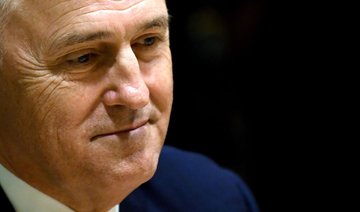
The fall will benefit Prime Minister Malcolm Turnbull, who has seen right-wing lawmakers such as Pauline Hanson win favor with voters after linking rising immigration to record house prices, denting support for the government. (AAP via AP)
Updated 13 July 2018
Follow

Migration to Australia hits decade low, seen as boost for prime minister

SYDNEY: The number of permanent migrants to Australia has hit a 10-year low, thanks to tougher scrutiny of claims, home minister Peter Dutton said on Friday, as the government tries to soothe angry conservative voters who threaten its re-election prospects.
The fall will benefit Prime Minister Malcolm Turnbull, who has seen right-wing lawmakers such as Pauline Hanson win favor with voters after linking rising immigration to record house prices, denting support for the government.
The tougher oversight meant that just under 163,000 people were approved for migration between July 1 last year and June 30, said Dutton, the minister of home affairs, a fall of 10 percent from the previous 12 months, and the lowest in 10 years.
“We are looking more closely at the applications that are made, making sure that we’re bringing the best migrants possible into our country,” Dutton told Australia’s Channel 9.
The immigration scrutiny aims to ensure applicants have real education qualifications and legitimate ties with people approved for Australian residency, he added.
“There has been a widespread feeling that there has been too much migration, so this will help the government,” said Rod Tiffen, an expert in government and international relations at the University of Sydney.
The stricter oversight began last year when Australia scrapped a temporary work visa popular with foreigners, lengthened the wait for citizenship, added a new “Australian values” test and raised the standard of English language use.
With an election less than a year away, Turnbull continues to trail in the polls, though the Australian newspaper’s latest Newspoll pegged the government at its best support in two years.


Australian far-right senator censured over ‘inflammatory’ Muslim comments

Pauline Hanson
Updated 9 sec ago
Follow

Australian far-right senator censured over ‘inflammatory’ Muslim comments

  • The motion called on the Senate to censure Hanson for her “inflammatory and divisive comments seeking to vilify Muslim Australians, which do not reflect the opinions of the Australian Senate or the Australian people”

SYDNEY: Australia’s Senate on ‌Monday censured far-right lawmaker Pauline Hanson over “inflammatory and divisive” comments she made about Muslim people during a discussion about the possible ​return of Australian relatives of Daesh militants from Syria.
“They hate Westerners, and that’s what it’s all about. You say there’s great Muslims out there, well I’m sorry, how can you tell me there are good Muslims?” Hanson said in an interview with Sky News in February.
Penny ‌Wong, leader ‌of Australia’s center-left Labor government ​in ‌the Senate, moved ​the censure motion against Hanson, who leads the anti-immigration One Nation party.
The motion called on the Senate to censure Hanson for her “inflammatory and divisive comments seeking to vilify Muslim Australians, which do not reflect the opinions of the Australian Senate or the Australian people.”
It passed with the ‌support of the minor ‌Greens party and two senators from ​the conservative Liberal ‌party who crossed the floor. “This censure motion is about ‌drawing a line and sending a message to the people of faith in this country and sending a message to children in this country that your leaders ‌believe that condemning an entire religion is not acceptable,” Wong said. Hanson called the motion a “stunt” before storming out of the chamber.
A senator for Queensland, Hanson first rose to prominence in the 1990s because of her strident opposition to immigration from Asia and to 
asylum seekers.
Recent opinion polling shows Hanson’s One Nation has overtaken the country’s ​conservative opposition coalition, ​with 28 percent of the primary vote amid rising support for anti-immigration policies.