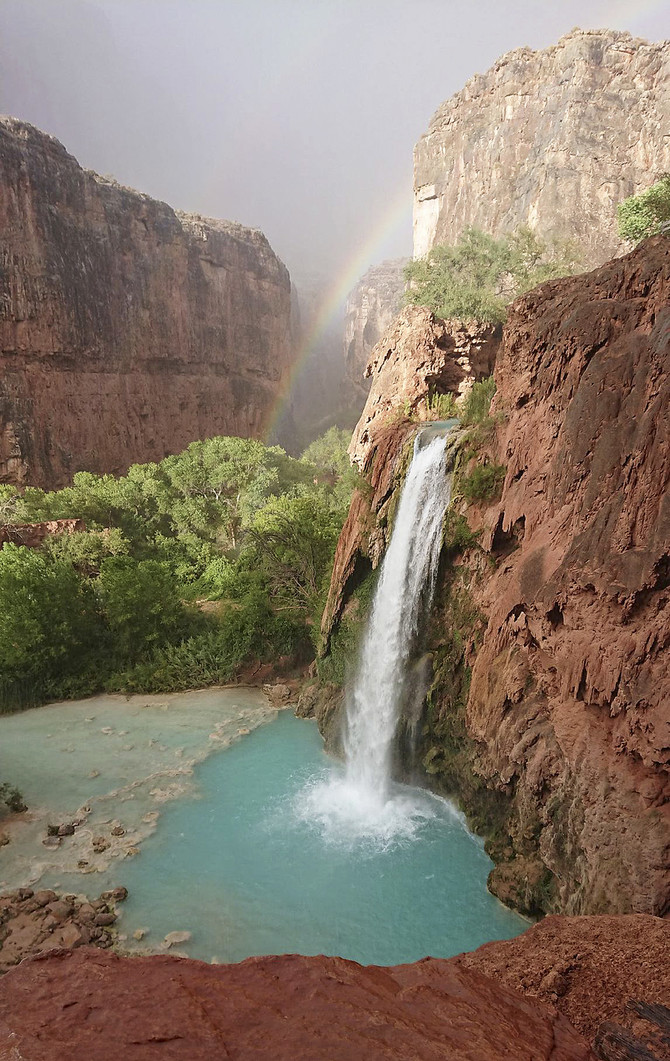
FLAGSTAFF, Arizona: Torrents of water rushed Thursday through an Arizona canyon famous for its towering blue-green waterfalls, sending tourists scrambling to benches, trees and caves as they sought higher ground.
Rescue workers evacuated most of the 200 tourists after two rounds of flooding hit the Havasupai reservation, deep in a gorge off the Grand Canyon.
All the tourists were accounted for and no one was seriously injured when heavy rain began falling Wednesday evening and before dawn Thursday, swelling a shallow creek that runs through a reservation campground, said tribal spokeswoman Abbie Fink.
Tourist Benji Xie said people were swimming at the base of waterfalls when the flash flooding struck. He and his friends ran up to a bathroom with other campers to wait out the rain.
“The sky opened up. Winds started blowing, sand was blowing everywhere and rain was coming down in sheets,” he told The Associated Press on Thursday.
Water sloshed up around people’s tents, and Xie said he his friends warned other campers to flee. Some were stranded on islands that formed in the water, while others climbed trees, stood on benches or took shelter in caves, he said.
The tribe used ATVs, rope and manpower to get dozens of tourists from the campground below the village of Supai to a school, where they spent the night Wednesday and were given food and supplies.
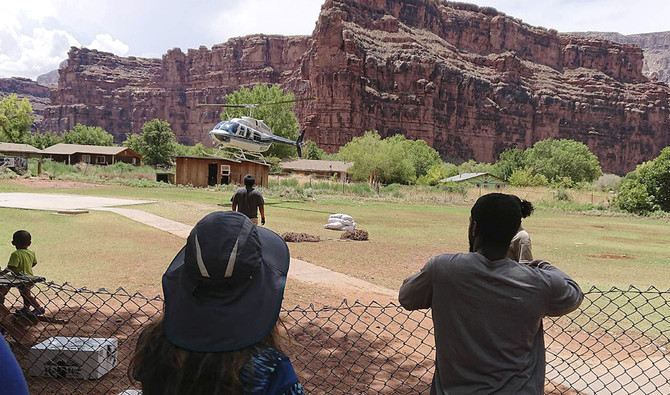
A single helicopter flew about five tourists at a time out of the village to a parking lot at the head of an eight-mile trail to Supai, Fink said. Several were still waiting their turn early Thursday evening, she said.
Officials will start assessing the damage Friday to determine when it’s safe for tourists to return. Fink said the reservation will be closed to visitors for at least a week.
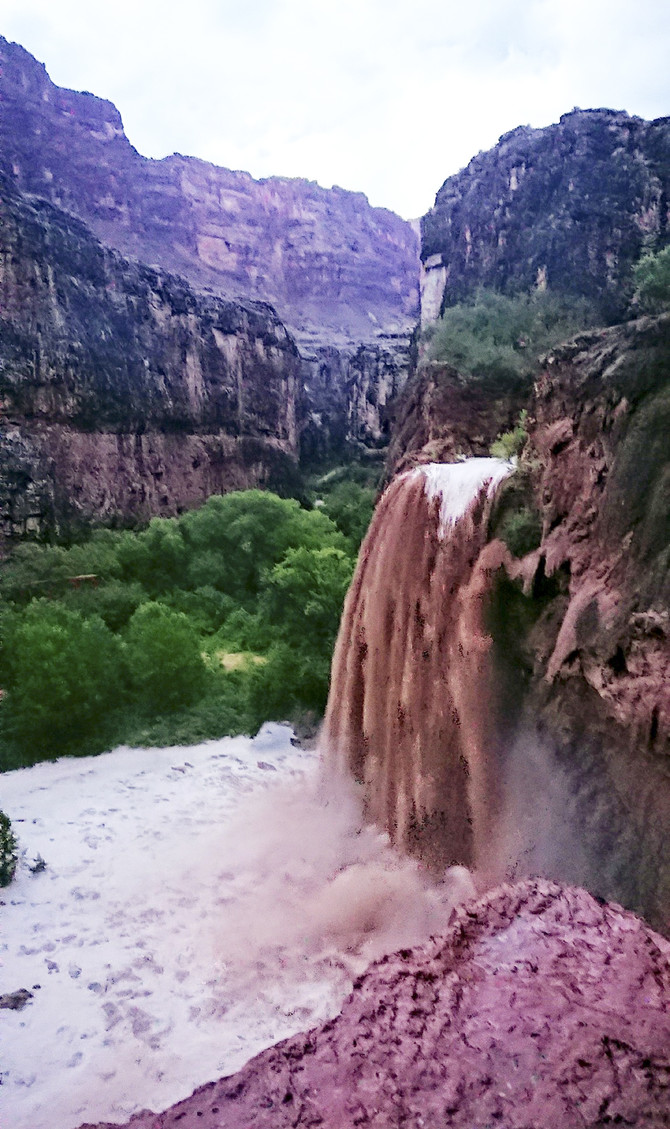
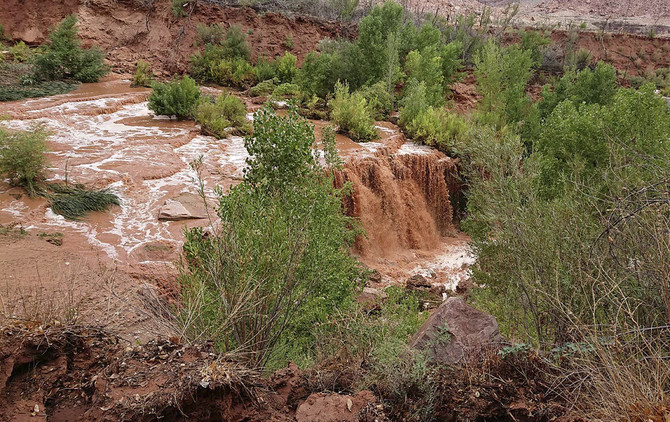
Posts on social media showed muddy water roaring through the canyon that is prone to flooding.
During monsoon season, rain can fall heavy and fast. Flood waters often rush unexpectedly through normally dry canyons and washes, sometimes with tragic consequences.
Ten members of an Arizona family were killed last July when a torrent of rain water rushed through a swimming hole in a canyon northeast of Phoenix. In another incident, seven people died at Utah’s Zion National Park in September 2015 when they were trapped in a flash flood while hiking at a popular slot canyon.
On Thursday, rather than panicking, Xie said most of the campers were in a state of disbelief about what had happened. Still, he said he would not hesitate to return to the pristine waterfalls.
Tourism is the lifeblood of the tribe’s economy, with many residents making a living by working in the area’s lodge, cafe and small store, or packing camping gear onto the backs of mules headed up and down an eight-mile trail. Spots in the campground sell out quickly every year.
The canyon is accessible only by foot, helicopter or mule ride, making it crucial to have as much of a heads-up as possible when floods are approaching so people can seek higher ground.
Brian Klimowski of the National Weather Service in Flagstaff said the agency contacted the tribe around 6:30 p.m. Wednesday with a flood advisory for the area.
The hard rain hit about 45 minutes later and a stream gauge noted a four-foot rise in Havasu Creek, he said. Another gauge downstream of the Colorado River showed an eight-foot rise in water levels, he said. The creek rose again at 2 a.m. Thursday.
In both cases, water receded within two hours, he said.
“That’s a steep-walled canyon with a relatively flat bottom on it,” he said. “When the water rises, it can engulf a significant part of the canyon area, and that’s what happened down in the campground.”


![]()
![]()
![]()
![]()

Flash flood sends tourists to high ground near Grand Canyon
Flash flood sends tourists to high ground near Grand Canyon
- Rescue workers evacuated most of the 200 tourists after two rounds of flooding hit the Havasupai reservation, deep in a gorge off the Grand Canyon.
- During monsoon season, rain can fall heavy and fast. Flood waters often rush unexpectedly through normally dry canyons and washes, sometimes with tragic consequences.


Latest updates


© 2026 SAUDI RESEARCH & PUBLISHING COMPANY, All Rights Reserved And subject to Terms of Use Agreement.