BEIRUT: Yemen’s foreign minister has called on Lebanon’s caretaker government to “rein in” Hezbollah and its aggressive tactics in support of the Iranian-backed Houthi militia.
“The Republic of Yemen reserves the right to present the matter to the Arab League, the Organization of the Islamic Conference and the Security Council,” Khalid Hussein Al-Yamani said in a letter to Lebanese Foreign Minister Gebran Bassil. The contents of the letter were aired by Sky News.
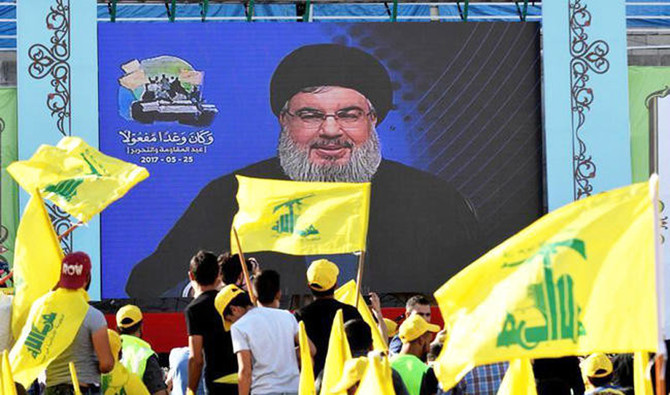
Al-Yamani said that Hezbollah’s support for the Houthis was evident in a recent televised address by its Secretary-General Hassan Nasrallah, who called on the Houthis to fight the Yemeni government forces, and expressed “his party’s ambition to fight in Yemen against the internationally recognized legitimate authority.”
The foreign minister described the address as “blatant interference in the internal affairs of my country, which would seriously damage Yemen’s national security and fuel the flames of war.”
“The Yemeni government condemns Hezbollah’s statements and practices, including participation in training, planning and incitement and supporting the coup movements,” he said.
The Arab coalition said on Monday that it had evidence of Hezbollah’s involvement in training Houthi militias.
The Lebanese Foreign Ministry did not comment on the Yemeni demand.
However, Mustafa Alloush, of the Future Movement, told Arab News: “The meaning of this message is that Hezbollah’s damage to Lebanon continues.
“The Lebanese government will not respond to this message, not because it supports Hezbollah but because it is unable to restrain the party,” he said.
The situation in Yemen was the focus of a recent meeting between UAE Ambassador to Lebanon Hamad Said Al-Shamsi and the UN Coordinator in Lebanon, Bernell Dahler Cardel.
Al-Yamani said that talks focused on “the integrated humanitarian plan that is being implemented to ensure easy access and provision of aid, as well as the protection of unarmed civilians through close coordination between the legitimate forces and international humanitarian organizations.”
He highlighted support for the efforts of UN Special Envoy Martin Griffiths, confirming that Houthi militias should withdraw from territories they occupied illegally as a prerequisite for accelerating peace negotiations.