PESHAWAR: Mehboob Shah, 48, a farmer from North Waziristan tribal region bordering Afghanistan, is all set to cast his vote for the first time in his life amid brimming enthusiasm after the Pakistan government officially allowed political parties to canvas for the fast-approaching election to be held on July 25 in the once lawless Federally Administered Tribal Areas (FATA).
Long regarded as a sanctuary for militants, FATA is a region where unprecedented zeal has be seen among tribal masses since it was mainstreamed. It has experienced bloody clashes between the security forces and the Taliban, followed by a mass exodus of tribal families during the last decade.
Shah said that the streets of Wana, the headquarters of South Waziristan tribal region, have been decorated with colorful parties’ flags with music resonating from the jagged mountains.
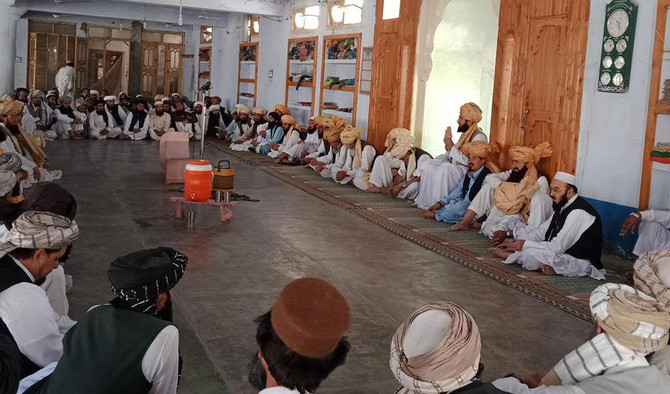
Jubilant election contenders and their supporters stage Attan (a traditional tribal dance) on a drumbeat to attract more and more voters as canvassing gains momentum.
Only a decade ago, the Tehrik-e-Taliban Pakistan and other militant groups held sway over large swaths of FATA with their excruciating rule that saw tribal families migrate down to districts of the country.
According to the Ministry of States and Frontier Region, the post-9/11 conflict in Afghanistan and repeated military operations in FATA had to displace 337,915 families in 2014 to banish terrorism and militancy from the tribal region.
The government has now completed the repatriation process of the displaced families to their hometowns in FATA, followed by the mainstreaming of the once violent region.
The outgoing government had formed FATA Reforms Committee for mainstreaming of the region on Nov. 8, 2015, leading to the merger of FATA with Khyber Pakhtunkhwa (KP).
“I don’t know how to vote but I am just told that my vote is priceless and can help elect an honest and sincere person. If this is the case, I will bring all my family members to exercise our democratic right in the larger interest of our war-ravaged region,” Shah told Arab News by telephone from Miranshah, the headquarters of the adjacent North Waziristan region.
According to SAFRON, the total population of FATA is 3.18 million but the last year census conducted by Pakistan Bureau of Statistics (PBS) stated that it has reached to 5,001,676.
The figure projected by the Election Commission of Pakistan (ECP) was that FATA has total registered voters in final electoral rolls-2018 are 2,510,154 with 1,507,902 male voters and 1,002,252 female.
A total of 120 political parties are registered with the ECP. The mainstream parties such as Awami National Party, Jamiat Ulema-e-Islam-Fazl, Pakistan Muslim League-Nawaz, Pakistan Tehrik-e-Insaf, Pakistan People’s Party have awarded tickets to candidates in FATA, which has multiplied political activities.
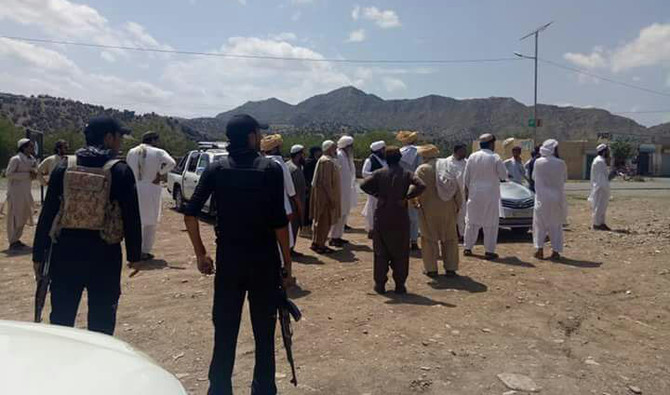
As canvassing and electoral campaigns gain momentum in many parts of the tribal region including South Waziristan, North Waziristan, Khyber, Bajaur, Kurram, Mohmand and the Frontier Regions, long queues of election candidates’ vehicles can be seen visiting towns to garner public support.
Tribal elders and analysts believe the historic election amid political activities in FATA will go a long way to discourage militants’ tendencies, arrest peace and multiply development activities in the war-ravaged region, which shares a long but porous 2,400-kilometer border with Afghanistan.
Zakia Wazir, a female social activist from FATA, said that the younger generation of today’s FATA is well aware about their constitutional rights as compared with those of people of the region a decade ago.
“After the extension of political act to FATA, hectic political activities spearheaded by educated persons will for sure bring drastic changes to the war-torn region. The election in FATA will usher an era of progress, prosperity and development,” she said.
As election activities add color to the gloomy environment in FATA, what makes the ballot more interesting is the emergence of Pashtun Tahaffuz Movement, or Pashtun Protection.
The political parties had little representation in the 2013 general election in FATA, but before that they had not been allowed to operate in FATA since the country’s independence in 1947.
Rustam Shah Mohmand, Pakistan’s former ambassador to Kabul and expert on FATA affairs, is pessimistic about the election bringing any positive change to the region.
“I think the election will make no difference in changing the lives of tribal people for good. The mainstreaming of FATA is a long, drawn-out process which will divert development resources toward building of new offices and infrastructure for different government departments and institutions,” he added.
This is for the first time in the history of Pakistan that the people of FATA will equally took part in the general election.
Before the mainstreaming of the region this year, FATA was being governed under draconian British-era law known as Frontier Crimes Regulations, under which the entire tribe was responsible for the crime committed by one person.
For most of the tribesmen and tribeswomen of the once violent tribal belt, the forthcoming election will bring drastic changes to the region. “We all are very enthusiastic about taking an active part in the voting process because vote tends to bring changes,” said Noorudin Mehsud, a transporter in South Waziristan.
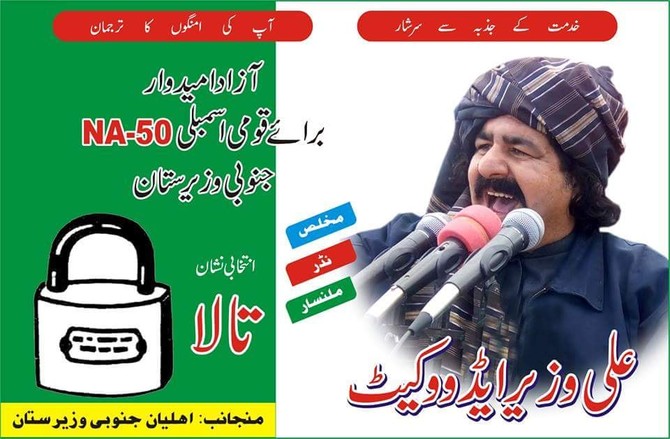
It has a decades-old tradition, which still somehow persists, that independent candidates from FATA have had to secure their win in the past elections because of tribal ethnicities. The independent candidates used to support a party with majority seats in the center (Islamabad) to become part of the government to have access to state resources.
As political parties are busy canvassing in FATA, the next government will rely on support or alliance from independent candidates from tribal areas.
“I, as well as my family, will only vote for an educated person who will provide our children with quality education for a better tomorrow because we have seen the worst in the shape of militancy,” Shah concluded.


![]()
![]()
![]()
![]()
![]()
![]()
![]()
![]()

FATA is all set to vote for first time in Pakistan’s history


FATA is all set to vote for first time in Pakistan’s history
- FATA has experienced bloody clashes between the security forces and the Taliban followed by a mass exodus of tribal families during the past decade
- This is the first time in Pakistan’s history that the people of FATA will equally take part in the general election


Latest updates


Recommended


© 2026 SAUDI RESEARCH & PUBLISHING COMPANY, All Rights Reserved And subject to Terms of Use Agreement.