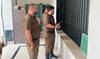
ISLAMABAD: Election time is here and PTI’s Imran Khan recently got himself into gear with a visit to the shrine of Baba Fariduddin Ganjshakar, a revered Sufi saint. The visit went in a few moments to a full-on news and social media meltdown.
On arriving at the shrine, accompanied by wife Bushra Maneka and a few PTI members, the chairman appeared to prostrate in front of the doors to the shrine. Sajda in Islamic tradition and prayers is reserved only for Allah, and only in the direction of the Ka’aba with nothing obstructing the path.
The action led to a media firestorm that played out across television channels and sparked heated exchanges across social media, leading to the man himself explaining his actions while being interviewed by Dunya News.
“You can’t be Muslim without believing in Allah and Prophet Muhammad (PBUH). This was not prostration, it was done in respect of Baba Fareed who was a great Sufi saint,” said Khan.
Some took him for his word and others were shocked and expressed disbelief at the videos. Many said this was meant to distract from his politics, while others blamed his conservative wife for her influence.
This @ImranKhanPTI is an #Oxford graduate & he’s planning to become #PM by doing these #Woodoo type of rituals not planning or organizing or doing any practical management because he knows #Pakistanis can be fooled by “Anything” IN THE NAME OF #Religion pic.twitter.com/BoNr6iQ3Ix
— #Quetta (@Shahid_Pashteen) June 29, 2018
Highly disappointed. No more support for this man. He has lost it.#ImranKhanSajda@ImranKhanPTI
Sajdah is permissible only to Allah. Not to anyone else even out of respect or for kissing. Very thin line crossed today. Now please stop coming up with excuses to cover up!— Zuha Bari (@ZuhaBari) June 28, 2018
Ok for the first time ever can't justify this guy. This sajda at the mazaar! Really? Dunno who is teaching him what but this just did it for me! #getyourprioritiesright #ImranKhan
— ℳ. (@mishkaz) June 28, 2018
Meet the man who wants to be Pakistan's next prime minister. Meet @ImranKhanPTI and his saintly white-robed burka woman wife Pinkie.
How does one country produce so many rectums? How do they do it? pic.twitter.com/Z0uOhLnllH— Tarek Fatah (@TarekFatah) June 29, 2018
God help us all @ImranKhanPTI need some serious help. Feeling sorry for him after watching this. pic.twitter.com/bGW9stXXEa
— Sadiajaved (@Sadiajavedppp) June 29, 2018
If there's one thing to learn from @ImranKhanPTI, it's that he doesn't have double standards. He is what he is...like it or leave it. Whatever you may think of him, the way he practises his faith, his personal life, his style of politics, is your issue.
He does not give a damn!— Soraya Aziz (@SorayaAziz) June 28, 2018
I humbly request all those in pursuit of declaring @ImranKhanPTI a non-muslim to please refrain from bringing into discussion Baba Farid Ganjshakar or his shrine in a derogatory way.
— Pansota (@Pansota1) June 29, 2018
Whether #ImranKhan did a sajda/dhamaal or kissed the ground, who the hell are you guys to pass fatwas? Since when did God need you to do his job of judging and deciding? Insaan k bachay bano, Khuda ka kaam ussi pe chor dou jaahilo!!
— Humayra (@Humayrah1358) June 28, 2018
Sajda is only for Allah, I only kissed the floor of the Mazaar out of my respect for the great individual that he was, for his services to Islam :: @ImranKhanPTI
#IKonDunyaTV #AbSirfImranKhanBallayPeNishan pic.twitter.com/mhXDVuhsTz— PTI KP (Official) (@PTIKPOfficial) June 28, 2018
You can bow down and kiss the floor a million times it won’t be regarded as a Sajdah UNLESS you have the intention (niyaat).
That said, instead of wasting time on someone’s religious beliefs and ideology how about mastering your religion yourself first? #ImranKhan #ImranKhanSajda— Nayaab Khan (@nayaabkay) June 28, 2018