EXCLUSIVE: Listen to ‘Code,’ the new single from Jordanian singer-songwriter Hana Malhas
Updated 07 June 2018
Adam Grundey
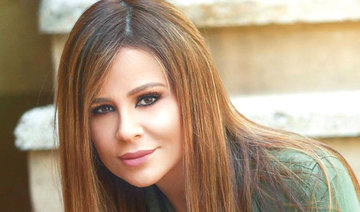
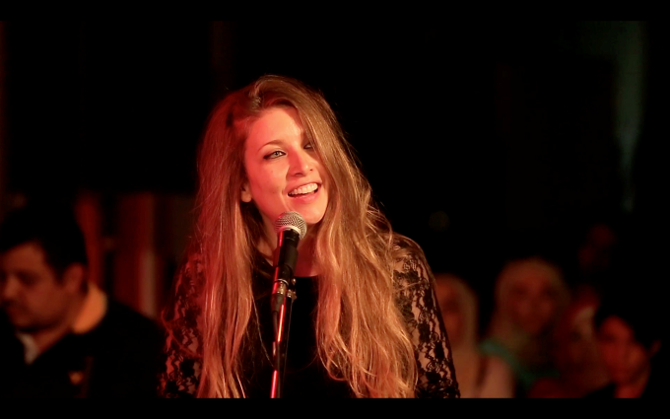
DUBAI: Jordanian singer-songwriter Hana Malhas releases her new single, “Code,” on Friday, June 8, and Arab News has an exclusive preview of the track below.
Malhas is a prominent figure in the region’s alternative music scene, not just for her own work, but also as the host and founder of the online Amman-based concert series Bala Feesh, which has given a platform to a number of the region’s best underground artists over the years.
“Code,” the second release from Malhas’s debut solo LP “Nasi,” set for release on Universal Music MENA on August 3, is something of a departure from Malhas’ previous work, introducing a contemporary electronic vibe to her more common acoustic, folk-y sound. That “very pop, very summer,” feel she told Arab News, is partly due to the input of her producer, and co-composer, Khaled Nimry.
“We worked together for a long time and you can definitely see his influence in the electronic elements in the songs. He sort of expanded a lot of my writing experiments,” Malhas said.
While the track is clearly a pop song, Malhas’ lyrics give it a depth that the genre doesn’t always display. “On one level it’s a very light, summer pop song, but it’s also about coded communication with people who get you caught in loops and patterns,” she explained. “And how time can pass without you knowing that you’re repeating loops and patterns. Basically, it’s saying, ‘Let’s change course.’”
Malhas has already released the album’s title track — her first Arabic language release — a “nostalgic,” slower-paced number which shared a lyrical theme with “Code” and, she said, the rest of the album: “Each song takes an element of our interaction with time.”
And she believes that dropping “Code” as the next single gives her audience a good idea of what to expect from the album in the fall.
“The idea behind releasing “Nasi” then “Code” is to tell the listener that the album is going to be a mix between the two worlds,” she said. “It kind of represents my journey, musically, from acoustic to somewhere more in-between acoustic and electronic.”
Listen to an exclusive preview of Hana Malhas’ “Code” below:
French Syrian artist Bady Dalloul on his Dubai solo exhibition
‘To make art your living requires a reason; a very deep meaning,’ says Bady Dalloul
Updated 9 sec ago
Adam Grundey
DUBAI: Last month, Syrian-French artist Bady Dalloul was shortlisted for this year’s Ithra Prize. In his solo exhibition “Self-portrait with a cat I don’t have” — which runs at Dubai’s Jameel Arts Center until Feb. 22 before moving on to Lisbon, where it opens in September — Dalloul “repurposes everyday materials … to create surprising dialogues across cultures and genres,” the show catalogue states, adding that he, “importantly, connects non-Western cultures … outside of conventional Eurocentric delineations and gaze.”
Dalloul was born and raised in Paris. His Syrian parents were also artists. This, he told Arab News, meant he had “room to express myself (creatively) without feeling uncomfortable about it” but also that he was “surrounded by their struggles” and came to understand “what it means to devote your life to a passion that doesn’t pay.”
He continued: “So I also grew up with this idea that, if I’m doing it — if I also choose to make it my living — it requires a reason; a very deep meaning. And I should be ready to sacrifice a few things.”
It wasn’t until he was almost 30 that Dalloul felt ready to commit fully to that sacrifice. That meant he was entering the art world at a time when Syria was in the global media spotlight.
“I was well aware that, as someone French of Syrian heritage — in the context of the civil war in Syria and all these images that were on screens daily — I was expected to speak about Syria. I was expected to have an opinion, to have a position in visual art, about it.” While he understood those expectations, they were not necessarily comfortable for him.
“It started these thoughts of … not ‘Choose your side,’ but ‘How can you make both cultures cohabit in your mind, in your story, in your visual art?’” he said.
It was his years in Japan that brought some clarity. He had visited the country while studying — his professor “had a love story with Japan” — and “found that perhaps this country could be amazing for what I do.” He moved there in 2021 for an artist’s residency, and ended up staying much longer than intended as the country was in COVID lockdown. He is currently based in Dubai.
“It came at just the right time,” he said of his move to Japan, “because it allowed this introspection, this distance. Being in the Japanese culture allowed me to really think about where I grew up. What did my parents do when they made their migration in the 80s? What is it to become part of a new country? My parents became French. Some of my friends in Japan from Syria became Japanese. I saw the struggle of their children mirroring my own story in France. And during this period of time that I spent in Japan, I felt that the conversation with people outside of Japan was no longer about Syria or France only, but it was now also about Japan. So, through my migration, I was able to change every conversation. And this was, for me, the greatest success: I was able to speak about something else.”
Here Dalloul talks us through some of the works in his solo exhibition.
‘Badland Notebooks’
Badlands Notebooks - Bady Dalloul. (Supplied)
My whole practice started as a game with my little brother, Jad. We used to go every summer from Paris to our grandparents’ home in Damascus. One long, very warm summer when I was about 11, we were very bored. So we imagined this game. Using notebooks belonging to my grandfather we became kings of fictitious countries — Jadland and Badland. The more we drew, the more we made collages, the more these countries were real to us. The two notebooks that are exhibited in the show are just two of the most visual among the seven notebooks that we have. I think it was a way to have a grip on our daily lives. And now it seems like a reflection, to me, on the differences of culture, of economic development, of politics, that existed between Paris and Damascus. This created this inspiration to draw and make collage and write about these fictitious countries for years. It became an obsession that I continued for years, without understanding what it would lead to.
‘Self-portrait with a cat I don’t have’
Self-portrait with a cat I don't have - Bady Dalloul. (Supplied)
This was made in Japan. I think it’s one of the first self-portraits I ever made. I’d been reading a book called “The Blue Light” by the Palestinian writer Hussein Barghouthi. It’s about a man who decides to emigrate to a small city on the west coast of America, and as he walks at night, he remembers stories from his childhood; relations with his parents, relations to his land, relations to history, sometimes, but in this very wandering, eerie atmosphere. It seems like a dream, and it really resonated with me as I had just migrated to this new place, far from my parents, far from my friends, but nonetheless still amazed by my walks at night and day and finding parallels (with the book). And on the cover of the book — the French version that I was reading — was a painting by an Egyptian surrealist named Abdel Hadi Al-Gazzar depicting a man with a cat. I really loved it, so I decided to do my own version with myself instead of the man and a cat which I don’t have. In the background, you have scenes of Tokyo. The frame is an old wooden box. Aren’t we all boxed in? Inhouses, at work, in our life, sometimes in metros, in cars, okay, in many places, and Japan has a lot of boxes, just in daily life, so it just came very naturally.
‘Matchboxes’
Matchboxes. (Supplied)
These are 173 of 800 drawings that I’ve made in matchboxes over about 10 years. They’re the result of a daily practice of drawing that I started in 2016. At first, I was depicting mostly scenes of the Syrian civil war, because it was everywhere, and I was in France, and it was my way to cope, somehow, with this never-ending influx of images and articles depicting my fellow countrymen. The contrast between those images and my memories of summers at my grandparents’ home was torturing me. Drawing these allowed me to, I think, digest the images and somehow make them mine. We can try to analyze this in a psychological way, but I’mnot an expert. Sometimes, it’s almost like a gut feeling: I just need to get this out. Somehow the drawing itself makes it less horrendous to me. Lookable. It makes it lookable, but not likeable. This is also a way to highlight the existence (of these things), and at the same time put them within a group of other kinds of images that are more humorous sometimes, or just more light, just to make them more acceptable.
Later, the drawings became more like a diary. So some of them are depicting my life when I was in Japan — like, my residence card; where I used to live, above a real-estate agency. It’s a mix-and-match. One day I draw Salman Rushdie, the next a cafe where I used to go. A good friend. Me reading in my home. A ramen restaurant I used to go to. A famous Japanese writer. Then here are Russian mercenaries; here is a bombing…just the violence of conflicts. How do you digest that when it’s not just images on TV, it’s part of your world or the area you live in, or when it’s part of your heritage, when it belongs to the history of your friends or of your family? You can’t escape it. So you speak about it. I think what I what I try to do, in fact, is, understand the point of view of the other. I’m not pointing fingers. In a very, very polarized world, when I’m putting these images all together, I’m trying to just get to the point of understanding where this person is coming from to have the opinion they have. Not to forgive him or her, but to have a point of dialog, yeah? You don’thave to agree with them. You don’t have to like them, but you have to try and understand. Once you talk with someone face to face, you’re less likely to hate them. It’s very difficult to hate someone when you’reactually speaking them, as long as they’re civil and trying to listen and talk to you as well.
‘Age of Empires’
Age of Empires - Bady Dalloul. (Supplied)
This is named after the video game where you build a civilization and try to conquer others. I made collage and drew on an existing Japanese book of astrology — onmyodo. In this book, they were supposedly interested in trying to translate the meaning of the shapes appearing in our body — features that would determine our fate from birth. So I thought: “What about empires? What if we see elements of the British Empire, but also the Russian, the Japanese? The Portuguese?” It’s, like, a sort of Noah’s Ark full of empires that are undefined. And in the middle of it all, you have these people trying to stay focused: people trying to live their lives.
‘Ahmad the Japanese’
Ahmad the Japanese - Bady Dalloul. (Supplied)
This is a 48-minute film based on video collage, my voiceover, and found footage. Ahmad is an archetypal character. He is a fiction — an (amalgamation) of the stories of several people that I’ve met who became my friends. It carries all their stories. I chose the name Ahmad from a poem by Mahmoud Darwish, the Palestinian poet, who wrote a beautiful text “Ahmad Al-Zaatar.” It’s about a man — but it could apply to a woman too — born in a camp at the end of the Seventies who has no future. When you read this poem, nothing has changed more than 40 years later. It’s not only about a Palestinian born in a camp, but about,unfortunately, many Levantine citizens. And in this film I imagine, “What if Ahmad migrated to Japan?” So it tells the story of his supposed migration, his reflections on family, on a region that he has left, a bit on what happened after the Arab Spring, on love, and on loneliness. Migration is hard work. It’s very hard. You’re starting from scratch. It sometimes like a reincarnation — a new life. Some have the luxury to travel as expats, and some can only travel as migrants. And what’s the difference between these two? There is, I think, a luxury in a conversation that we can have as holders of passports that allow us to travel.
‘Kamen Rider Dislocation’
Kamen Rider Dislocation - Bady Dalloul. (Supplied)
This is one of my collage books. When you make a collage, you decide to keep the original medium; to not interfere with it. And next to it — if you decide, for instance, to draw or write — you put your own touch on something that is already existing. The importance of collage is making the original material communicate with other material that would otherwise never have met. So this, originally, is a “Kamen Rider” book. “Kamen Rider” is a famous TV show in Japan about a masked knight bringing evil characters to justice. When I found this children’s book, right away I thought, “These are beautiful images.” But they’re so foreign to me. So, what images could relate to my experience? I made this book after meeting someone born in Tokyo, growing up in Japan, with Pakistani parents. He told me about his life there. And I imagine in this book the interference of two worlds — the inner world and the outer world. So, the inner world: What you have inside the house, your culture, your food, your habits, the products that you use. Your imagery, you know? And the outer world: You take the metro to go from your neighborhood to your workplace. You get your residency card. You get images on TV that sometimes do not reflect who you are — children of a foreign background growing up in Japan, but growing up with myths and legends from your (parents’ culture) and juxtaposing it with what you see on TV. It’s just a mix-and-match. But if I’d drawn all of this, it would have had a differentmeaning than using found materials.