HONOLULU, US: The Hawaii community hardest hit by the Kilauea Volcano was ordered sealed off under a strict new mandatory evacuation on Thursday as the eruption marked its fourth week with no end in sight.
The Big Island’s mayor, Harry Kim, declared a roughly 17-block swath of the lava-stricken Leilani Estates subdivision off-limits indefinitely and gave any residents remaining there 24 hours to leave or face possible arrest.
The mandatory evacuation zone lies within a slightly larger area that was already under a voluntary evacuation and curfew.
The latest order was announced a day after police arrested a 62-year-old Leilani Estates resident who fired a handgun over the head of a younger man from the same community, apparently believing his neighbor was an intruder or looter.
The confrontation on Tuesday was recorded on cell phone video that later went viral.
But the mandatory evacuation was “decided prior to that incident,” said David Mace, a spokesman for the Federal Emergency Management Agency currently assigned to the Hawaii County Civil Defense authority.
Civil defense officials have previously said about 2,000 residents in and around Leilani Estates were displaced at the outset of the current eruption, which began on May 3.
But the total number of evacuees was estimated to have risen to about 2,500 after authorities ushered residents from the nearby Kapoho area as a precaution on Wednesday, as a lava flow threatened to cut off a key access road.
At least 75 homes — most of them in Leilani Estates — have been devoured by streams of red-hot molten rock creeping from about two dozen large volcanic vents, or fissures, that have opened in the ground since Kilauea rumbled back to life four weeks ago. Lava flows also have knocked out power and telephone lines in the region, disrupting communications.
Besides spouting fountains of lava around the clock, the fissures have released high levels of toxic sulfur dioxide gas on a near constant basis, posing an ongoing health hazard. Meanwhile, the main summit crater has periodically erupted in clouds of volcanic ash that create breathing difficulties and other problems for residents living downwind.
The heightened volcanic activity has been accompanied by frequent earthquakes, as magma — the term for lava before it reaches the surface — pushes its way up from deep inside the earth and exerts tremendous force underground.
After a month of continual eruptions at Kilauea’s summit and along its eastern flank, geologists say they have no idea how much longer it will last.
“There’s no sign we’re getting that anything is going to slow down at the moment,” Wendy STOVL, a vulcanologist for the US Geological Survey, told reporters on a conference call on Thursday. “We don’t see any changes occurring.”
The island’s mayor on Wednesday renewed an emergency proclamation for 60 more days, allowing construction of temporary shelters and other relief projects to proceed on an expedited basis, without reviews and permits normally required.
The month-old eruption of Kilauea, one of the world’s most active volcanoes, followed an eruption cycle that had continued almost nonstop for 35 years.
Stovall said geologists now believe the latest upheaval should be classified as a separate volcanic event, though an official determination has yet to be made.

Mandatory evacuation ordered as Hawaii eruption hits 4-week mark
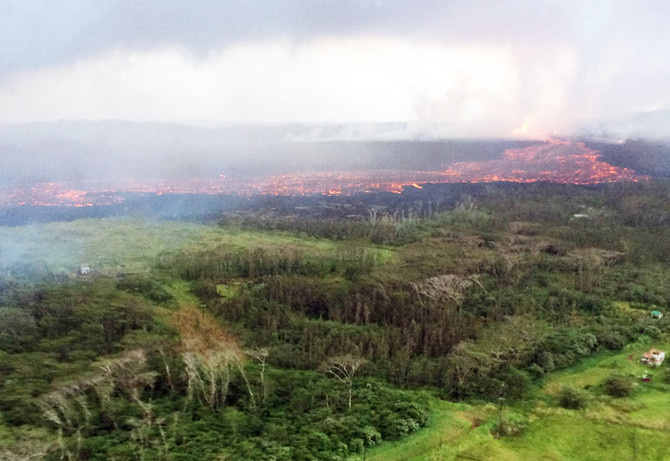
- The mandatory evacuation zone lies within a slightly larger area that was already under a voluntary evacuation and curfew.
- Civil defense officials have previously said about 2,000 residents in and around Leilani Estates were displaced at the outset of the current eruption, which began on May 3.
France’s screen siren Brigitte Bardot dies at 91
- French PM Emmanuel Macron hails the actor as a legend who 'embodied a life of freedom'
- Film star also courted controversy, embracing far-right views in her later years
PARIS: French film sensation Brigitte Bardot, a symbol of sexual liberation in the 1950s and 1960s who reinvented herself as an animal rights defender and embraced far-right views, died on Sunday aged 91, her foundation said.
She died in her Saint-Tropez home, La Madrague, on the French Riviera.
“The Brigitte Bardot Foundation announces with immense sadness the death of its founder and president, Madame Brigitte Bardot, a world-renowned actor and singer, who chose to abandon her prestigious career to dedicate her life and energy to animal welfare and her foundation,” it said in a statement sent to AFP.
The cause of death was not given. But Bardot was briefly hospitalized in October for what her office called a “minor” procedure. Bardot at the time had lambasted “idiot” Internet users for speculation that she had died.
Tributes were immediately paid to the star who was known as “BB” in her home country, with President Emmanuel Macron calling her a “legend” of the 20th century.
Born on September 28, 1934 in Paris, Bardot was raised in a well-off traditional Catholic household. Married four times, she had one child, Nicolas-Jacques Charrier, with her second husband, actor Jacques Charrier.
Bardot became a global star after appearing in “And God created Woman” in 1956, and went on to appear in about 50 more movies before giving up acting in 1973.
She turned her back on celebrity to look after abandoned animals, saying she was “sick of being beautiful every day.”
Far-right leanings
“With her films, her voice, her dazzling glory, her initials (BB), her sorrows, her generous passion for animals, and her face that became Marianne, Brigitte Bardot embodied a life of freedom,” Macron wrote on X, referring to the Marianne image used as the female symbol of the French republic.
His tribute, though, made no reference of Bardot’s alignment with far-right views in her post-cinema years, which alienated many of her fans.
Bardot was convicted five times for hate speech, mostly about Muslims, but also the inhabitants of the French island of Reunion whom she described as “savages.”
A supporter of far-right politician Marine Le Pen, Bardot declared herself “against the Islamization of France” in a 2003 book, citing “our ancestors, our grandfathers, our fathers have for centuries given their lives to push out successive invaders.”
The head of Le Pen’s far-right National Rally party, Jordan Bardella, was among the first to pay homage.
“Today the French people have lost the Marianne they so loved,” he wrote on X, calling her an “ardent patriot.”
Le Pen, who has been barred from public office pending an appeal trial in January, also paid tribute to Bardot as “incredibly French: free, untamable, whole.”
In her final book, Mon BBcedaire (“My BB Alphabet“), published weeks before her death, Bardot fired barbs at what she described as a “dull, sad, submissive” France and at her home town of Saint-Tropez, now packed with the wealthy tourists she helped attract.
The book also contained derogatory remarks about gay and transgender people.
Saint-Tropez retreat
After retiring from cinema, Bardot withdrew to her home in the Riviera resort of Saint-Tropez where she devoted herself to fighting for animals.
Her calling apparently came when she encountered a goat on the set of her final film, “The Edifying and Joyous Story of Colinot.” To save it from being killed, she bought the animal and kept it in her hotel room.
Bardot went on to found the Brigitte Bardot Foundation in 1986, which now has 70,000 donors and around 300 employees, according to its website.
“I’m very proud of the first chapter of my life,” she told AFP in a 2024 interview ahead of her 90th birthday.
“It gave me fame, and that fame allows me to protect animals — the only cause that truly matters to me.”
She added that she lived in “silent solitude” in her home “La Madrague,” surrounded by nature and content to be “fleeing humanity.”
On the subject of death, she warned that she wanted to avoid the presence of “a crowd of idiots” at her funeral and wished for a simple wooden cross above her grave, in her garden — the same as for her animals.
She died in her Saint-Tropez home, La Madrague, on the French Riviera.
“The Brigitte Bardot Foundation announces with immense sadness the death of its founder and president, Madame Brigitte Bardot, a world-renowned actor and singer, who chose to abandon her prestigious career to dedicate her life and energy to animal welfare and her foundation,” it said in a statement sent to AFP.
The cause of death was not given. But Bardot was briefly hospitalized in October for what her office called a “minor” procedure. Bardot at the time had lambasted “idiot” Internet users for speculation that she had died.
Tributes were immediately paid to the star who was known as “BB” in her home country, with President Emmanuel Macron calling her a “legend” of the 20th century.
Born on September 28, 1934 in Paris, Bardot was raised in a well-off traditional Catholic household. Married four times, she had one child, Nicolas-Jacques Charrier, with her second husband, actor Jacques Charrier.
Bardot became a global star after appearing in “And God created Woman” in 1956, and went on to appear in about 50 more movies before giving up acting in 1973.
She turned her back on celebrity to look after abandoned animals, saying she was “sick of being beautiful every day.”
Far-right leanings
“With her films, her voice, her dazzling glory, her initials (BB), her sorrows, her generous passion for animals, and her face that became Marianne, Brigitte Bardot embodied a life of freedom,” Macron wrote on X, referring to the Marianne image used as the female symbol of the French republic.
His tribute, though, made no reference of Bardot’s alignment with far-right views in her post-cinema years, which alienated many of her fans.
Bardot was convicted five times for hate speech, mostly about Muslims, but also the inhabitants of the French island of Reunion whom she described as “savages.”
A supporter of far-right politician Marine Le Pen, Bardot declared herself “against the Islamization of France” in a 2003 book, citing “our ancestors, our grandfathers, our fathers have for centuries given their lives to push out successive invaders.”
The head of Le Pen’s far-right National Rally party, Jordan Bardella, was among the first to pay homage.
“Today the French people have lost the Marianne they so loved,” he wrote on X, calling her an “ardent patriot.”
Le Pen, who has been barred from public office pending an appeal trial in January, also paid tribute to Bardot as “incredibly French: free, untamable, whole.”
In her final book, Mon BBcedaire (“My BB Alphabet“), published weeks before her death, Bardot fired barbs at what she described as a “dull, sad, submissive” France and at her home town of Saint-Tropez, now packed with the wealthy tourists she helped attract.
The book also contained derogatory remarks about gay and transgender people.
Saint-Tropez retreat
After retiring from cinema, Bardot withdrew to her home in the Riviera resort of Saint-Tropez where she devoted herself to fighting for animals.
Her calling apparently came when she encountered a goat on the set of her final film, “The Edifying and Joyous Story of Colinot.” To save it from being killed, she bought the animal and kept it in her hotel room.
Bardot went on to found the Brigitte Bardot Foundation in 1986, which now has 70,000 donors and around 300 employees, according to its website.
“I’m very proud of the first chapter of my life,” she told AFP in a 2024 interview ahead of her 90th birthday.
“It gave me fame, and that fame allows me to protect animals — the only cause that truly matters to me.”
She added that she lived in “silent solitude” in her home “La Madrague,” surrounded by nature and content to be “fleeing humanity.”
On the subject of death, she warned that she wanted to avoid the presence of “a crowd of idiots” at her funeral and wished for a simple wooden cross above her grave, in her garden — the same as for her animals.
© 2025 SAUDI RESEARCH & PUBLISHING COMPANY, All Rights Reserved And subject to Terms of Use Agreement.


