Groceries got you down? 6 healthy iftar shopping tips to help you out

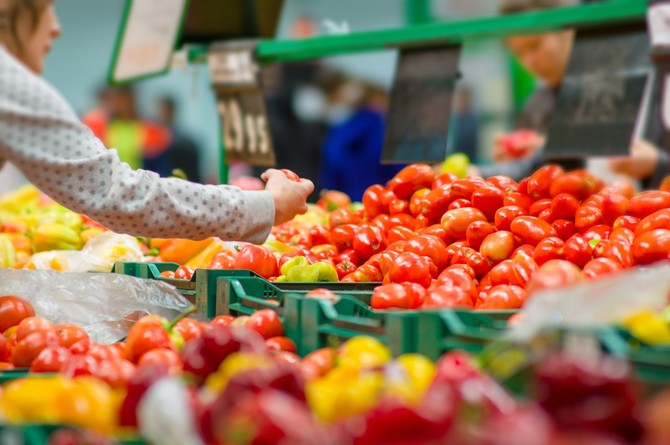
Making sure your family is eating well is a process that begins in the supermarket. (Shutterstock)
Updated 30 May 2018
Follow

Groceries got you down? 6 healthy iftar shopping tips to help you out

With two weeks' worth of traditional Ramadan meals left to prepare, you may find yourself making unhealthy choices in the kitchen. Making sure your family is eating well is a process that begins in the supermarket, however, so read on for the top expert shopping tips.

Choose your fats carefully

Your intake of fats should be limited. Unsaturated fats like vegetable oil, raw nuts and avocados are preferred over saturated fats, such as margarine and butter. Try grilling instead of frying and try to choose low fat dairy products and low fat meats.

Beware of processed and canned foods

These foods often contain high amounts of sodium, sugars and fats. They are often less nutritious than frozen or fresh foods. Just as author Michael Pollan writes in his book, “Food Rules: An Eater's Manual,” “Don’t eat anything your great grandmother wouldn’t recognize as food.”

Keep an eye on your carbohydrates

Wholegrain carbohydrates are always a winner. They contain more fibers and do not cause peaks in blood sugar levels because they get absorbed more slowly. Whole wheat bread, brown rice and bran are great options for iftar sandwiches, biriyani dishes and snacks, as opposed to refined carbohydrates like white bread and commercial cereals that are very high in sugars.

Chomp away on fruits and vegetables

Spend the maximum amount of time in the fresh produce aisle and try to choose options that are in season, or even locally grown. Failing that, frozen and sun-dried fruits are an option, while canned fruits should remain strictly off the shopping list due to the syrupy, sugary liquid in which they are stored.

Cut salt and sugar

Salt and sugar are considered white poison in the world of nutrition. Your intake of simple sugars should be limited to less than five percent of your total daily intake of food. As for salt, it should be iodized and you should not consume more than 1500 mg per day.

Read food labels carefully

The serving information on food labels tells you the size of a recommended single serving and the total number of servings per package. Be aware of how many servings you are consuming and choose foods with more fibers, proteins, vitamins and minerals and less sodium, sugars and trans-fats.


Hamza Hawsawi on headlining The Fridge in Riyadh

Updated 14 February 2026
Follow

Hamza Hawsawi on headlining The Fridge in Riyadh

DUBAI: Saudi R&B artist Hamza Hawsawi headlined The Fridge’s “Concert Series KSA Season 1” over the weekend, performing a show in Riyadh’s JAX District as part of a two-day program spotlighting emerging talent.

Hawsawi’s performance followed “The Fridge Open Mic,” which took place at the same venue the night before. The open mic offered rising artists a professional stage to perform original material in front of a live audience, creating space for experimentation and discovery within the local music scene.

Speaking during the event, Hawsawi highlighted the importance of platforms such as open mics for artists. “I think it is important because an open mic is an opportunity to get to know new artists,” he said. “For industry professionals, like Fridge, it is an eye-opener to the scene, and it lets you understand how the scene is going, what kind of artists you’re gonna be dealing with in the future.”

From an artist’s standpoint, he added, the format remains essential for growth. “We do need open mics. We do need to be out there and to try different things, and to sing to different people, and to test our art and find out if people are gonna gravitate towards it or not.”

Hawsawi has spent more than 15 years developing a sound rooted in R&B, soul and pop, building an audience that now spans the region and beyond. He has accumulated more than 33 million global views and collaborated with a range of regional and international artists. 

His track “Million Miles” was selected as the official Rally Dakar anthem, while his live performances have included stages such as MDLBeast and the Abu Dhabi Grand Prix.

Asked whether he feels a responsibility to help shape the Saudi R&B scene, Hawsawi described a fluid relationship with that role. “Sometimes I feel that sense of responsibility,” he said. “Other times I feel like I’m just a human being trying to express my feelings … But we’re just artists at the end of the day.”

He added that while he sometimes embraces being a beacon for the genre, “other times I feel like I want to be low-key, and I don’t even want to be seen or heard.”

Hawsawi also reflected on one of his personal challenges as an artist in the Kingdom: writing and performing primarily in English. 

“That has been the biggest challenge to face,” he said. 

While Arabic remains the most widely spoken language in Saudi Arabia, Hawsawi explained that English allows him to express what he feels more clearly, particularly when it comes to emotion and meaning.

“The nuances of what I feel and all the metaphors for me trying to say something but not saying it, you know, not a lot of people get that,” he said, noting that his work often reaches a niche audience. “But I’m happy with that.”