Waleed Al-Ibrahim visits MBC in Dubai for first time since anti-corruption probe

1 / 3
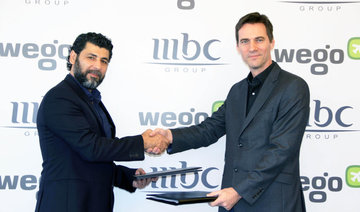
Sheikh Waleed Al-Ibrahim told the Wall Street Journal in March that he was never accused of wrongdoing in the anti-corruption drive, and that he was kept at the Ritz hotel as a witness. (MBC Group)
2 / 3
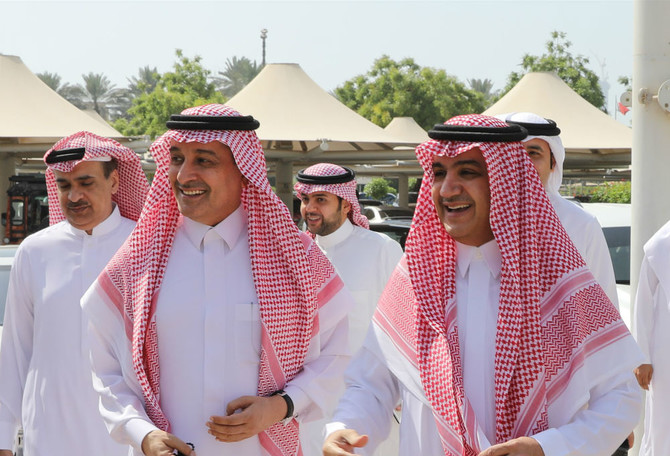
MBC’s Group TV Director Ali Jaber said that MBC’s chairman was “enthused” about the media company’s future plans following a meeting with Crown Prince Mohammed. (MBC Group)
3 / 3
Al-Ibrahim is a major shareholder in the Middle East’s largest broadcasting company, but was held during an investigation late last year along with hundreds of others as part of an anti-corruption campaign. (MBC Group)
Updated 29 May 2018
Follow

Waleed Al-Ibrahim visits MBC in Dubai for first time since anti-corruption probe

  • Media mogul retains his original stake in MBC Group and enjoys management control — statement
  • Al-Ibrahim has also been appointed as a member of a new culture council headed by Saudi Arabia’s Minister of Culture and Information Awwad Al-Awwad

DUBAI: Saudi Arabian media mogul Sheikh Waleed Al-Ibrahim has visited the Dubai headquarters of his MBC television empire for the first time since being released after last year’s anti-corruption drive.

Al-Ibrahim is a major shareholder in the Middle East’s largest broadcasting company, but was held during an investigation late last year along with hundreds of others as part of an anti-corruption campaign spearheaded by the Saudi Crown Prince Mohammed bin Salman.

Al-Ibrahim was released earlier this year, having been found innocent of any wrongdoing in the probe, and is said to retain his 40 percent stake in MBC, Reuters reported earlier this year.

For the first time since his being held at Riyadh’s Ritz Carlton hotel, Al-Ibrahim on Tuesday visited the MBC headquarters in Dubai, according to a statement issued by MBC.

News of the visit was first reported overnight by Arab News.

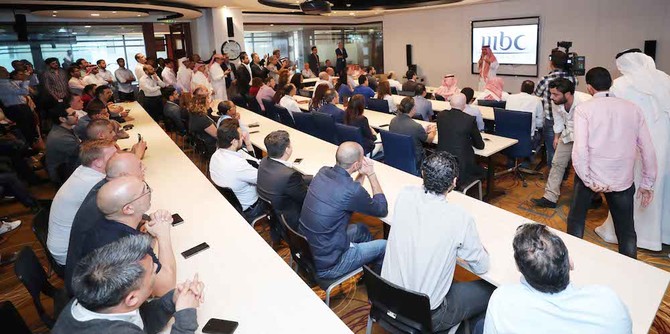
Al-Ibrahim chaired a strategy meeting with senior management and more than 100 top executives at MBC headquarters in Dubai Media City, MBC said.

He reviewed MBC’s growth plans and opportunities in markets such as Saudi Arabia, according to the statement. 

“With leadership, excellence, determination and cultural relevance, there is no limit to our ambitions. We look ahead for greater achievements, as we confidently expand our plans,” Al-Ibrahim said. 

Al-Ibrahim said MBC will shift toward having a greater focus on Saudi Arabia and neighboring markets, in sectors such as premium content production, media, entertainment and technology.

The statement confirmed that Al-Ibrahim retains his original stake in MBC Group, continues to act as its chairman and enjoys management control. 

Al-Ibrahim told the Wall Street Journal in March that he was never accused of wrongdoing in the anti-corruption drive, and that he was kept at the Ritz hotel as a witness.

“I was treated with respect,” Al-Ibrahim told the WSJ. “I am sure if you ask anyone: ‘If you could go back would you do it the same?’ They would say no. It’s a new experience for everybody.”

In April, MBC’s Group TV Director Ali Jaber said that MBC’s chairman was “enthused” about the media company’s future plans following a meeting with Crown Prince Mohammed.

“After … Sheikh Waleed Ibrahim met with the crown prince, he is enthused about MBC and its future growth into an international organization,” Jaber said.

“It will be responsible for important partnerships between Saudi Arabia and international organizations and Hollywood,” he added.

Since, Al-Ibrahim has also been appointed as a member of a new culture council headed by Saudi Arabia’s Minister of Culture and Information Awwad Al-Awwad. 

MBC has recently also been involved in the emerging film market in the Kingdom, which this year reopened cinema theaters. The group is said to be involved in negotiations with Hollywood producers and international distribution companies for this purpose.

Meta to charge Arab advertisers extra fee for reaching European audiences

Updated 11 March 2026
Follow

Meta to charge Arab advertisers extra fee for reaching European audiences

  • US tech giant told advertisers it will add fees ranging from 2 to 5 percent on image and video ads delivered on its platforms to offset digital service taxes
  • Charges are determined by where the audience is located, not where the advertiser is based

LONDON: Meta will from July 1 impose location-based surcharges on advertisers targeting audiences in six European countries, a move that will directly affect Arab businesses that run campaigns across the continent.

The US tech giant announced it will add fees ranging from 2 to 5 percent on image and video ads delivered on its platforms, including Facebook, Instagram and WhatsApp, to offset digital service taxes imposed by individual governments.

Crucially, the charges are determined by where the audience is located, not where the advertiser is based.

That means Saudi, Emirati, Egyptian or other Arab companies paying to reach consumers in the UK, France or Italy will face the additional costs regardless of their own country’s tax arrangements with Meta.

Fees will apply at 2 percent for ads reaching UK audiences, 3 percent for France, Italy and Spain, and 5 percent for Austria and Turkiye.

“If you deliver $100 in ads to Italy, where there is a 3% location fee, you will be charged $100 (ad delivery), plus $3 (location fee), for $103 total,” the company wrote in an email to an advertiser initially reported by Bloomberg. “Note that any applicable VAT will be calculated on top of the total amount.”

The taxes have been introduced at different points, starting with France in 2019, though not the EU as a bloc.

Many tech companies report substantial sales in Europe and millions of users but pay minimal tax on profits. The goal is to claw back locally derived economic value, Bloomberg reported.

The move follows similar decisions by Google and Amazon, which have also begun passing European digital tax costs on to advertisers.

For Arab brands with growing European footprints, particularly in fashion, travel, hospitality and media, the new fees add another layer of cost to campaigns already subject to currency and targeting complexities.

Digital services taxes, levied as a percentage of revenues earned by major tech platforms in individual countries, have drawn criticism from Washington, which argues they unfairly target US companies.

Meta has been reached for comments.