

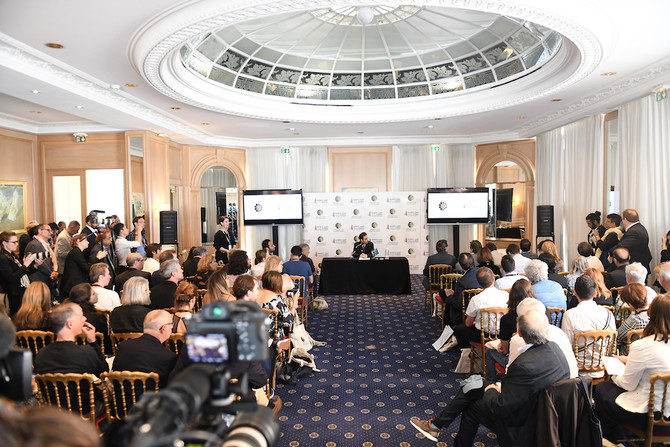
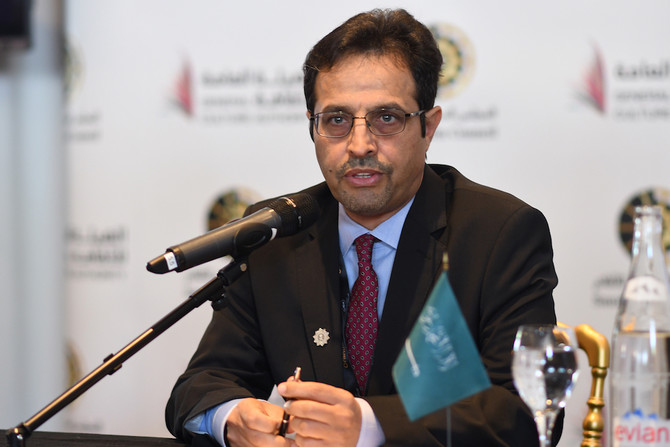


CANNES: At a special VIP breakfast on the sidelines of the 71st Cannes Film Festival on Friday, Ahmad Al-Maziad, CEO of the General Culture Authority, announced that Saudi Arabia is “open for business” to the global film industry, with a number of initiatives to promote locations and develop talent, from funding to scholarships.
Al-Maziad announced a rebate program of at least 35 per cent for foreign productions filming in Saudi Arabia. “We’re developing guidelines on how to get even higher than 35 per cent. That will be for all spend used and consumed in Saudi Arabia,” said Maziad at a press conference held at the Carlton Hotel.
In addition, Maziad announced that the General Culture Authority will be “funding 50 per cent of all money spent on Saudi talent.” This offer, which will apply to Saudis employed on productions in the Kingdom, will also be offered as a rebate, and is designed to incentivize using local crews, which will help develop Saudi Arabia’s domestic talent pool.
“We believe the combination of the two make us the most attractive incentive program in the world,” said Maziad. “This extends from film to documentaries, animation, scripted programs and much more. Putting a handsome rebate on local talent is about developing the local talent in Saudi. We believe that the more local talent used with global film crews will help them develop faster. We’re welcoming the best in the world to come shoot in Saudi, which will expedite the use of local talent beyond what we have today.”
According to Maziad, the rebate program will drive greater visibility of the country as Saudi Arabian locations are featured in films and TV programs, which will in turn further attract international productions and impact the country’s developing tourism sector.
“As in-country spend grows, it is expected to have a follow-on effect on industry infrastructure development such as studios and service providers, including hotels and accommodation, catering, transportation and other support services,” the General Culture Authority said in a statement.
Maziad promised that more details will be shared on the General Culture Authority’s website within the next few weeks, including the criteria, guidelines for application and other issues. It will also develop training programs, in conjunction with the University of Southern California, the Studio School and Film Independent in the United States, and La Femis and Les Gobelins in France.
In 2018, trainings and multi-week summer camps will take place in Saudi Arabia, Los Angeles and Paris through these education partners, covering the full spectrum of skills required for film production, including directing, editing, screenwriting, sound design, VR/AR and 2D/3D animation.
“Details will be shared on our website in the next few weeks. The criteria, the application, everything will be shared. This is one aspect that aims to attract international filmmaking to come to Saudi.”
Maziad also announced a national grant program “aimed at developing Saudi talent to help them produce movies in Saudi.” The program will be open to KSA nationals who produce or post-produce content in the Kingdom and meet eligibility criteria, the details of which “will be shared shortly on our website,” Maziad said.
Details on partners and content guidelines will also be announced in the coming weeks, Maziad promised. “Every country has its own content guidelines. We're developing a content guideline and it will be shared. We're developing based on what will be acceptable in the society. Already there are women wearing western dresses within Saudi. In terms of censorship and content guidelines, we will also be publishing them within the next few weeks.
“The guidelines are derived from what is accepted in the society. The content guidelines are also evolving guidelines: they are not stagnant. They will evolve as the society changes and evolves. What was not accepted two years ago is accepted now.”
Speaking to Arab News after the announcement, Saudi filmmaker Hajar Alnaim was most excited about the 50 per cent rebate for hiring Saudi nationals. “This is what we need,” she said. “I believe that education is really essential to follow up with the local talent, to make better content, but working on sets is the most beneficial way to educate. When you do that, you’re not only getting education, you’re not only getting experience, you’re getting inspired. You’re learning the process.
“We have directors, great cinematographers, and more. We have great talent already, but for the upcoming generation, you need them to step up the ladder,” she said.
“I really think that the Saudi Film Council and the General Culture Authority—their objective is to invest in their talent, and that makes me happy. They are putting their local talent as their main priority, and that is exactly what we need as Saudis. We have great talent, and we need to show the world our talent, and our great stories too,” Alnaim continued, noting that it is her dream to shadow a filmmaker such as David Fincher or David Lynch on a Saudi Arabian co-production. Alnaim also hopes that she and her peers will be able to show their feature films in Saudi Arabian cinemas.
“The announcement was very progressive and very unique,” added Dr. Mohamed Ghazala, chair of the visual and digital production department at Effat University in Jeddah. “So far I have never seen an offer like this from another country, to provide this kind of support. For investors from around the world to come and get a minimum of 35 per cent for shooting inside the country—this will encourage many big players in cinema to come and to take advantage of this opportunity, and ultimately support Saudi film.”
Ghazala also believes that future Saudi Arabian productions and international co-productions will help change the world’s view of Saudi Arabia and educate the international community with more empowering depictions of Saudi Arabians, as well as all the region’s Muslims and Arabs.


