

Islamic countries call Rohingya crisis ‘ethnic cleansing’

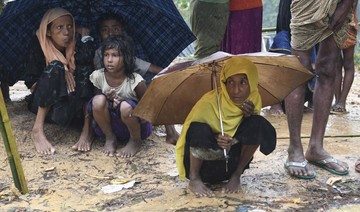
The majority of approximately 700,000 Muslim Rohingyas have crossed the border to Bangladesh to flee violence in Myanmar. (AP)
Updated 07 May 2018
Follow

Islamic countries call Rohingya crisis ‘ethnic cleansing’

DHAKA, Bangladesh: A grouping of Islamic countries said Myanmar’s treatment of Rohingya Muslims is a “serious and blatant violation of international law” and it is calling for international support in solving the crisis.

The Organization of Islamic Cooperation issued a joint statement Sunday at the end of a two-day conference in Bangladesh, which has taken in more than 700,000 Rohingya who have fled violence in Myanmar since August.

The statement said the grouping will continue to work the UN and other global platforms to address the rights violations taking place in Myanmar. The grouping echoed previous international statements saying ethnic cleansing is taking place in Myanmar.

Bangladesh Foreign Minister A.H. Mahmood Ali said delegates pledged solidarity with his country “in the face of the huge Rohingya influx with its humanitarian and security consequences.”

Security forces in Buddhist-majority Myanmar launched a scorched-earth campaign in late August in response to attacks by a Rohingya insurgent group. Thousands of people are believed to have been killed in the crackdown, which many rights activists believe was a calculated attempt to drive Rohingya from the country.

Rohingya are denied citizenship in Myanmar, where they have long faced persecution. Many in Myanmar see them as illegal migrants from Bangladesh, and deride them as “Bengalis.” Most have long lived in poverty in Myanmar’s Rakhine state, next to Bangladesh.

The hundreds of thousands who fled now live in squalid camps across the border in Bangladesh. The Bangladesh Red Crescent Society estimates that at least 100,000 refugees will be exposed to extreme dangers during the coming monsoon season.

Archbishop of York says he was ‘intimidated’ by Israeli militias during West Bank visit

Archbishop of York Stephen Cottrell poses for a photograph with York Minster’s Advent Wreath.
Updated 26 December 2025
Follow

Archbishop of York says he was ‘intimidated’ by Israeli militias during West Bank visit

  • “We were … intimidated by Israeli militias who told us that we couldn’t visit Palestinian families in the occupied West Bank,” the archbishop said

LONDON: The Archbishop of York has revealed that he felt “intimidated” by Israeli militias during a visit to the Holy Land this year.

“We were stopped at various checkpoints and intimidated by Israeli militias who told us that we couldn’t visit Palestinian families in the occupied West Bank,” the Rev. Stephen Cottrell told his Christmas Day congregation at York Minster.

The archbishop added: “We have become — and really, I can think of no other way of putting it — we have become fearful of each other, and especially fearful of strangers, or just people who aren’t quite like us.

“We don’t seem to be able to see ourselves in them, and therefore we spurn our common humanity.”

He recounted how YMCA charity representatives in Bethlehem, who work with persecuted Palestinian communities in the West Bank, gave him an olive wood Nativity scene carving.

The carving depicted a “large gray wall” blocking the three kings from getting to the stable to see Mary, Joseph and Jesus, he said.

He said it was sobering for him to see the wall in real life during his visit.

He continued: “But this Christmas morning here in York, as well as thinking about the walls that divide and separate the Holy Land, I’m also thinking of all the walls and barriers we erect across the whole of the world and, perhaps most alarming, the ones we build around ourselves, the ones we construct in our hearts and minds, and of how our fearful shielding of ourselves from strangers — the strangers we encounter in the homeless on our streets, refugees seeking asylum, young people starved of opportunity and growing up without hope for the future — means that we are in danger of failing to welcome Christ when he comes.”