ThePlace: KSA’s Qiddiya project soon to become the world’s largest entertainment city

Updated 05 May 2018
Follow

ThePlace: KSA’s Qiddiya project soon to become the world’s largest entertainment city

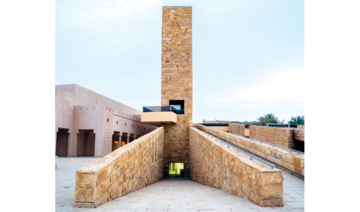
  • Located 40 kilometers from the center of Riyadh city, Qiddiya bears the name of the area and has spectacular views of mountains, valleys and desert. 
  • By 2030, the number of annual visitors to Qiddiya is expected to reach 17 million in the entertainment sector, 12 million in the shopping sector and two million in the hospitality sector.

JEDDAH: Qiddiya is one of three Saudi giga-projects, in addition to Neom and the Red Sea Project, launched by Crown Prince Mohammed bin Salman. 

Qiddiya is 40 kilometers from the center of Riyadh city. It bears the name of the area and has spectacular views of mountains, valleys and desert. 

It is expected to be the world’s largest entertainment city by 2030, with a total area of 334 square kilometers, surpassing Walt Disney World in Florida, which is only 110 sq km.

The project targets local, regional and international tourists and will be Saudi Arabia’s pre-eminent entertainment, sports and cultural destination that embodies the Saudi identity. 

The project includes theme parks; entertainment centers; sports amenities capable of hosting international competitions; training academies; desert and asphalt tracks for motorsport enthusiasts; water- and snow-based recreation; outdoor and adventure activities alongside nature and safari experiences; and an array of historical, cultural and educational activities and events.

By 2030, the number of annual visitors to Qiddiya is expected to reach 17 million in the entertainment sector, 12 million in the shopping sector and two million in the hospitality sector. 

Qiddiya will help diversify national income sources as it is forecast to contribute to up to SR17 billion of GDP by 2030. 


Riyadh emerges as Gulf evacuation hub for wealthy amid regional escalation

Updated 52 min 25 sec ago
Follow

Riyadh emerges as Gulf evacuation hub for wealthy amid regional escalation

  • Saudi capital’s King Khalid International Airport is among the few major airports in the region still operating normally after Iranian missile and drone strikes

RIYADH: Riyadh has become a principal evacuation hub for wealthy residents and senior executives seeking to leave the Gulf amid escalating regional tensions, according to a report by Semafor.

The Saudi capital’s King Khalid International Airport is among the few major airports in the region still operating normally after Iranian missile and drone strikes targeted cities including Dubai and Abu Dhabi over the weekend, as well as locations in Qatar and Bahrain.

With airspace closures elsewhere, stranded executives and high-net-worth individuals have been travelling overland to Riyadh, in some cases undertaking a roughly 10-hour journey from Dubai, in order to board private or commercial flights out of the region.

Citing people familiar with the arrangements, Semafor reported that private security firms have been hiring fleets of SUVs to transport clients to the Saudi capital before arranging chartered aircraft departures.

Those being evacuated include senior figures at global financial institutions as well as affluent individuals who had been in the Gulf for business or leisure.

The surge in demand has sharply increased costs.

Ameerh Naran, chief executive of private jet brokerage Vimana Private, told Semafor that Riyadh is currently “the only real option” for those seeking to exit the region, with private jet charters from the Saudi capital to Europe reaching as much as $350,000.

Alternative routes have narrowed. Security providers initially explored using Oman as an exit corridor, but that option became unviable after reported Iranian strikes on the country’s port infrastructure and a tanker, leaving Riyadh as the most accessible transit point, the report said.

Riyadh’s role marks a notable shift in regional risk perception. In previous years, security concerns — including cross-border Houthi attacks during the Yemen conflict and earlier periods of regional instability — had led many expatriates and business leaders to favour other Gulf cities as transit hubs.

However, Saudi Arabia’s more flexible visa regime, which now allows many nationalities to obtain visas on arrival, combined with the kingdom’s ability so far to keep its airspace open, has reinforced its position as a temporary gateway out of the region.

While some schools have moved to remote learning and certain companies have advised staff to work from home, Semafor reported that daily life in Riyadh has largely continued uninterrupted compared with other Gulf cities that have faced direct attacks.