RAMALLAH, West Bank: Palestinian leader Mahmoud Abbas was re-elected as chairman of the Palestine Liberation Organization’s (PLO) Executive Committee on Friday, as the veteran leader sought to renew his legitimacy while installing loyalists who he hopes will eventually continue his legacy.
The expected reappointment came at the end of a four-day meeting by the Palestinian National Council (PNC) in Ramallah in the occupied West Bank. The PNC chose a new Executive Committee, the most senior body of the PLO.
“Members of the PLO Executive Committee consulted among themselves and decided to elect brother Abu Mazen (Abbas) as the chairman of the Executive Committee,” said Azzam Al-Ahmad, a staunch ally of Abbas who was among nine new people elected to the 15-member committee.
The PNC was convened by Abbas in part to forge a strategy in response to US President Donald Trump’s decisions to recognize Jerusalem as Israel’s capital, and to move the US embassy to the city.
The first PNC meeting in 22 years was overshadowed by criticism of Abbas’s opening speech on Monday, which drew accusations of anti-Semitism.
The new Executive Committee was not elected but were chosen by consultation with the PLO factions who took part.
Abbas, 82, is thought to have achieved most of his goals at the meeting, including the removal from the committee of some of his rivals, including Yasser Abed Rabbo and former Palestinian Authority prime minister and negotiator Ahmed Qurei.
Abbas left the door open for other factions who boycotted the session, such as the Popular Front for the Liberation of Palestine, to win one of three seats that have yet to be filled.
He also said that a rival Islamist group such as Hamas was welcome to come on board “if it accepted the national unity and if it accepted the PLO.”
Hamas and Islamic Jihad boycotted the meeting, along with some PLO factions.
Some did not want to attend an event held in the Israeli-occupied West Bank, and others wanted the meeting postponed to allow for greater consultation and more time for reconciliation between the two main rival factions, Hamas and Fatah.
The leader of Abbas’s most powerful rival, Hamas, dismissed the four-day session as a “clapping party” for Abbas.

Palestinian leader Mahmoud Abbas re-elected as chairman of PLO executive committee
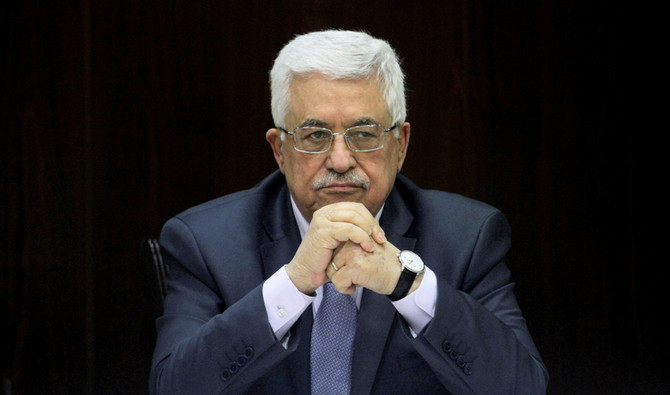
- Abbas is thought to have achieved most of his goals at the meeting
- Hamas, dismissed the four-day session as a 'clapping party' for Abbas
MSF calls Israeli ban a ‘grave blow’ to Gaza aid
- Doctors Without Borders is among 37 foreign humanitarian organizations banned from the territory
- The group, which has hundreds of staff in Gaza, says: 'Denying medical assistance to civilians is unacceptable'
JERUSALEM: International charity Doctors Without Borders Friday condemned a “grave blow to humanitarian aid” after Israel revoked the status it needs to operate in Gaza for refusing to share Palestinian staff lists.
Israel on Thursday confirmed it had banned access to the Gaza Strip to 37 foreign humanitarian organizations for refusing to share lists of their Palestinian employees.
Doctors Without Borders (MSF), which has 1,200 staff members in the Palestinian territories, the majority of them in Gaza, said in a statement that “denying medical assistance to civilians is unacceptable under any circumstances.”
The medical organization argued that it had “legitimate concerns” over new Israeli requirements for foreign NGO registration, specifically the disclosing of personal information about Palestinian staff.
It pointed to the fact that 15 MSF staff had been “killed by Israeli forces,” and that access to any given territory should not be conditional on staff list disclosure.
“Demanding staff lists as a condition for access to territory is an outrageous overreach,” the charity said.
MSF also denounced “the absence of any clarity about how such sensitive data will be used, stored, or shared,” charging that Israeli forces “have killed and wounded hundreds of thousands of civilians” in Gaza during the course of the war.
It also charged that Israel had “manufactured shortages of basic necessities by blocking and delaying the entry of essential goods, including medical supplies.”
Israel controls and regulates all entry points into Gaza, which is surrounded by a wall that began to be built in 2005.
Felipe Ribero, MSF head of mission in the Palestinian territories, told AFP that all of its operations were still ongoing in Gaza.
“We are supposed to leave under 60 days, but we don’t know whether it will be three or 60 days” before Israeli authorities force MSF to leave, he said.
Prominent humanitarian organizations hit by the Israeli ban include the Norwegian Refugee Council (NRC), World Vision International and Oxfam, according to an Israeli ministry list.
The ban, which came into effect on December 31, 2025 at midnight, has triggered widespread international condemnation.
Israel says the new regulation aims to prevent bodies it accuses of supporting terrorism from operating in the Palestinian territories.
MSF says it currently supports one in five hospital beds in Gaza and assists one in three mothers in the territory, and urged the Israeli authorities to meet to discuss the ban.
Israel on Thursday confirmed it had banned access to the Gaza Strip to 37 foreign humanitarian organizations for refusing to share lists of their Palestinian employees.
Doctors Without Borders (MSF), which has 1,200 staff members in the Palestinian territories, the majority of them in Gaza, said in a statement that “denying medical assistance to civilians is unacceptable under any circumstances.”
The medical organization argued that it had “legitimate concerns” over new Israeli requirements for foreign NGO registration, specifically the disclosing of personal information about Palestinian staff.
It pointed to the fact that 15 MSF staff had been “killed by Israeli forces,” and that access to any given territory should not be conditional on staff list disclosure.
“Demanding staff lists as a condition for access to territory is an outrageous overreach,” the charity said.
MSF also denounced “the absence of any clarity about how such sensitive data will be used, stored, or shared,” charging that Israeli forces “have killed and wounded hundreds of thousands of civilians” in Gaza during the course of the war.
It also charged that Israel had “manufactured shortages of basic necessities by blocking and delaying the entry of essential goods, including medical supplies.”
Israel controls and regulates all entry points into Gaza, which is surrounded by a wall that began to be built in 2005.
Felipe Ribero, MSF head of mission in the Palestinian territories, told AFP that all of its operations were still ongoing in Gaza.
“We are supposed to leave under 60 days, but we don’t know whether it will be three or 60 days” before Israeli authorities force MSF to leave, he said.
Prominent humanitarian organizations hit by the Israeli ban include the Norwegian Refugee Council (NRC), World Vision International and Oxfam, according to an Israeli ministry list.
The ban, which came into effect on December 31, 2025 at midnight, has triggered widespread international condemnation.
Israel says the new regulation aims to prevent bodies it accuses of supporting terrorism from operating in the Palestinian territories.
MSF says it currently supports one in five hospital beds in Gaza and assists one in three mothers in the territory, and urged the Israeli authorities to meet to discuss the ban.
© 2026 SAUDI RESEARCH & PUBLISHING COMPANY, All Rights Reserved And subject to Terms of Use Agreement.


