

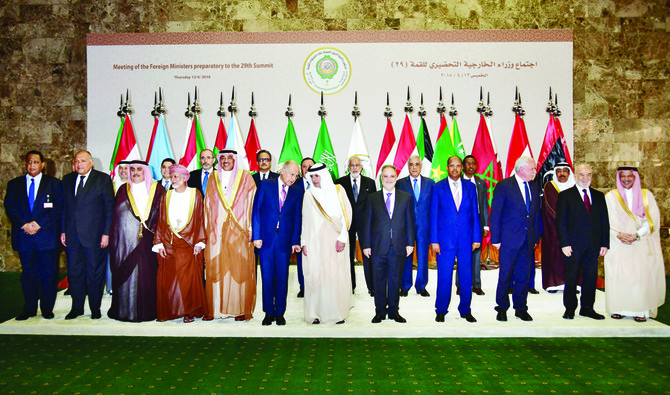

JEDDAH: Saudi Arabia has provided all the required human and material resources to secure the success of Sunday’s Arab League Summit, said a top envoy.
Saudi Arabia is exerting all efforts to enable the Arab world to face various political, economic and cultural challenges, said the Kingdom’s ambassador to Algeria, Dr. Sami bin Abdullah Al-Saleh.
The summit will “constitute a qualitative leap and a new stage in the course of joint Arab action,” which will “positively influence the course of events in the Arab world,” he said.
“The Kingdom has underscored in many instances the importance and necessity of adopting an Arab strategy to counter the challenges that threaten the security of Arab countries, especially terrorism.”
Al-Saleh highlighted Saudi Arabia’s leading role in the fight against terrorism regionally and internationally. 
He expressed optimism that the summit will adopt resolutions that will boost Arab solidarity and provide more mechanisms to eradicate terrorism and strengthen economies.
“The Kingdom will put all its potential at the disposal of Arab countries… so as to reach an effective Arab position on the international scene,” Al-Saleh said.
The Saudi ambassador to Morocco, Dr. Abdulaziz Muhieddin Khoja, highlighted the security challenges facing the region, and said the summit’s resolutions will hinder attempts by hostile forces to thwart Arab unity.
“The summit is taking place at a time when the Arab region is facing many challenges by Iran and its relentless attempts to meddle in the internal affairs of countries, spreading terrorism and sedition, and undermining security and stability, in Yemen, Syria, Lebanon and Iraq,” he added.
The Saudi ambassador to Jordan, Prince Khalid bin Faisal bin Turki, said the Kingdom “relentlessly endeavors to promote collaboration and synergy between Arab countries to address the challenges affecting the lives of Arab citizens on the political, security and social levels.”
He added: “It also strives to fortify relationships between Arab nations against intrusions of foreign countries that aim to split Arab ranks.”
Bin Turki stressed the importance of the issues on the summit‘s agenda, namely the fight against terrorism, the conflict in Syria, political and security challenges in Iraq, and Iran’s interventions in the internal affairs of Arab countries.
He praised the Arab League’s backing for the Saudi-led coalition supporting Yemen’s internationally recognized government.


