





PARIS: The contrast in locations could not have been more different. The golden glow of the sunlit sandstone of Saudi Arabia’s finest and yet little-known archaeological site set against the walls of the Musee des Arts Decoratifs — a wing of the Louvre Palace in central Paris.

keywords
Yet the images transported the guests from the rain-soaked streets of the French capital to an area of remote desert in the Kingdom’s northwest.
That region, an area the size of Belgium, contains a string of archaeological treasures and ancient cities dating back 4,000 years, but still unknown, particularly outside of the Kingdom.
Unknown, that is, until now.
 On Monday night high-profile guests from Saudi Arabia and France gathered for a gala dinner in honor of a collaboration between the two countries to enhance the natural, historical and cultural heritage of Al-Ula.
Guests arrived to the sounds of classical Arabic music combined with a modern technical light display, a fitting backdrop to the intentions of the two countries to both preserve the past and yet develop the site for the future.
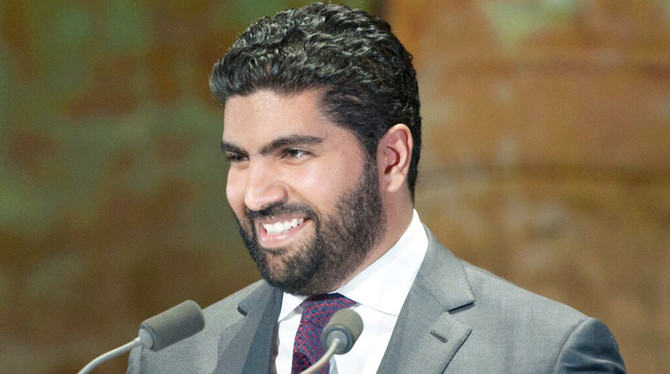
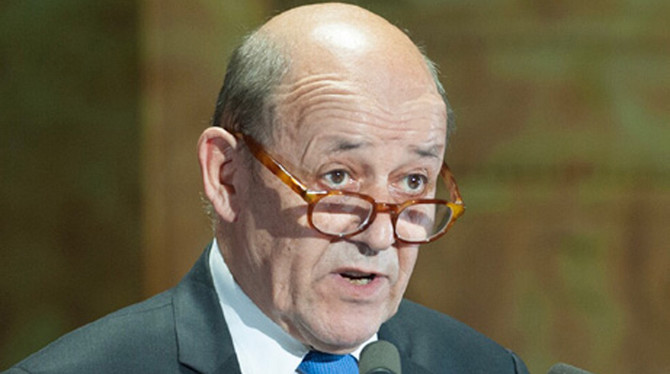
Speakers at the event, which coincided with Crown Prince Mohammed bin Salman’s visit to France, included the foreign ministers of the two countries, archaeologists who have worked at the site and other senior figures involved in the project.
Guests arrived to a breathtaking exhibition of images from Al-Ula, including the striking tombs of Madain Saleh.
“Our ambition is to turn the region into one of the most exceptional archaeological and cultural destinations in the Kingdom and we are really thrilled to invite France to participate by bringing its expertise and experience to achieve this goal,” Adel Al-Jubeir, Saudi Arabia’s foreign minister, told guests.
Prince Badr bin Abdullah bin Farhan, governor of the Royal Commission for Al-Ula, appointed last year, described Al-Ula as a “hidden jewel in northwestern Saudi Arabia.”
“The signing of this agreement is the first milestone toward the achievement of our project for Al-Ula: preserve its heritage and build the infrastructures and facilities that its beauty deserves,” he said. “France is a key partner to help us reach our objectives.”
The prince described Al-Ula in detail to those attending, who are still to find out the sheer scale and depth of the archaeological sites.
“The Al-Ula valley is a place of extraordinary human and natural heritage and a natural crossroads, and saw bustling commercial centers develop along what became the incense route from southern Arabia,” he said.
The event was attended by the French Foreign Minister Jean-Yves Le Drian and Gerard Mestrallet, the special envoy of French President Emmanuel Macron for Al-Ula.
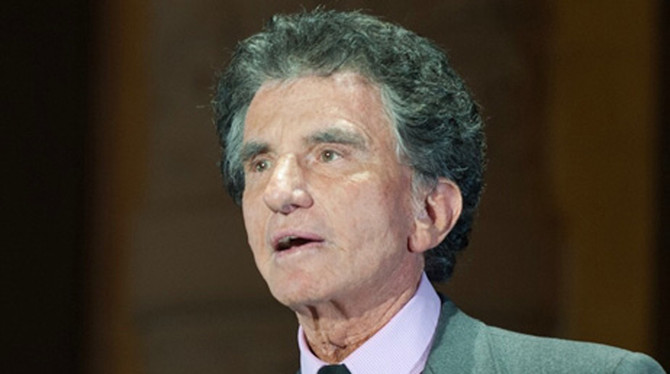
Others attending included senior figures in French art, culture and heritage — just the kind of people whose expertise the Kingdom wants to draw on as it opens up its heritage as part of the sweeping reform plan introduced by the crown prince.
The collaboration with France will shed more light on the civilizations that existed in the Al-Ula area over several millenia, said Irina Bokova, the former director-general of UNESCO. The Paris-based organization made Madain Saleh a World Heritage Site in 2008.
“The Al-Ula project is more than a great project of historical, cultural and natural heritage enhancing,” Bokova said. “It is about enlarging the world heritage with a great testimony of the Dedanite, Nabatean and Islamic civilizations.”
The expected easing of restrictions on foreign visitors to Saudi Arabia will allow the sites of Al-Ula to be explored, not just by tourists, but also by artists looking for a spectacular backdrop that has previously been hidden from the world.
Award-winning photojournalist Ammar Abd Rabbo said that he would love to be one of the first foreign professional photographers to take pictures in Madain Saleh.
“I’m proud to see the monuments of Madain Saleh presented like this in an amazing place which is part of the Louvre, one of the most famous museums in the world,” he told Arab News at the dinner.
“Slowly it will be a new destination for many people. You have a tremendous amount of people who are interested in such treasures and who could not access them before.”
Another guest, Isabelle Giordano, executive director of Unifrance Films, which promotes and export French cinema to the world, said that she sees an opportunity to make a “beautiful movie” set among the ancient monuments in Al-Ula.
“This country (Saudi Arabia) has so many stories to tell and it’s beautiful so I hope they will produce soon a lot of big movies and blockbusters to tell all the past and the stories,” she said.
Text of the speech at the gala dinner by Prince Badr bin Abdullah bin Farhan, Governor of the Royal Commission for Al-Ula.
Al-Ula is a hidden jewel in northwestern Saudi Arabia. A historic location that spans millennia, it has evidence of major civilizations dating more than 4,000 years to the first millennium BC, including most notably the Lihyan and the Nabataean kingdoms.
Al-Ula valley is a place of extraordinary human and natural heritage and a natural crossroads and saw bustling commercial centers develop along what became the Incense Route from Southern Arabia.
Al-Ula is a gift to be shared with the world. Inspired by Vision 2030, that provides an opportunity for all, a tolerant country welcoming to everyone, the Royal Commission for Al-Ula is a pioneer for a new model of cultural tourism. The Royal Commission for Al-Ula was tasked in 2017 by Crown Prince Mohammed bin Salman with preserving the region to enhance its exceptional natural, historical and cultural heritage. Because heritage is the future, because the future of the next generation lies in our heritage, our tradition and our people. And because Al-Ula’s past represents an authentic history of exchange and trade between cultures of which we must be proud. To achieve such an ambition, the royal commission turned to the world to select the perfect supporting partner.
More than 100 years ago, Frenchmen Antonin Jaussen and Raphael Savignac traveled to Al-Ula and undertook the first serious archaeological research. France has continued to be an exemplar in the fields of culture and archaeology not only in the region but also throughout the world. The Kingdom of Saudi Arabia and France share a common approach to national heritage and arts, one that maintains that culture transcends borders and should be accessible to all as global heritage. Together we strive to preserve our historical treasures for future generations safeguarding antiquities for thousands of years more.
By working closely with local communities, and by exchanging expertise with the nation of France we will create a world standard of heritage and cultural experience for Al-Ula. It gives me great pleasure to celebrate — tonight, with you — the commencement of a historic partnership for Al-Ula, a living embodiment of the meaningful relationship between the new visionary Saudi Arabia and France. Heritage is the future.
Thank you for your support and your presence.
keywords


