PESHAWAR: Pakistan United Nations Refugees Agency (UNHCR) signed an agreement with Shaukat Khanum Memorial Cancer Hospital (SKMCH) in Peshawar on Wednesday to provide $6.2 million high-tech equipment to the Peshawar-based hospital.
The UNHCR representative Ruvendrini Menikdiwela and the hospital’s chief executive officer Dr. Faisal Sultan signed the Memorandum of Understanding (MoU).
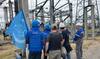
Notable officials, prominent members of the UNHCR and SKMCH were present at the ceremony.
The UN refugee agency will provide radiotherapy machines, software and training for the technicians to operate the equipment.
Radiotherapy uses high-energy radiation to break down cancer cells and treat tumors. The machines will be installed in the newly-built hospital rooms by mid-summer.
Dr. Sultan said that Peshawar’s cancer hospital is bigger than its namesake in Lahore. The Peshawar hospital receives patients from the Federally Administered Tribal Areas (FATA), Khyber Pakhtunkhawa (KP), as well as Islamabad, he said.
More than 70 percent of treatment at the cancer hospital is free, he told guests at the signing ceremony.
“On average, 60 Afghan patients are registered for treatment at the Shaukat Khanum hospital in Peshawar each month,” said Dr. Faisal.
The UNHCR Representative praised the hospital as a symbol of hope for thousands of cancer patients in Pakistan, including Afghan refugees.
“Treating those in real need and trying to save lives blighted by cancer is the noblest act of service to humanity,” said Ms. Menikdiwela.
“This equipment is being donated not just on behalf of the UNHCR, but on behalf of the international community as well,” she added.
Later, speaking to Arab News, Menikdiwela said equipment has been giving to the cancer hospital in recognition of the support that the people and government of Pakistan have been extending to the Afghan refugees.
When asked why the UN agency is donating the equipment when many Afghan families have left Pakistan, Menikdiwela told Arab News: “This is not just for Afghans but also for Pakistanis. Many Afghan refugees are still living in Pakistan, and those in Afghanistan can come on visas to Pakistan to get treatment here.”
According to the UN refugee agency, Pakistan currently has about 1.4 million registered Afghan refugees. Pakistani officials estimate that there are about 1.3 million Afghan refugees without documentation.
“The new cancer equipment will benefit more than 30,000 cancer patients every year and an estimated 1,500 new patients will be added every year,” the UNHCR said in a statement.


![]()
![]()
![]()

UNHCR donates $6.2m high-tech equipment to Peshawar cancer hospital


UNHCR donates $6.2m high-tech equipment to Peshawar cancer hospital
- In addition to Pakistani patients, Afghans refugees will benefit from the state-of-the-art treatment for cancer.
- Dr. Sultan said that Peshawar’s cancer hospital is bigger than its namesake in Lahore.
Latest updates



© 2026 SAUDI RESEARCH & PUBLISHING COMPANY, All Rights Reserved And subject to Terms of Use Agreement.