ISLAMABAD: Political parties in Pakistan are preparing for the 2018 general elections in August as the assemblies come to end their constitutional terms in the last week of May, according to Election Commission of Pakistan (ECP).
The five-year constitutional term of the National Assembly and the Punjab Assembly is ending on May 31, while those of the Sindh, Khyber Pakhtunkhwa and Balochistan assemblies are finishing three days earlier, i.e, on May 28.
The National Assembly is expected to complete its constitutional tenure on June 5, requiring elections to be held within 60 days of its dissolution.
Pakistan’s constitution requires the president to nominate the caretaker prime minister after consultation with the prime minister and leader of the opposition.
“As per Article 224A (1), in case the Prime Minister and the Leader of the Opposition in the outgoing National Assembly do not agree on any person to be appointed as the caretaker Prime Minister, within three days of the dissolution of the National Assembly, they shall forward two nominees each to a Committee to be immediately constituted by the Speaker of the National Assembly,” ECP official Haroon Khan told Arab News.
He said the parliamentary committee comprises eight members of the outgoing National Assembly, or the Senate, or both, having equal representation from the Treasury and the Opposition, to be nominated by the prime minister and the leader of the opposition respectively.
“The Committee constituted under clause (1) or (2) [of Article 224] shall finalize the name of the caretaker prime minister or caretaker chief minister, as the case may be, within three days of the referral of the matter to it,” said Haroon.
In case of the Committee’s inability to decide the matter in these three days, “the names of the nominees shall be referred to the Election Commission of Pakistan for a final decision within two days,” he added.
On Friday, Prime Minister Shahid Khaqan Abbasi said efforts were being made to install a consensus caretaker setup after the incumbent government completes its tenure, but if the efforts failed the matter would go to the ECP.
However, he feared that given the role of Pakistan People’s Party in the recent elections of the chairman and deputy chairman of Senate, there can be some problems in reaching consensus over the caretaker setup.
“The incumbent prime minister and the chief ministers shall continue to hold office till appointment of the caretaker prime minister and the respective caretaker provincial chief ministers, as the case may be,” Haroon said.


![]()
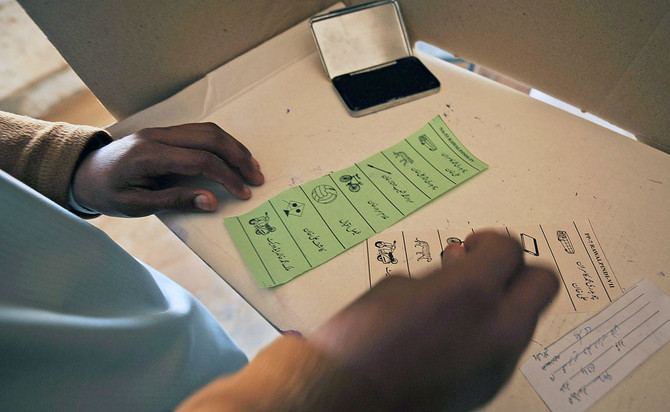
Efforts to form caretaker setup under way as Pakistan gears up for polls
Efforts to form caretaker setup under way as Pakistan gears up for polls


Latest updates





© 2026 SAUDI RESEARCH & PUBLISHING COMPANY, All Rights Reserved And subject to Terms of Use Agreement.