KABUL: While Afghanistan’s government hopes an international conference this week in Uzbekistan can forge a consensus for finding a peaceful settlement for the long Afghan imbroglio, the Taliban guerrillas say the meeting will yield no result.
Delegates of regional and international powers such as the US, Russia, China, Saudi Arabia and Pakistan will gather on March 25-27 in Tashkent, Uzbekistan’s capital, to find ways of holding direct talks between President Ashraf Ghani’s government and the Taliban.
A number of the delegates are from countries who have bankrolled warring sides in Afghanistan as part of their proxy war for decades.
Other topics of the two-day meeting in Tashkent from March 26 to 27 will be regional connectivity and combating of terrorism, with some of the regional countries fearing a spread of attacks by Daesh groups from Afghanistan into their soil.
“The debate of fighting terrorism, peace in Afghanistan and regional connectivity has always been the main priority of our foreign policy,” Shekib Mustaghni, chief foreign ministry spokesman, told Arab News. “We hope that with regard to Afghanistan’s peace, countries of the region and beyond can come to a consensus and play their positive role.”
The Tashkent meeting comes a month after President Ghani during a regional conference, called the “Kabul Process”, urged the Taliban to initiate talks with his government to end nearly four decades of conflict, including the current 16-year-old war led by the US.
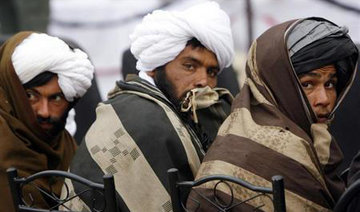
The Taliban, which has led the insurgency since its ouster by US-led forces in late 2001, has not officially given a positive reply to Ghani’s offer.
The group has not been invited to the Tashkent meeting. A spokesman for the movement, Zabihullah Mujahid, said the meeting will produce no positive impact on ending the Afghan conflict as it does not discuss the occupation of Afghanistan by the US.
“We have not been invited (to the Tashkent meeting). From the other side they are holding such meetings regularly, but are trying to distract attention from the main problem of Afghanistan, which is the ending of the foreign occupation,” Mujahid told Arab News.
“Therefore, meetings where Afghanistan’s occupation is not discussed and the Islamic Emirate (Taliban) does not have presence, are all dictated ones and our countrymen will not have expectations from it.”
The Tashkent meeting comes after sustained US air bombardments of suspected Taliban positions across Afghanistan in recent months as part of Washington’s new war strategy in the face of some inroad gains by the militants in recent years while Ghani’s government is locked in internal division.
Responding to the surge of the US-led attacks and to show that group is still strong, the Taliban have unleashed a series of high-profile attacks in rural areas.
And Daesh sympathizers, composed of fighters from Central Asia, seem to have become more active than when they emerged in late 2014 in Afghanistan.
Growing suspicion and open accusations in the region, particularly from Russia and Iran, that the US is funding Daesh have further complicated the Afghan war.
The US’ top commander in Afghanistan, General John Nicholson, in an interview with the BBC aired on Friday, said Russia’s fear of Daesh’s strength had prompted Moscow to provide arms to the Taliban.
A number of observers are finding it hard to see peace in Afghanistan while the US speaks of finding a peaceful settlement, but it has earmarked $45 billion for its war expenditure in the country for this year alone.
“As you know, the US has planned to invest $45 billion in 2018 on its war business in Afghanistan,” said Aimal Faizi, a spokesman for former President Hamid Karzai, who has remained a critic of the US military presence in Afghanistan.
“I do not believe one conference in Tashkent will have an impact on peace/security in Afghanistan. Unfortunately, the war will go on because the main impediments to peace in Afghanistan are still two countries: the US and Pakistan,” he told Arab News.
Ahmad Saeedi, a political analyst, also sounded pessimistic about the moot.
“There is no regional or international consensus on the war here,” he told Arab News.


![]()
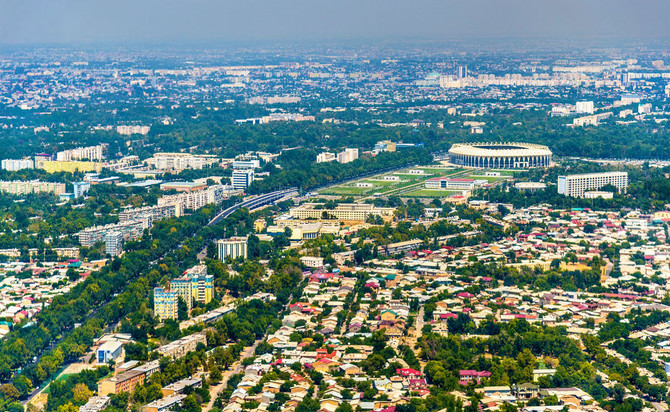
Kabul hopes Tashkent moot can forge consensus for Afghan settlement, Taliban reject it
Kabul hopes Tashkent moot can forge consensus for Afghan settlement, Taliban reject it


Latest updates


© 2026 SAUDI RESEARCH & PUBLISHING COMPANY, All Rights Reserved And subject to Terms of Use Agreement.