PESHAWAR: Afghan refugees have hailed the Pakistan government’s decision to extend their stay until June, as most of them say it is difficult to make a living in Afghanistan.
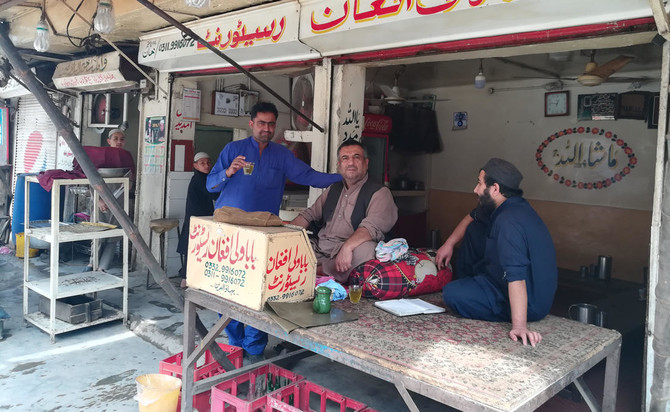
Bahaud Din, an Afghan refugee and manager of Baba Wali Afghan Restaurant in Peshawar, told Arab News that he had visited his native Kunduz area of Afghanistan a year ago.
“Kunduz is lawless and militants are in large numbers there. We are perturbed by security situation and there is no employment. Even if we become jobless in Pakistan, at least our lives are safe here,” he said.
He said Afghans are not a burden on Pakistan where they work hard to earn a living and also provide employment for Pakistanis. “I have given jobs to eight Pakistanis at my hotel here.”
Abdul Hameed and Muhammad Azam, two brothers from the Panjsher area of Afghanistan, run a shop in the famous gemstone market in Peshawar. “We cannot leave Pakistan. We have been running a good business in gemstones here for the past 36 years.”
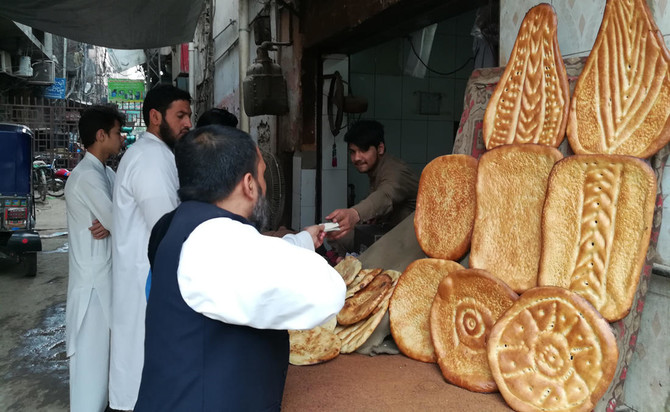
Faheem Khan, who bakes Afghan naan bread in Peshawar’s Shuba Bazaar, said that they have run their Peshawar business for the last 60 years.
“Baking Afghan naan is the profession of our grandfather, who moved from Afghanistan to Peshawar,” said 40-year old Khan.
He welcomed the extension but added that the Afghans born in Pakistan should be given Pakistani nationality as is the rule in most of the countries around the world.
“I don’t know where I will live in Afghanistan if I am taken there because I have not even visited since my birth in Pakistan,” said Khan.
Afghanistan’s Deputy Ambassador Zardasht Shams told Arab News that repatriating refugees are given $200 (SR750) each and the government is also working on a package to facilitate allotment of land to Afghans.
He said: “All repatriating Afghans are not entitled to get lands in Afghanistan because many already own lands and have relatives there, but the Afghan government is working to provide land to those who don’t have any shelter there.”
He added that as Afghanistan is a war-ravaged country, it is not possible to provide jobs to all returning Afghans.
“We appeal to the affluent Afghans, who have invested in Pakistan, to shift to Afghanistan so that they also start businesses and generate employment for other Afghans there.”
On 19 March, the UNHCR Representative for Pakistan, Ms. Ruvendrini Menikdiwela, applauded Pakistan and its people who hosted the refugees for decades.
On March 1, the UN refugee agency started its voluntary repatriation program for registered Afghan refugees. Since 2002, around 4.3 million Afghan refugees have voluntarily returned to Afghanistan.


Repatriating refugees see bleak future in Afghanistan


Repatriating refugees see bleak future in Afghanistan

Pakistan regulator amends law to facilitate capital raising by listed companies
- The amendments address challenges faced by listed companies when raising further capital from existing shareholders through a rights issue
- Previously, listed companies were prohibited from announcing a rights issue if the company, officials or shareholders had any overdue amounts
KARACHI: The Securities and Exchange Commission of Pakistan (SECP) has notified amendments to the Companies (Further Issue of Shares) Regulations 2020 to facilitate capital raising by listed companies while maintaining adequate disclosure requirements for investors, it announced on Monday,
The amendments address challenges faced by listed companies when raising further capital from existing shareholders through a rights issue. Previously, listed companies were prohibited from announcing a rights issue if the company, its sponsors, promoters, substantial shareholders, or directors had any overdue amounts or defaults appearing in their Credit Information Bureau (CIB) report.
This restriction constrained financially stressed yet viable companies from raising capital, even in circumstances where existing shareholders were willing to support revival, restructuring, or continuation of operations, according to the SECP.
“Under the amended framework, the requirement for a clean CIB report will not apply if the relevant persons provide a No Objection Certificate (NOC) regarding the proposed rights issue from the concerned financial institution(s),” the regulator said.
The notification of the amendments follows a consultative process in which the SECP sought feedback from market stakeholders, including listed companies, issue consultants, professional bodies, industry associations, law firms, and capital market institutions.
The amendments are expected to enhance market confidence, improve access to capital for listed companies, and strengthen transparency within the rights issue framework, according to the SECP.
“To ensure transparency and protect investors’ interests, companies in such cases must make comprehensive disclosures in the rights offer document,” the regulator said.
“These disclosures must include details of any defaults or overdue amounts, ongoing recovery proceedings, and the status of any debt restructuring.”
The revised regulations strike an “appropriate balance” between facilitating corporate rehabilitation and enabling investors to make informed investment decisions, the SECP added.


