RIYADH: Entering the Misk Institute is like visiting wonderland. New visitors can only marvel at the artwork that covers walls, ceilings and even staircases.
This creative hub is not afraid of color and has an energetic vibe. Ambitious young people work here and their energy is palpable.
The entrance hall declares “Our ambitions reach the sky,” quoting the words of Crown Prince Mohammed bin Salman, whose portrait hangs alongside his words.
Color is a trademark of Misk Institute Director Ahmed Mater. Born in Tabuk in 1979 and raised in the city of Abha in the south of the Kingdom, Mater’s love of art came early. “I love color, I grew up around it,” he said.
He is referring to Al-Qatt Al-Asiri, the multi-colored wall decorations deeply rooted in the south of the Kingdom.
This ancient art form, exclusively practiced by women, has been declared part of the cultural heritage of humanity by UNESCO.
Mater’s own works give an unparalleled perspective on modern-day Saudi Arabia. He has regularly exhibited around the Kingdom, and in numerous international institutions such as New York’s Guggenheim and Brooklyn museums, Washington’s The Smithsonian, and in Lebanon, Bahrain, Denmark, France and many more. He is seen worldwide as the unofficial historian of Saudi socio-political life.
Before becoming an artist, he was a medical physician. But far from it being a change in direction, Mater said both are “intertwined and go hand in hand.”
His “Illuminations” project showed his fascination for merging science and art. He created a fusion of x-rays and traditional Islamic arts using discarded hospital images and paints on paper prepared with tea and pomegranate to achieve a luminous effect.
He has attracted attention for his ground breaking displays. His work encompasses photography, video, installation, paintings and calligraphy, his style changing from project to project.
As director of the Misk Institute, he has had the full support of the crown prince. Mater said: “This is Saudi Arabia’s Renaissance age, and our crown prince is the Medici.”
Referring to his famous photograph “Magnetism” (2011), Mater said: “Anyone who has been to Makkah and specifically visited the Ka’aba can feel the spiritual pull. That’s where the idea came from.”
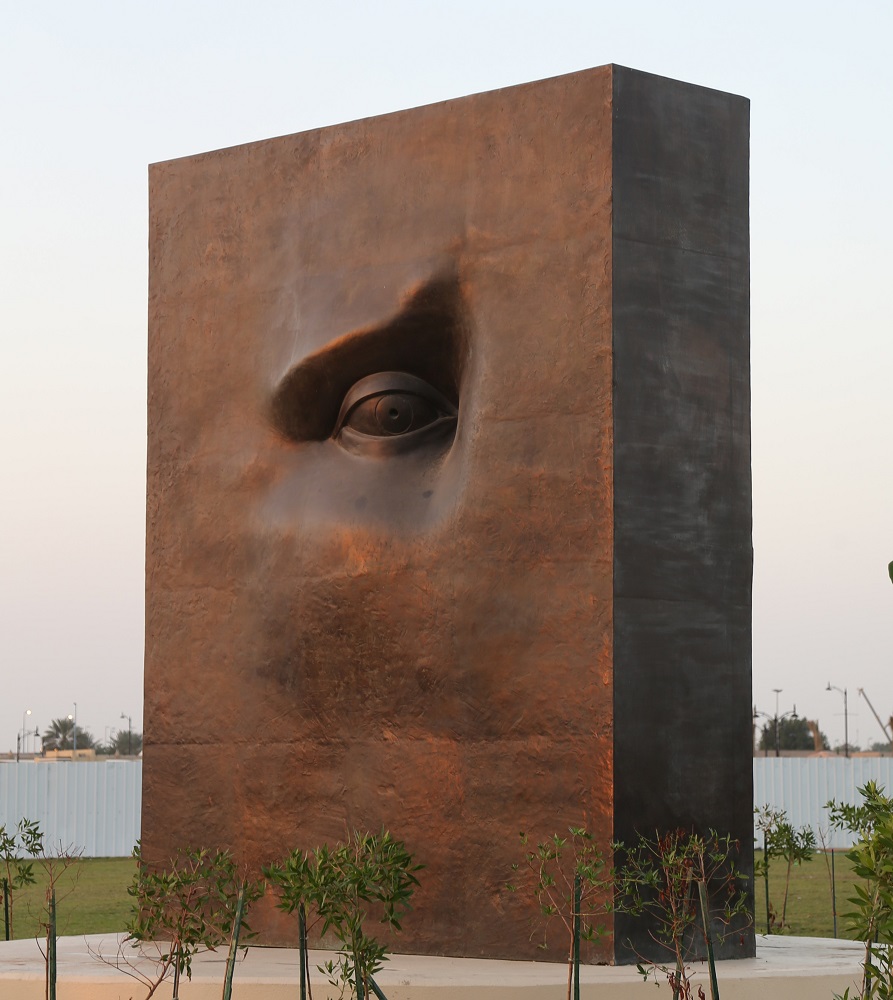
Mater’s eyes light up as he leafs through the pages of his latest work “Sculptures of Jeddah.” It documents the restoration and relocation of 26 major works that had been forgotten.
“Jeddah is the bride of the sea, always known for its beauty and being a haven for artists,” he said.
He said in 1972, the newly appointed mayor of Jeddah at the time, Mohammed Said Farsi, initiated the Jeddah Beautification Project and purchased more than 400 sculptures, including works by international artists.
Working for more than a year to collect all these treasures and document them in an almost 300-page book, Mater is something of a historian, documenting magnificent sculptures that are Jeddah’s landmarks.
His book explored and revived the work of many renowned artists who have contributed to Jeddah’s famous landmarks.
“Pick a favorite,” I said. Mater’s eyes lit up and he said: “They are all special.” He leafs through the book and shows me works by Cesar Baldaccini, Henry Moore and many others.
“Many people are astonished that Jeddah has works of art by many of these famous sculptors,” he said.
There is a light in his eyes as he marvels at the sculptures, as if looking at them for the first time. The book records the extreme care taken to bring the sculptures back to life.
Speaking of other Saudi cities, Mater said: “In less than five years, Riyadh will be transformed into an artist’s retreat with many art works.”
He is striving to ensure this goal is achieved, while also inspiring many all over the world through his work.


![]()
![]()

Meet Ahmed Mater, the man transforming Saudi Arabia into an art haven
Meet Ahmed Mater, the man transforming Saudi Arabia into an art haven


Latest updates


© 2026 SAUDI RESEARCH & PUBLISHING COMPANY, All Rights Reserved And subject to Terms of Use Agreement.