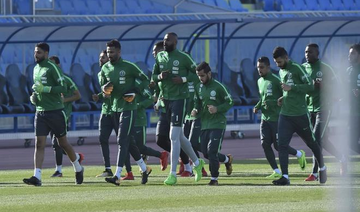
DUBAI: Al-Hilal winger Ahmed Al-Faqi could find himself facing his parents’ home country when Saudi Arabia play Egypt at the World Cup following his call-up for the first time by the Green Falcons.
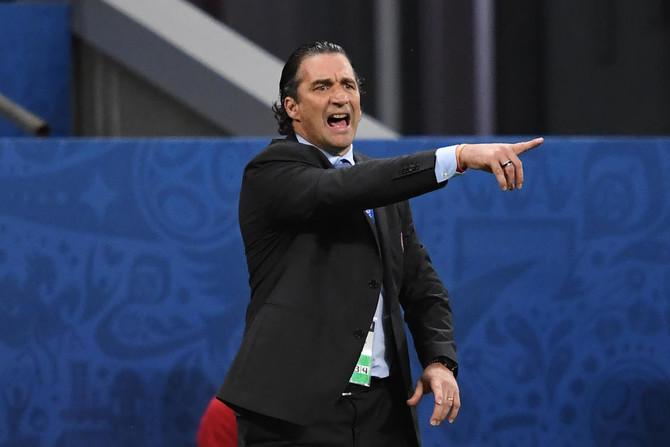
The 24-year-old is the only debutant in Juan Antonio Pizzi’s 28-man squad which will travel to Europe later this month for a 10-day training camp and friendlies against Ukraine and Belgium.
Al-Faqi was born in Riyadh to Egyptian parents and has been identified as a top prospect by the national scouting committee. He was plucked from playing street football by Al-Hilal in the January transfer window and his impressive displays on either flank for the Saudi Pro League champions have caught the attention of Pizzi, who wants to see how he shapes up in the friendlies in Marbella and Brussels.
Egyptian media reported that Pharaohs’ manager Hector Cuper had inquired about Al-Faqi’s eligibility, but the midfielder has opted to represent the country of his birth. If selected, it promises to be an emotional day for him and his family on June 25 when Saudi Arabia meet Egypt at the World Cup.
If Pizzi has offered Al-Faqi World Cup hope, then the Argentine has dealt a blow to the chances of goalkeeper Abdullah Al-Mayouf. The Al-Hilal stopper was in the last squad against Moldova, but has lost his place after being edged out at club level by Oman international Ali Al-Habsi. There are four goalkeepers in the latest squad and only three will go to Russia, so Al-Mayouf’s hopes are fading fast.
The backline is starting to take shape with six defenders retaining their places in the squad. There was one change in the four full-back positions as Al-Ahli right-back Saeed Al-Muwallad was drafted into the team at the expense of Al-Hilal’s Mohammed Al-Buraik.
The three Hawsawis at center-back — captain Osama, Omar and Motaz — will definitely go to the World Cup, but the fourth central defender spot is still up for grabs. Al-Ittihad’s Ahmed Assiri was left out of this squad in favor of Al-Hilal’s Mohammed Jahfali who gets his chance to stake a claim for the remaining berth at the back.
Further afield, Al-Hilal midfielder Salman Al-Faraj was the highest profile omission after the 28-year-old suffered a muscle injury in his side’s AFC Champions League game against Al-Rayyan earlier this week.
Defensive midfielder Abdullah Al-Khaibari and winger Mohammed Al-Kuwaikbi both earned their international debuts in February and have done enough to earn a second call-up. The Spain-based trio of Salem Al-Dawsari, Yahya Al-Shehri and Fahad Al-Muwallad lack game-time but have been selected on the back of their past performances, meaning there was no room for Al-Nassr’s Abdulaziz Al-Jibreen and Al-Shabab pair Abdulwahab Jaafar and Hattan Bahebri.
Youngster Mujahid Al-Mania, a surprise inclusion in February’s squad that defeated Moldova 3-0, will not be part of the squad as Pizzi has opted for Al-Ahli’s in-form playmaker Abdul-Fattah Assiri.
Up front, the former Chile boss seems to have settled on duo Mohannad Assiri and Mohammed Al-Sahlawi. The latter started last month’s fixture against Moldova before being replaced by Assiri, who made a strong claim for
the starting spot with the side’s third goal of the game — and his first in more than seven years — just seven minutes after his introduction.
SQUAD:
Goalkeepers: Waleed Abdullah, Yasser Al-Mosailem, Mohammed Al-Owais, Fawaz Al-Qarni
Defenders: Yasser Shahrani, Osama Hawsawi, Omar Hawsawi, Motaz Hawsawi, Mohammed Jahfali, Hassan Maaz, Mansour Al-Harbi
Midfielders: Abdullah Khaybari, Malik Khaybari, Ibrahim Ghaleb, Abdullah Otayf, Abdel Fattah Asiri, Housain Al-Mogahwi, Mohammed Kanno, Salman Al-Moasher, Yahya Al-Shehri, Fahad Al-Muwallad, Salem Al-Dawsari, Mohammed Al-Kwikbi, Ahmed Al-Fiqi
Strikers: Mohammed Al-Sahlawi, Muhannad Assiri