NEW YORK: A US citizen was sentenced to 45 years in prison on Tuesday for supporting the militant group Al-Qaeda and helping to prepare a 2009 car bomb attack on a US military base in Afghanistan, less than the life sentence sought by prosecutors.
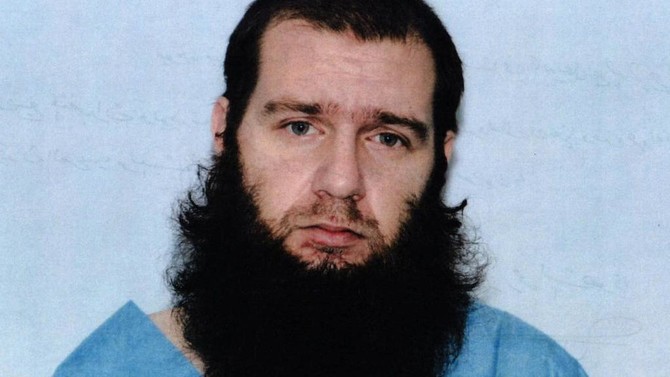
Muhanad Mahmoud Al Farekh, 32, was sentenced by US District Judge Brian Cogan in Brooklyn federal court. Al Farekh’s lawyer, David Ruhnke, said at the court hearing that Al Farekh would be appealing his conviction.
Before Cogan imposed the sentence, Ruhnke read a letter written by Al Farekh, who did not speak himself. Al Farekh did not directly address the crimes of which he was found guilty, but asked the judge to consider that young men could be misled into violence. Al Farekh said in the letter that he was now opposed to violence.
Assistant US Attorney Richard Tucker urged the judge not to believe the letter, saying Al Farekh remained “unshakably committed to violent jihad” and was “willing to say anything.”
Cogan said the letter was “not an enthusiastic acceptance of responsibility.”
“I just can’t draw anything from that,” he said.
Still, the judge said he was giving Al Farekh some hope of life after prison because he did not believe him to be “totally devoid of humanity,” citing the support of his family.
Cogan said that, with 15 percent off his sentence for good behavior and three years time served, Al Farekh could get out when he is 67.
Al Farekh was found guilty by a jury in September of the charges of conspiring to murder Americans, using a weapon of mass destruction and supporting a foreign terrorist organization.
US prosecutors in 2015 accused Al Farekh, who was born in Texas, of conspiring to support Al-Qaeda by traveling with two fellow students from the University of Manitoba in Winnipeg, Canada, to Pakistan with the intention of fighting US forces.
Al Farekh had helped prepare an explosive device used in a Jan. 19, 2009 attack on a US Forward Operating Base Chapman in Afghanistan, prosecutors said.
Prosecutors said an accomplice detonated one device, injuring multiple people including a pregnant woman, while Al Farekh’s fingerprints were found on packing tape for the second device, which another accomplice carried but failed to detonate.
One of the other university students with whom Al Farekh traveled in 2007, Ferid Imam, has also been indicted, though his whereabouts are unknown.


American sentenced to 45 years prison for role in Al-Qaeda bomb attack
American sentenced to 45 years prison for role in Al-Qaeda bomb attack



Filmmakers defend Berlin festival chief in Gaza row
- Actors and filmmakers rushed to defend the head of the Berlin film festival Thursday following a media report that her job was on the line over a director’s anti-Israel speech at the event
BERLIN: Actors and filmmakers rushed to defend the head of the Berlin film festival Thursday following a media report that her job was on the line over a director’s anti-Israel speech at the event.
Syrian-Palestinian filmmaker Abdallah Al-Khatib kicked off a controversy during Saturday’s closing ceremony by accusing Germany of being complicit in genocide in Gaza through its support for Israel.
German tabloid Bild had reported that Tricia Tuttle was due to be dismissed at an emergency meeting on Thursday, citing sources close to state-owned KBB, the company that runs the festival.
Culture minister Wolfram Weimer’s office confirmed the meeting had taken place but made no mention of Tuttle being sacked, stating that discussions had been “constructive and open” and would “continue in the coming days.”
A group of cinema luminaries including Tilda Swinton, Todd Haynes, Sean Baker and Tom Tykwer signed an open letter defending the Berlinale as a forum for free expression.
“As filmmakers in Germany and beyond, we are following the debates surrounding the Berlinale and the discussion about the dismissal of Tricia Tuttle with great concern,” they wrote. “We defend the Berlinale for what it is: a place of exchange.”
Angry rows over the Israel-Palestinian conflict have repeatedly rocked the Berlinale, held every February as Europe’s first major film festival of the year.
Environment Minister Carsten Schneider walked out of Saturday’s closing ceremony, labelling Khatib’s remarks “unacceptable.”
Germany, as it has sought to atone for the horrors of the Holocaust, has been a steadfast supporter of Israel, and criticism of Israel’s conduct in Gaza has been more muted than in many other countries.
Conservative lawmaker Ellen Demuth was among those who condemned the “antisemitic incident” at the awards ceremony and urged “a fresh start at the top of the film festival.”
The Berlinale Team in an Instagram post meanwhile defended Tuttle, praising her “clarity, integrity and artistic vision.”
The writers’ association PEN Berlin said Khatib’s comments were protected by freedom of expression and that if Tuttle were to be sacked over them, it would cause “immense damage” to the festival.
“Such wanton destruction of the German cultural scene, such self-inflicted insularity, must not be allowed to happen,” it said.
The backdrop of the Middle East conflict led to a tense 76th edition of the festival from the start.
More than 80 film professionals criticized the Berlinale’s “silence” on the Gaza war in an open letter, accusing the festival of censoring artists “who reject the genocide” they believe Israel has committed in Gaza.
Award-winning Indian writer Arundhati Roy withdrew from the festival after the jury president, German director Wim Wenders, said cinema should “stay out of politics” when asked about Gaza.