Arab FMs affirm Jerusalem as future Palestinian capital

Arab foreign ministers are insisting that Jerusalem must be the capital of a future Palestinian state, even as the US prepares to move its embassy there in a step that has angered the Arab world. (AFP)
Updated 07 March 2018
Follow

Arab FMs affirm Jerusalem as future Palestinian capital

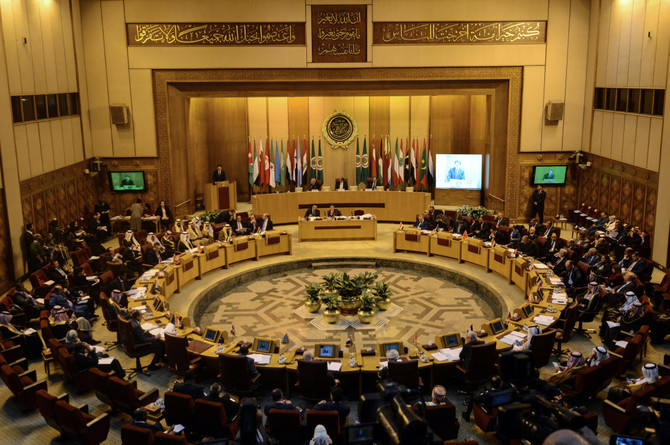
CAIRO: Arab foreign ministers insisted on Wednesday that Jerusalem must be the capital of a future Palestinian state, even as the US prepares to move its embassy there in a step that has angered the Arab world.
A ministerial meeting held in the Egyptian capital Cairo brought together foreign ministers from the Arab League member-states. It came amid a wave of anger at US President Donald Trump’s decision in December to recognize Jerusalem as Israel’s capital and move the embassy there, sparking protests in the West Bank and Gaza Strip at the time.
In their final statement, the ministers endorsed a peace plan presented by Palestinian President Mahmoud Abbas to the United Nation Security Council in February and his call for an international peace conference by mid-2018 with the key goals of full UN membership for the state of Palestine and a timeframe for a two-state solution.
The plan calls for mutual recognition by the states of Israel and Palestine based on 1967 borders, and formation of “an international multilateral mechanism” to assist the two parties in resolving all final status issues and implementing them within a set time frame.
“The Arab league has already decided to stand against the negative consequences of the American dangerous and illegal decision of moving the US embassy from Tel Aviv to Jerusalem and recognizing the occupied city as a capital of Israel,” said Arab League chief Ahmed Aboul-Gheit in a televised press conference.
Trump’s declaration departed from decades of US policy and upended longstanding international assurances that the fate of the city would be determined in negotiations.
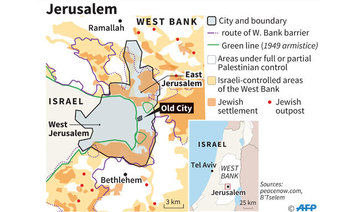
Most countries around the world have not recognized Israel’s 1967 annexation of east Jerusalem. Under long-standing international consensus, the fate of the city is to be determined in negotiations.
Jerusalem’s status is at the core of the decades-long Israeli-Palestinian conflict and Trump’s Dec. 6 announcement was widely perceived as siding with Israel. It also raised fears of more bloodshed as past crises over Jerusalem have triggered violence.
Israel has considered Jerusalem its capital since the state’s establishment in 1948 and sees the city as the ancient capital of the Jewish people. The Palestinians equally lay claim to Jerusalem and want the eastern part of the city as capital of their future state.


UK plans evacuation of thousands of Britons from Gulf

Updated 6 sec ago
Follow

UK plans evacuation of thousands of Britons from Gulf

  • 76,000 citizens in affected areas registered with FCO
  • Wealthy expats taking long drive from UAE to fly via Riyadh airport

RIYADH: The UK’s Foreign and Commonwealth Office is drawing up plans to evacuate tens of thousands of British citizens if war in the Middle East escalates, several British media outlets have reported.

The government does not know how many British nationals are resident, on holiday, or otherwise traveling across the Gulf, but it said 76,000 have so far registered their presence in affected areas of the region.

According to The Guardian, more than 50,000 of those are believed to be in the UAE, and most are holidaymakers or other travelers rather than residents, with Dubai a major tourist and business destination. Its airspace is currently closed, leaving tourists without a clear plan for getting home.

The Foreign Office’s advice is against all travel to Iran, Israel, and Palestine. It also advises against all but essential travel to the UAE, Qatar, Kuwait and Bahrain, and there are further instructions to avoid travel to some parts of Pakistan.

According to the X account of the British ambassador to Saudi Arabia, British nationals in the Kingdom are advised to stay at home, while those in Jordan, Oman, Syria, Lebanon, Yemen and Iraq should take precautions given the heightened regional tensions.


Yvette Cooper, the British foreign secretary, is expected to make her first remarks on the unfolding crisis on Monday. For his part, Prime Minister Keir Starmer on Sunday expressed “solidarity” with nations in the Middle East facing “indiscriminate” fire from Iran as he spoke to the leaders of Bahrain and Cyprus.

Meanwhile, leading online news outlet Semafor has reported that Riyadh has emerged as a key exit route for the super-rich and senior executives stranded in the Gulf who are seeking safe passage out of major cities such as Abu Dhabi, Dubai and Doha.

The Saudi capital’s airport is one of the few still operating in the region, forcing executives and their families stranded in other parts of the Gulf to take the long drive in order to catch private jets or commercial flights from King Khaled International Airport in Riyadh, Semafor reported.

Private security companies have been booking fleets of SUVs to ferry high-net-worth individuals and leading executives on the 10-hour drive to Riyadh from Dubai, before chartering private planes to take them out of the region.

“Saudi Arabia is the only real option for people who want to get out of the region right now,” said Ameerh Naran, chief executive of private jet brokerage Vimana Private. Private jets from Riyadh to Europe now cost up to $350,000, he told Semafor.