UNITED NATIONS: The United Nations Security Council on Wednesday called for a ceasefire to be implemented across Syria and expressed concern about the country's humanitarian situation, said Netherlands U.N. Ambassador Karel van Oosterom, council president for March.
"The cessation of hostilities was discussed. The Security Council reiterated its call for implementation of resolution 2401," van Oosterom said. The 15-member council unanimously demanded a 30-day truce across Syria on Feb. 24.
He was speaking after the Security Council was briefed behind closed doors on the situation in Syria at the request of Britain and France.
The meeting was called to press Syria and Russia to comply with a ceasefire endorsed eleven days ago to allow humanitarian aid and medical evacuations from Eastern Ghouta.
France and Britain requested the urgent meeting as the Syrian government sent militias as reinforcements to the rebel enclave and heavy airstrikes battered key towns.
Swedish Ambassador Olof Skoog, who negotiated the ceasefire resolution along with Kuwait, said implementation of the truce remains "totally and completely inadequate."
"So far we see minimal signs only from the Syrian authorities to implement the resolution and we are very, very disappointed about that," Skoog told reporters ahead of the meeting.
Backed by Russia, the council unanimously adopted on February 24 a resolution demanding the 30-day cessation of hostilities to allow deliveries of humanitarian aid and evacuations of the sick and wounded.
A first aid convoy reached Eastern Ghouta on Monday but the delivery was cut short as air strikes pounded the enclave. Aid workers offloaded 32 of the 46 trucks.
Nearly half of the food carried on the convoy which had been approved by the Syrian government could not be delivered and part of the medical and health supplies were removed from trucks by Syrian authorities, the UN said.
The Swedish ambassador said the council would push for another aid convoy to be allowed to return to Eastern Ghouta on Thursday to deliver food and medicine.
Skoog said the safety of the aid workers must be guaranteed.
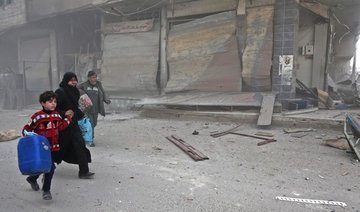
The Syrian Observatory for Human Rights said 800 civilians -- including at least 177 children -- have been killed since Russia-backed Syrian forces launched an assault on the besieged enclave outside Damascus on February 18.


![]()
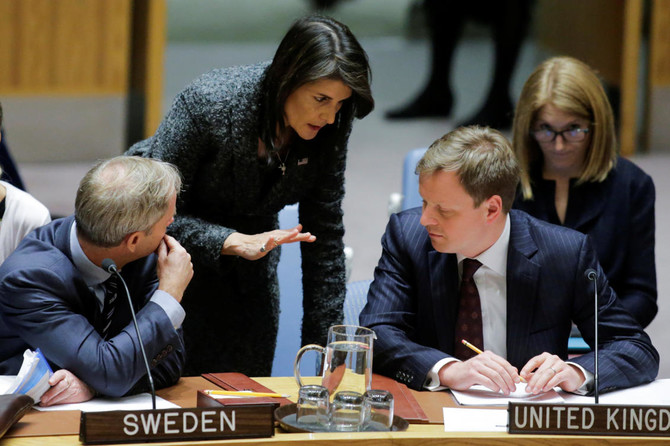
UN Security Council calls for Syria ceasefire to be implemented
UN Security Council calls for Syria ceasefire to be implemented

Latest updates






© 2026 SAUDI RESEARCH & PUBLISHING COMPANY, All Rights Reserved And subject to Terms of Use Agreement.