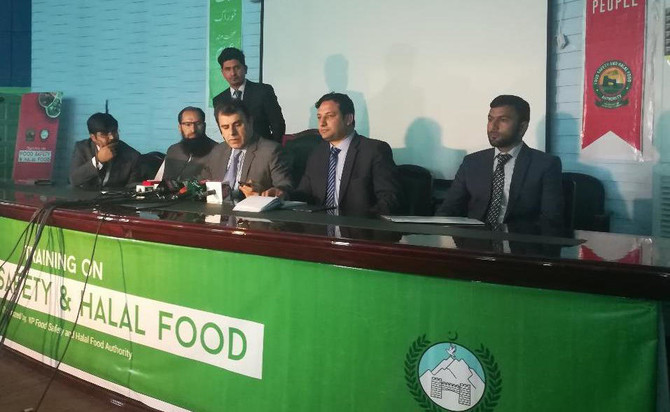
PESHAWAR: Khyber Pakhtunkhwa (KP) government on Monday inaugurated the province’s first Food Safety and Halal Food Authority.
Officials say the authority will monitor and improve the quality of food in the province.
Speaking at the inaugural ceremony, the authority’s Director General, Riaz Mehsud, said the body, which commenced operations on March 1, will have its headquarters in Peshawar in addition to seven divisional headquarters across the province.
“It is being set up in Peshawar, Swat, Abbottabad, Mardan, D. I. Khan, Bannu, and Kohat for now, but will be extended to the entire province in due course,” he said.
Seven mobile testing labs have also been arranged to check food standards on the spot, while more will be arranged in the coming days, added Mehsud.
The KP Food Authority will lay down standards, procedures and guidelines for any food-related enforcements including labeling and food additives. The authority staff will monitor and regulate the manufacture, storage, and distribution of food across the province. The body will also regulate regional sales and imports.
The authority staff will also visit food outlets and hotels, giving their employees and owners health certificates after their medical tests.
“Besides health certificates, we will register all general stores and food outlets. Our mechanism for registration is of two kinds: One, the hotels’ management can register online, and secondly, our food and safety officers will visit food outlets to register them in rural areas where people either don’t have access to the Internet or they don’t have the know-how to register online,” said Mehsud.
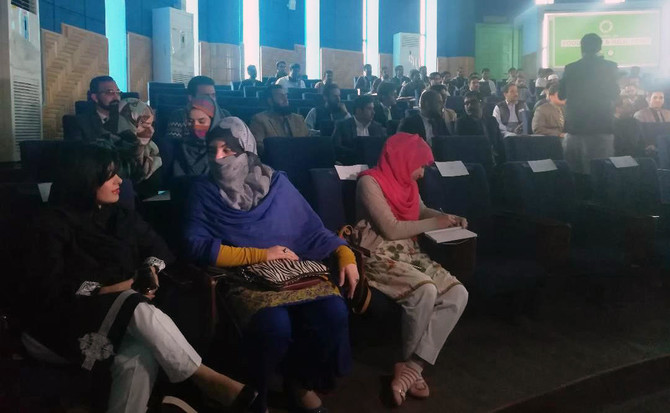
The authority, set up under the KP Food Safety Authority Act of 2014, has hired volunteers to monitor food safety and quality, working alongside regular staff in the field.
Hashim Javed, a graduate in food science and technology from the University of Agriculture in Peshawar, told Arab News that the volunteers are now being trained by the authority.
“Previously, food inspectors were hired by the KP Food Department but those inspectors did not have any specialized education in food. Now the authority has hired volunteers, all of whom are from the relevant discipline. We have studied theory on food safety but now we are going to work practically in the field,” said Javed.
The Food Authority staff will first issue a notice to a hotel in a case of insanitary conditions or substandard food, and if that does not work fines will be slapped on such hotels and eateries, or they might even have their assets confiscated, according to officials.
KP Food Authority, operating under the province’s Health Department, is the second such regulatory body in the country after Punjab set up its Food Authority in 2011.


![]()
![]()
![]()
![]()
Khyber Pakhtunkhwa gets its first food safety authority


Khyber Pakhtunkhwa gets its first food safety authority
Latest updates


© 2026 SAUDI RESEARCH & PUBLISHING COMPANY, All Rights Reserved And subject to Terms of Use Agreement.