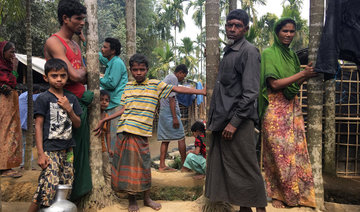
DHAKA: Tension is mounting between Bangladesh and Myanmar over border-fencing with an estimated 6,000 Rohingya refugees stuck in a no-man’s land between the two countries.
Myanmar’s troop buildup on the border near Bangladesh’s Bandarban district is viewed by Dhaka as a “provocation.” This was conveyed to Myanmar by Bangladesh officials in a flag meeting held at Ghumdhum border area in Bandarban.
Bangladesh has repeatedly asked Myanmar to expedite the Rohingya refugee repatriation process and not to fence the border until the issue is resolved.
“The Myanmar army denied deploying extra soldiers at the Bangladesh-Myanmar border. They claim they are having some internal problems within the Myanmar territory and that they have every right to do this (the troop buildup),” said Lt. Col. Monjurul Hasan Khan, commander of 34 Battalion of Border Guard Bangladesh (BGB), who led the Bangladesh team at the recent flag meeting.
Acting Foreign Secretary Rear Adm. (Retired) Khorshed Alam told Arab News: “They did this to scare the Rohingyas living at the zero line, and this is against the agreement signed earlier by the two countries.”
“We visited the refugees at the zero line together with the Myammar team just 12 days back,” Alam said.
“The Rohingya refugees expressed a desire to go home only if their security is ensured by the Myanmar authorities,” the official said. “But now the Myanmar army is intimidating the refugees, pushing them from the no-man’s land inside Bangladesh, which is extremely detrimental to the repatriation process,” Alam said.
Brig. Gen. (Retired) Shakhawat Hossain, a security analyst, believes Myanmar’s troop deployment at the border could provoke the Bangladesh forces and instigate a reaction that would eventually lead to a delay in the repatriation process.
“They (Myanmar) are trying to provoke Bangladesh by gathering troops on the border. In case of any clash between the two border forces, the entire world’s attention will fall on the situation, which will ultimately defer the repatriation of the Rohingyas,” he said.
He said Myanmar is not serious about refugee repatriation. “They are deceiving the world. They have not taken any significant initiative in terms of repatriation yet.”
Anup Kumar Chakma, former Bangladesh ambassador to Myanmar, told Arab News: “The current situation is utterly undesirable. If this persists, it will cause panic among Rohingyas living on the zero line, and eventually compel them to enter into Bangladesh.”
He said that the conditions were not favorable for Rohingyas to return to Rakhine State.
“The situation can prompt a clash between the two border forces at any time, which will further complicate things. However, Bangladesh is rightly taking all the actions as per the understanding between the countries pertaining to border management, security and cooperation.”