PARIS: A thriving hotspot of some 1.5 million Adelie penguins has been discovered on the remote Danger Islands in the east Antarctic, surprised scientists announced Friday.
Just 160 kilometers (100 miles) away in the west Antarctic, the same species is in decline due to sea ice melt blamed on global warming, they said.
The first complete census revealed that the Danger Islands host more than 750,000 breeding pairs of Adelie penguins, more than the rest of the Antarctic Peninsula region combined, the team reported in the journal Scientific Reports.
It included the third and fourth-largest Adelie penguin colonies in the world.
The find “is certainly surprising and it has real consequences for how we manage this region,” study co-author Heather Lynch of Stony Brook University said.
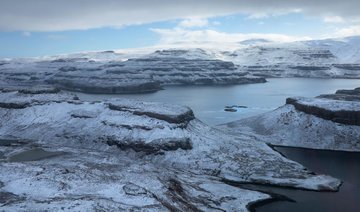
The islands, which lie at the tip of Antarctica nearest South America, have rarely been visited, and the new discovery was thanks to Earth-monitoring satellites, the team from America, Britain and France, said.
“This is called the Danger Islands for a reason,” explained Lynch.
“The area is covered by heavy sea ice most of the year, and even in the height of summer it is difficult to get into this region to do surveys.”
Evidence of the previously-unknown penguin colony first emerged in data from the Landsat Earth-monitoring satellites run by NASA and the US Geological Survey.
Lynch and her team “then went and looked at higher resolution commercial imagery to confirm the guano staining that our algorithms had picked up in the Landsat imagery,” she said.
When the Landsat data originally suggested the presence of hundreds of thousands of penguins on the islands, she thought it “was a mistake.”
“We were surprised to find so many penguins on these islands, especially because some of these islands were not known to have penguins.”
Then followed a field expedition for a headcount.
“We were... very lucky to have a window of time where the sea ice moved out and we could get a yacht in,” said Lynch.
The Danger Islands, said the team, has felt the ravages of climate change less than western Antarctic zones, and knew very little human activity.
But it may need protection from overfishing nevertheless. Krill, an Adelie staple, is caught in the area.
“The most important implication of this work is related to the design of Marine Protected Areas in the region,” said Lynch.
“Now that we know this tiny island group is so important, it can be considered for further protection from fishing.”


![]()

1.5 million Adelie penguins discovered on remote Antarctic islands
1.5 million Adelie penguins discovered on remote Antarctic islands


Latest updates


Recommended


© 2026 SAUDI RESEARCH & PUBLISHING COMPANY, All Rights Reserved And subject to Terms of Use Agreement.