The many problems prove video is VAR from perfect

Fans, players and coaches are often left to play a waiting game with VAR
Updated 01 March 2018
Follow

The many problems prove video is VAR from perfect

LONDON: Perhaps football's adoption of Video Assistant Referees seemed so sensible because we are all VARs every time we watch a televised game. We expect our commentators to be VARs. We stare at our screens mid and post-match awaiting further replays and the analyses of pundit VARs.
    Sometimes, this legion of informal assistants agrees. Occasionally, all these DIY VARs come to the same conclusion at pace, after just a couple of replays.
    When you consider how infrequently viewers, commentators and pundits reach consensus when granted the dual luxury of multiple camera angles and unlimited time to pick the bones from them, is it any surprise The International Football Association Board's two-year VAR experiment is beset with controversy?
    The body “hopes to make a decision about VARs” at its Zurich AGM on Saturday. The experiment has as much to do with FIFA politics as the groundswell of opinion that pushed for VAR. Sepp Blatter, a FIFA president who oversaw a series of rule changes that improved the spectacle, protected skilful proponents and increased the popularity of his sport, long stood against efforts to 're-referee' games.
    When Blatter's presidency ended the populist move for successor Gianni Infantino was to allow VAR into the game. Technological assistance was modern, rational and, most importantly, the antithesis of Blatter's position. Following trial use by over 20 national associations, it seems reasonable to argue that an audience broadly in favour of the idea of video assistance pre-introduction is less enamoured with the concept having observed attempts to put it into practise.
    The system was first to used to change a FIFA match referee's decision in the 2016 Club World Cup; an incident worth seeking out and watching online. A Kashima Antlers midfielder is tripped in the penalty area. Daigo Nishi is in an offside position, but, because he hasn't played the ball when he is fouled the VAR informs Viktor Kassai that he should have awarded a penalty. Kassai views footage on a pitch-side monitor and penalises Atletico Nacional. It is, in short, a mess. A precursor of problems to come.
    IFAB recently released “provisional research results” from an academic study of VAR matches. It found that VAR increased accuracy across four match-changing decisions (goal, penalty, direct red card, mistaken identity) by 5.9 percent. VAR was said to have a “decisive impact” in 8 percent of matches, with the average review taking 60 seconds.
    Another line stands out: “100 per cent accuracy impossible due to human perception and subjectivity in decision-making.”
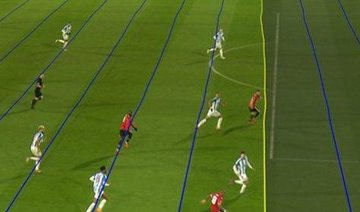
    So we know VAR doesn't guarantee correct decisions (and doesn't increase the number of correct decisions by a great margin). We know VAR doesn't remove controversy over refereeing (Willian's yellow card for “simulation” and Hawk Eye's forced apology for providing sub-ZX Spectrum standard offside lines are just two examples).
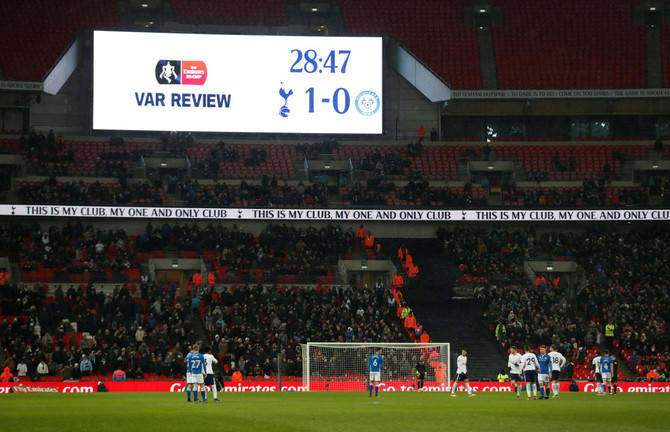
    We know officials struggle to implement protocol properly (allowing Juan Mata's offside goal at Huddersfield was not a “clear and obvious” error). We know it interrupts the flow of a match (six minutes of added time for one half of VAR controversy at Tottenham vs Rochdale clash on Wednesday). We know it frustrates spectators, players and coaches awaiting the outcome of a decision making process they cannot observe live.
    All are costs to be weighed up against the benefits of VAR error correction. Plus the financial cost of a system, which, by its very nature, will not be deployed across the entire professional game.
    There are other drawbacks. Most of football's laws involve an element of subjectivity — with VAR you allow two referees to make judgements on key decisions. In principle, the match referee always has the final decision. In practise, there is no longer one final arbiter.
    If a referee stops a promising attack with a free kick or offside flag, play is stopped. A VAR correction cannot enable the attacker to go on and score or make a goal. So in-stadium officials err on the side of not making a decision, leaving VAR to pick up their misses. Potential repercussions are more aggressive tackling, injuries and match-flow interrupting VAR reviews.
    Even matter-of-fact decisions are problematic. IFAB state that: “checking offside positions of players has proven to be one of the more difficult tasks due to the number of variables and the very short time-span in which the decision needs to be made. The exact pitch dimensions, including any physical camber on the field as well as distortions of the camera lenses, make it very difficult for a virtual line to be drawn that accurately represents a true straight line.”
    An operator then has to decide exactly when the ball is passed to a team-mate. A similar element of subjectivity applies to VAR calls on whether a foul is in the area.
    Despite all this FIFA President Gianni Infantino is pushing for the system to be deployed at this summer's World Cup. Former Champions League Final referee Kim Milton Nielsen expects Russia 2018 to be do or die for VAR.
    “The forthcoming World Cup will need some big successes early on for the system not to cause big problems and risk rejection in the court of public opinion,” said Nielsen. “The Confederations Cup last summer hardly gave us confidence, and once again the wrong decision was reached in one game despite deliberations taking over five minutes.”
    Five minutes to arrive at the wrong answer. That's just like watching TV.


With 100 days to go, World Cup faces new challenges with Iran war and Mexico violence

Updated 3 sec ago
Follow

With 100 days to go, World Cup faces new challenges with Iran war and Mexico violence

  • It’s not unusual for international politics to overshadow a global sports event like the World Cup
  • Iran is set to play two group stage games in Inglewood, California, and one in Seattle

GENEVA: With 100 days to go until the World Cup, the Iran war has added a new layer of complexity to the tournament co-hosted by the United States, Mexico and Canada.
How the conflict will affect the world’s most watched sporting event is the latest issue facing organizers already grappling with cartel violence in one of Mexico’s host cities, scaled-back plans for fan festivals in the US and criticism from fans against soaring ticket prices.
Officials of the qualified teams are meeting with FIFA staff in Atlanta this week. The tournament kicks off on June 11 when Mexico plays South Africa in Mexico City. It will be the biggest World Cup ever with 48 participating teams, up from 32 at the previous tournament in Qatar.
Here’s a look at some of the issues drawing scrutiny as the countdown began.
A backdrop of geopolitical tension
It’s not unusual for international politics to overshadow a global sports event like the World Cup — at least in the early stages before the soccer action takes over the headlines.
In 2022, Qatar’s treatment of migrant workers and others matters drew headlines off the field.
Pride community rights, the annexation of Crimea and the poisoning of a spy in Britain were in focus when Russia hosted the tournament in 2018.
In Brazil in 2014 and South Africa in 2010 there were concerns about crime and security.
The 2026 tournament looks set to kick off amid a backdrop of political tensions involving the US and the participating nations.
Many have been hit by tariffs. Some are facing travel restrictions. Denmark, which can still qualify through playoffs in March, has been shaken by President Donald Trump’s calls for the US to take over Greenland. And with 100 days to go, the US was in a military conflict with Iran, one of the first teams to qualify.
Iran’s status at the World Cup is unclear
Iran is set to play two group stage games in Inglewood, California, and one in Seattle.
However, whether the Iranian team will come to the US is uncertain.
“What is certain is that after this attack, we cannot be expected to look forward to the World Cup with hope,” Iran’s top soccer official, Mehdi Taj, said last weekend as the US and Israel launched coordinated attacks that killed Supreme Leader Ayatollah Ali Khamenei and dozens more senior officials.
Still, Iran has not announced it is withdrawing from the tournament, which no team that qualified has done in the past 75 years. Iran, the second-highest ranked team in Asia, was drawn in a group with Belgium, Egypt and New Zealand.
“I really don’t care,” if Iran participates, Trump told Politico on Tuesday. “I think Iran is a very badly defeated country. They’re running on fumes.”
FIFA did not immediately respond to a request on whether Iran federation officials attended the Atlanta workshop.
Fan festivals are being slimmed down
Fan festivals have been a key part of the World Cup experience in the past two decades. They offer a chance for thousands of fans without match tickets to take part in the World Cup atmosphere by coming together to watch games on a big screen.
Some of those plans are now being scaled back in the US
New York/New Jersey eliminated its Fan Fest in Jersey City, New Jersey, even though it had started selling tickets for an event scheduled to be open every day of the tournament.
Planning to sell tickets was itself unprecedented for World Cup fan zones, which were free to enter since being launched at the 2006 edition in Germany.
Seattle cut down its original plan and rescheduled it for smaller venues and Boston trimmed its event to 16 days.
The chief operating officer of Miami’s FIFA World Cup host committee said during a congressional hearing on Feb. 24 that it might cancel its event if it did not receive federal funding within 30 days. Kansas City, Missouri, Police Deputy Chief Joseph Maybin said the city had an immediate need for federal funds to prepare security.
House Republicans said federal money may be held up by the partial government shutdown of the Department of Homeland Security, caused by Democrats insisting restrictions be placed on Immigration and Customs Enforcement agents.
Foxborough games threatened
The New England Patriots’ stadium in Foxborough, Massachusetts, is due to host seven World Cup games, starting with Haiti-Scotland on June 13 and ending with a quarterfinal on July 9. That is FIFA’s plan.
The Select Board of Foxborough has refused to issue a permit for World Cup matches at the stadium and set a March 17 deadline to be paid $7.8 million — what the town estimates will be the cost of police and other expenses. Foxborough said it was not part of FIFA’s hosting agreement with Boston.
Pushback against FIFA’s ticket prices
FIFA has about 7 million seats to fill for the World Cup matches and said last month it received 500 million ticket requests. FIFA president Gianni Infantino has proclaimed all 104 games are sold out and yet some fans received emails last week offering an extra 48-hour window for tickets sales.
FIFA’s prices in December ranged up to $8,680 per ticket. After criticism, FIFA said it will offer a few hundred $60 tickets for every game to the 48 national federations in the tournament. Those federations will decide how to distribute them to their most loyal fans who attended previous games.
Most seats on FIFA’s ticket resale platform — seeking to cut out the secondary market and earn FIFA extra 15 percent fees from buyers and sellers — are well past the $1,000 mark.
Cartel violence in Mexico
Mexico’s ability to co-host the World Cup has been under scrutiny after a surge in violence last week in the state of Jalisco following the military’s killing of a powerful cartel boss.
The state’s capital, Guadalajara, is set to host four matches during the group stage.
Mexico’s government insists the World Cup won’t be affected and President Claudia Sheinbaum said there’s no risk for fans coming to the tournament.
Infantino told Sheinbaum that he has full confidence in Mexico as a World Cup host.
The FIFA leader has repeatedly promised the 2026 World Cup will be the greatest and most inclusive.