WELLINGTON/MELBOURNE: At least one company began evacuating non-essential personnel after a powerful 7.5 magnitude earthquake hit Papua New Guinea’s energy-rich interior on Monday, causing landslides, damaging buildings and closing oil and gas operations.
The tremor hit in the rugged, heavily forested Southern Highlands about 560 kilometers northwest of the capital, Port Moresby, at around 345am local time (1545 GMT Sunday), according to the US Geological Survey (USGS).
A spokesman at Papua New Guinea’s National Disaster Center said by telephone the affected area was very remote and the agency could not properly assess damage until communication was re-established. He said there were no confirmed casualties.
The PNG government also said it had sent disaster assessment teams. At least 13 aftershocks with a magnitude of 5.0 or more rattled the area throughout the day, according to USGS data, but no tsunami warnings were issued.
“The Papua New Guinea Defense Force has also been mobilized to assist with the assessment and the delivery of assistance to affected people as well as the restoration of services and infrastructure,” Isaac Lupari, the chief secretary to the government, said in a statement.
ExxonMobil said it had shut its Hides gas conditioning plant and that it believed administration buildings, living quarters and a mess hall had been damaged. It also said it had suspended flights into the nearby Komo airfield until the runway could be surveyed.
“Due to the damage to the Hides camp quarters and continuing aftershocks, ExxonMobil PNG is putting plans in place to evacuate non-essential staff,” the company said in an emailed statement.
Gas is processed at Hides and transported along a 700 km (435 miles) line that feeds a liquefied natural gas plant near Port Moresby for shipping.
PNG oil and gas explorer Oil Search said in a statement it had also shut production in the quake-affected area.
The giant Grasberg copper mine operated by the Indonesian unit of Freeport McMoRan in neighboring Papua province was not affected, a Jakarta-based spokesman said.
However, the quake and several aftershocks caused panic in Jayapura, the capital of Indonesian Papua, Indonesia’s disaster mitigation agency said in a statement, but there were no reports of casualties or damage there.
Udaya Regmi, head of the International Red Cross in Papua New Guinea, said communications were “completely down” in Tari, one of the larger settlements near the quake’s epicenter, and that landslides had cut roads.
Several other aid and missionary agencies said poor communications in the area made damage and injury assessment difficult.
“The bush structures that they build tend to handle earthquakes extremely well,” Christian missionary Brandon Buser said after contacting several remote villages by shortwave radio.
Earthquakes are common in Papua New Guinea, which sits on the Pacific’s “Ring of Fire,” a hotspot for seismic activity due to friction between tectonic plates.
“This is the Papuan fold-and-thrust belt, so it’s a typical movement of faults in that region, but it’s big,” said Chris McKee, acting director of the Geohazards Management Division in Port Moresby.
Part of PNG’s northern coast was devastated in 1998 by a tsunami, generated by a 7.0 quake, which killed about 2,200 people.


![]()
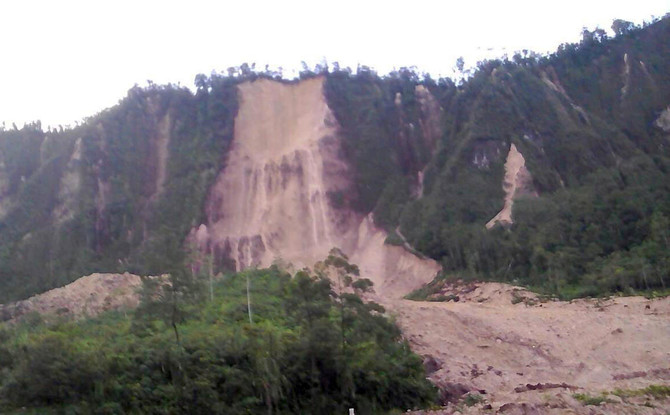
Major quake cuts communications, halts oil and gas operations in Papua New Guinea
Major quake cuts communications, halts oil and gas operations in Papua New Guinea
Latest updates


© 2026 SAUDI RESEARCH & PUBLISHING COMPANY, All Rights Reserved And subject to Terms of Use Agreement.