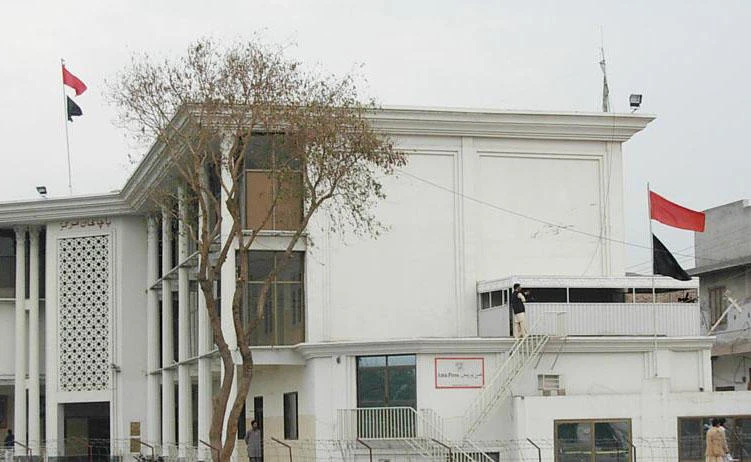
PESHAWAR: The Awami National Party’s red flag can be seen everywhere in Khyber Pakhtunkhwa’s PK-3 constituency. The area has traditionally been a stronghold of the Pashtun nationalist party, and it never lost a voting contest here until the last general elections in 2013.
Back then, the country’s relatively new Pakistan Tehreek-e-Insaf (PTI) party managed to defeat the ANP’s Haroon Bilour, who had replaced his deceased father, Bashir Ahmed Bilour, after the Taliban assassinated him in a suicide attack in December 2012.
There are several other areas in Peshawar and other KP districts where the ANP has a significant following. Yet the party has never been able to form an independent government in the province, though it has spearheaded several coalition administrations.
This is despite the fact that the ANP prides itself on being the province’s organic political force. However, unlike Pakistan Muslim League-Nawaz or the Pakistan Peoples Party, which have usually remained the strongest political entities in their respective provinces of Punjab and Sindh, the ANP has largely failed to dominate KP’s electoral politics, even though it has always marketed itself as a Pashtun political party.
But KP is not an easy province to govern. The incumbency factor always militates against political parties administering the region, making its people change their rulers in almost every general election. The ANP, which claims to champion the rights of the Pashtun population, has not been immune to this habit of change, either.
Today, the party claims to follow the legacy of Khan Abdul Ghaffar Khan, who launched the Khudai Khidmatgar – or Servants of God – movement in 1929 to drive out the British from the subcontinent. His son, Khan Abdul Wali Khan, founded the ANP as a left-wing party in 1986. Asfandyar Wali Khan, who belongs to the family’s third generation, is leading the political faction, making it a dynastic entity. Yet ANP leaders claim they desire radical sociopolitical transformation of the country.
“The red in our flag symbolizes revolution,” Senator Zahid Khan told Arab News. “ANP’s ideology is Pashtun nationalism, and our objective is to work for the rights of the oppressed.”
The party’s secular political orientation turned it into a target for the Taliban between 2008 and 2013. ANP leaders publicly criticized the militant network as well, and their offices and front-running candidates were frequently targeted by suicide bombers. The party lost a large number of activists to the scourge of terrorism, making it difficult for its leaders to run an aggressive election campaign.
“More than a thousand ANP leaders and workers were killed in terrorist attacks while we were ruling the province,” Khan said.
He added that even after the party lost its government in KP, nearly 250 ANP members have become victims of target killings in the past few years.
Regardless of such hardships, the party’s detractors believe it failed to deliver while governing the province. Juma Khan Sufi, who remained quite close to ANP’s founding fathers, accused it of indulging in corrupt practices during its last tenure. He also criticized its relations with India and Afghanistan.
“ANP should stop playing politics in the name of Pashtuns and its leaders should become Pakistanis,” he said. “They should not toe the line of Kabul and New Delhi.”
But the party’s vice president, Senator Baz Muhammad Khan, told Arab News that the ANP faced such criticism because it demanded Pashtun rights, and the federation viewed its politics quite negatively.
“Why was Bashir Bilour, our senior minister, killed? Why have our leaders been targeted since the party’s inception? They did not have personal enmities. They were only targeted since they were demanding the rights of the province and its Pashtun population,” he said.
Asked about ANP’s less-than-satisfactory election performance in 2013, Senator Zahid Khan said elections were always rigged in Pakistan. He also claimed that the party never got a level playing field.
“Why did we lose in 2013? It was because the PTI was holding public rallies while our party was being attacked. While other parties were campaigning, we were attending funerals of our party colleagues,” he said.
He pointed out that the ANP had faced criticism not only domestically but also internationally: “We were disliked at the international level when we opposed the Cold War. The ANP also said that what was happening in Afghanistan during the late 1970s and much of the 1980s was a war between the United States and Soviet Union, and it must not be misconstrued as jihad.”
Responding to the allegation that the ANP had a soft spot for India and Afghanistan, Khan said: “Our leadership was killed and targeted by militants. Is this not enough to prove our patriotism toward our country?”
Back then, the country’s relatively new Pakistan Tehreek-e-Insaf (PTI) party managed to defeat the ANP’s Haroon Bilour, who had replaced his deceased father, Bashir Ahmed Bilour, after the Taliban assassinated him in a suicide attack in December 2012.
There are several other areas in Peshawar and other KP districts where the ANP has a significant following. Yet the party has never been able to form an independent government in the province, though it has spearheaded several coalition administrations.
This is despite the fact that the ANP prides itself on being the province’s organic political force. However, unlike Pakistan Muslim League-Nawaz or the Pakistan Peoples Party, which have usually remained the strongest political entities in their respective provinces of Punjab and Sindh, the ANP has largely failed to dominate KP’s electoral politics, even though it has always marketed itself as a Pashtun political party.
But KP is not an easy province to govern. The incumbency factor always militates against political parties administering the region, making its people change their rulers in almost every general election. The ANP, which claims to champion the rights of the Pashtun population, has not been immune to this habit of change, either.
Today, the party claims to follow the legacy of Khan Abdul Ghaffar Khan, who launched the Khudai Khidmatgar – or Servants of God – movement in 1929 to drive out the British from the subcontinent. His son, Khan Abdul Wali Khan, founded the ANP as a left-wing party in 1986. Asfandyar Wali Khan, who belongs to the family’s third generation, is leading the political faction, making it a dynastic entity. Yet ANP leaders claim they desire radical sociopolitical transformation of the country.
“The red in our flag symbolizes revolution,” Senator Zahid Khan told Arab News. “ANP’s ideology is Pashtun nationalism, and our objective is to work for the rights of the oppressed.”
The party’s secular political orientation turned it into a target for the Taliban between 2008 and 2013. ANP leaders publicly criticized the militant network as well, and their offices and front-running candidates were frequently targeted by suicide bombers. The party lost a large number of activists to the scourge of terrorism, making it difficult for its leaders to run an aggressive election campaign.
“More than a thousand ANP leaders and workers were killed in terrorist attacks while we were ruling the province,” Khan said.
He added that even after the party lost its government in KP, nearly 250 ANP members have become victims of target killings in the past few years.
Regardless of such hardships, the party’s detractors believe it failed to deliver while governing the province. Juma Khan Sufi, who remained quite close to ANP’s founding fathers, accused it of indulging in corrupt practices during its last tenure. He also criticized its relations with India and Afghanistan.
“ANP should stop playing politics in the name of Pashtuns and its leaders should become Pakistanis,” he said. “They should not toe the line of Kabul and New Delhi.”
But the party’s vice president, Senator Baz Muhammad Khan, told Arab News that the ANP faced such criticism because it demanded Pashtun rights, and the federation viewed its politics quite negatively.
“Why was Bashir Bilour, our senior minister, killed? Why have our leaders been targeted since the party’s inception? They did not have personal enmities. They were only targeted since they were demanding the rights of the province and its Pashtun population,” he said.
Asked about ANP’s less-than-satisfactory election performance in 2013, Senator Zahid Khan said elections were always rigged in Pakistan. He also claimed that the party never got a level playing field.
“Why did we lose in 2013? It was because the PTI was holding public rallies while our party was being attacked. While other parties were campaigning, we were attending funerals of our party colleagues,” he said.
He pointed out that the ANP had faced criticism not only domestically but also internationally: “We were disliked at the international level when we opposed the Cold War. The ANP also said that what was happening in Afghanistan during the late 1970s and much of the 1980s was a war between the United States and Soviet Union, and it must not be misconstrued as jihad.”
Responding to the allegation that the ANP had a soft spot for India and Afghanistan, Khan said: “Our leadership was killed and targeted by militants. Is this not enough to prove our patriotism toward our country?”