Chitral women hail historic decision to pay them forest royalty

1 / 2
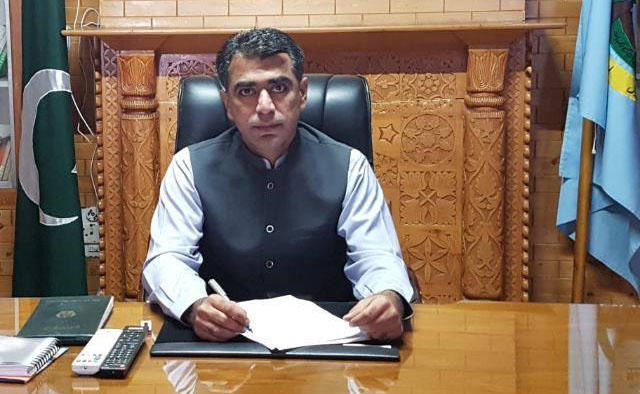
Chitral Deputy Commissioner says that previous procedure of forest royalty distribution among people was not transparent and that women must be given royalty separately. (Sayed Gul Kalashi shared this Photo)
2 / 2
Chitral is the largest district of KP province by area. (AN photo)
Updated 30 September 2018
Follow

Chitral women hail historic decision to pay them forest royalty

PESHAWAR: Women in the mountainous district of Chitral, in Khyber Pakhtunkhwa (KP) province, have hailed the government’s decision to pay the womenfolk forest royalty – for the first time in the country’s history.
“It will empower women,” Sayed Gul Kalashi, a local woman and an employee of the archaeology department in Chitral, told Arab News.
“I still remember the day when one of my sisters was born and a relative came to my father telling him; if the newborn baby was a boy, he would be able to receive royalty,” she said.
Many parts of Chitral are covered with forests. In the past, a man with several daughters received only his share while a man with sons received a much bigger chunk of the royalty, she added.
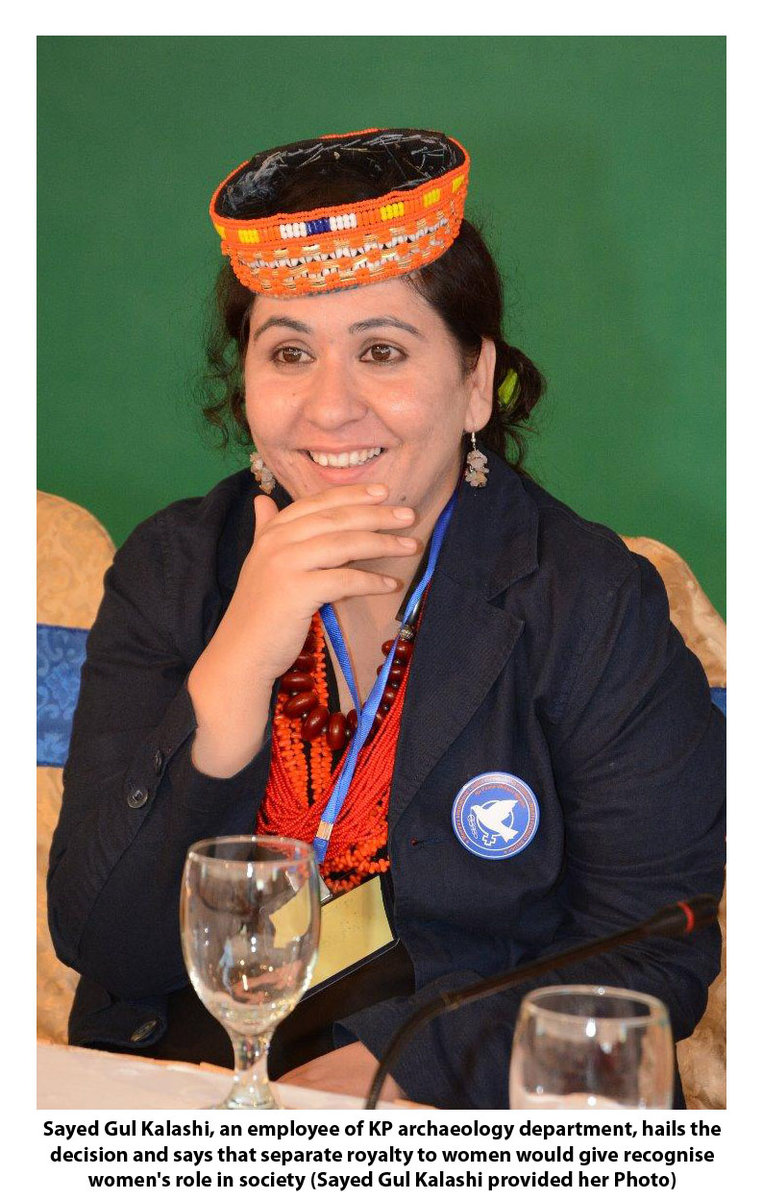
“It is not just royalty, it is a status being given to women in society,” she said, adding that there are many women who do not even have male family members to earn and this decision would help them greatly.
Many men in the area, however, are still opposed to the idea of their female family members getting a share of the royalty.
Muhkam-ud-Din, a local resident of Ayun area in Chitral, is one of those who support the prevailing local tradition. “The district administration should not have introduced the new formula for royalty,” he told Arab News.
“There is already a set procedure under the local traditions,” he said. “Even if a man gets royalty, he spends it on the whole family.”
Chitral District Forest Officer Shaukat Fayyaz told Arab News that the Forest Department has transferred more than R150 million ($1.35 million) to the deputy commissioner’s office for distribution as royalty among people in different areas of Chitral.
“As per policy, we deposited 40 percent profit of forests in the government exchequer while the 60 percent has been given to the office of deputy commissioner for distribution to communities,” he added.
“In the past, the list of royalty holders only had male names but now a new list is being made including the names of women as well, and once the new lists are finalized, the distribution of royalty will be made to all men and women alike,” he added.
Deputy Commissioner of Chitral Irshad Sodhar told Arab News that up until now, forest royalty was only distributed through the forest management committees in different areas but that procedure was not transparent, and also women were deprived from the share.
“But the new lists would also have names of women along with men,” he said.
“After finalizing the lists of names, we will meet communities in different areas and discuss modalities for payment to the contractors in a transparent manner,” said Sodhar.
Authorities in Chitral are now facilitating all the residents of Chitral to get their computerized national identity cards so as to update and settle land records. “This will help in settling many forest land issues,” said Shaukat Fayyaz.


Pakistani, Bangladeshi officials discuss trade, investment and aviation as ties thaw

Updated 28 December 2025
Follow

Pakistani, Bangladeshi officials discuss trade, investment and aviation as ties thaw

  • Pakistan and Bangladesh were once one nation, but they split in 1971 as a result of a bloody civil war
  • Ties between Pakistan, Bangladesh have warmed up since last year and both nations have resumed sea trade

ISLAMABAD: Pakistan's High Commissioner to Bangladesh Imran Haider on Sunday met Chief Adviser Muhammad Yunus in Dhaka, the latter's office said on, with the two figures discussing trade, investment and aviation.

Pakistan and Bangladesh were once one nation, but they split in 1971 as a result of a bloody civil war, which saw the part previously referred to as East Pakistan seceding to form the independent nation of Bangladesh.

Ties between Pakistan and Bangladesh have warmed up since former prime minister Sheikh Hasina’s ouster as a result of a student-led uprising in August 2024. Relations remain frosty between Dhaka and New Delhi over India’s decision to grant asylum to Hasina.

Pakistan has attempted to forge closer ties with Bangladesh in recent months and both South Asian nations last year began sea trade, followed by efforts to expand government-to-government commerce.

"During the meeting, both sides discussed ways to expand cooperation in trade, investment, and aviation as well as scaling up cultural, educational and medical exchanges to further strengthen bilateral relations between the two South Asian nations," Yunus's office said in a statement on X.

In 2023-24 Pakistan exported goods worth $661 million to Bangladesh, while its imports were only $57 million, according to the Trade Development Authority of Pakistan. In Aug. this year, the Pakistani and Bangladeshi commerce ministries signed a memorandum of understanding to establish a Joint Working Group on Trade, aiming to raise their bilateral trade volume to $1 billion in the financial year that began in July.

The Pakistani high commissioner noted that bilateral trade has recorded a 20 percent growth compared to last year, with business communities from both countries actively exploring new investment opportunities, according to the statement.

He highlighted a significant increase in cultural exchanges, adding that Bangladeshi students have shown strong interest in higher education opportunities in Pakistan, particularly in medical sciences, nanotechnology, and artificial intelligence. Haider also said that Dhaka-Karachi direct flights are expected to start in January.

"Chief Adviser Professor Muhammad Yunus welcomed the growing interactions between the two countries and emphasized the importance of increased visits as well as cultural, educational and people-to-people exchanges among SAARC (South Asian Association for Regional Cooperation) member states," the statement read.

"Professor Yunus also underscored the need to further boost Bangladesh–Pakistan trade and expressed hope that during Mr. Haider’s tenure, both countries would explore new avenues for investment and joint venture businesses."