TEHRAN: Iranian search teams found the wreckage on Tuesday of a plane that went missing in the Zagros mountains two days earlier with 66 people on board, a spokesman said.
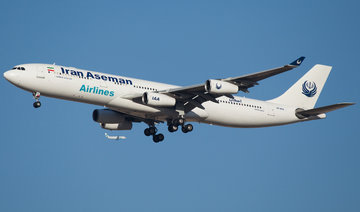
Aseman Airlines flight EP3704 disappeared in the Zagros range on Sunday morning, around 45 minutes after taking off from Tehran.
After two days of heavy snow and fog, the weather finally cleared on Tuesday morning, giving helicopter teams much better visibility.
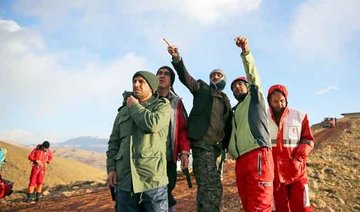
“The Revolutionary Guards’ helicopters this morning found the wreckage of the plane on Dena mountain,” spokesman Ramezan Sharif told state broadcaster IRIB.
An IRIB reporter who spoke to one of the pilots said he had seen “scattered bodies around the plane” and that it was located in Noghol village, around 4,000 meters (13,000 feet) up Dena mountain.
“Since yesterday the Guards’ drones started carefully identifying the geographical area where the plane had probably crashed and this morning two helicopters of the air forces were dispatched to the location,” Sharif said.
Snowmobiles were deployed earlier on the 4,409-meter peak, where more than 100 mountaineers have also been aiding the search.
“Last night, a number of people stayed on the mountain and through coordination with local guides managed to search all crevices,” Mansour Shishefuroosh, head of a regional crisis center, told the ISNA news agency.
Some 500 images taken by drones were being analyzed overnight, he added.
The ATR-72 twin-engine plane, in service since 1993, flew early Sunday from Mehrabad airport toward the city of Yasuj, some 500 kilometers (300 miles) to the south.
Poor visibility meant some 60 helicopter sorties on Monday could find no trace of the plane.
A team of crash investigators from French air safety agency BEA were also due to arrive in Iran on Monday, but their arrival had not yet been confirmed.
The incident has reawakened concerns over aviation safety in Iran, which has been exacerbated by international sanctions over the years.
Aseman Airlines was blacklisted by the European Commission in December 2016.
It was one of only three airlines barred over safety concerns — the other 190 being blacklisted due to broader concerns over oversight in their respective countries.
Iran has complained that sanctions imposed by the US have jeopardized the safety of its airlines and made it difficult to maintain and modernize aging fleets.
Aseman was forced to ground many of its planes at the height of the sanctions due to difficulties in obtaining spares.
In a working paper presented to the United Nations’ International Civil Aviation Organization (ICAO) in 2013, Iran said US sanctions were blocking “the acquisition of parts, services and support essential to aviation safety.”
Iran has suffered multiple aviation disasters, most recently in 2014 when 39 people were killed as a Sepahan Airlines plane crashed just after take-off from Tehran, narrowly avoiding many more deaths when it plummeted near a busy market.
But figures from the Flight Safety Foundation, a US-based NGO, suggest Iran is nonetheless above-average in implementing ICAO safety standards.
Lifting sanctions on aviation purchases was a key clause in the nuclear deal that Iran signed with world powers in 2015.
Following the deal, Aseman Airlines finalized an agreement to buy 30 Boeing 737 MAX jets for $3 billion last June, with an option to buy 30 more.
The sale could still be scuppered if US President Donald Trump chooses to reimpose sanctions in the coming months, as he has threatened to do.


Iran teams find wreckage of plane in Zagros mountains

Iran teams find wreckage of plane in Zagros mountains

How armed groups are using fire to displace communities in Sudan’s troubled Darfur
- Satellite images show fires have ravaged settlements surrounding the westen city of Al-Fashir in recent weeks
- UN officials have accused combatants of setting fires to sow fear and ethnically cleanse tribal communities
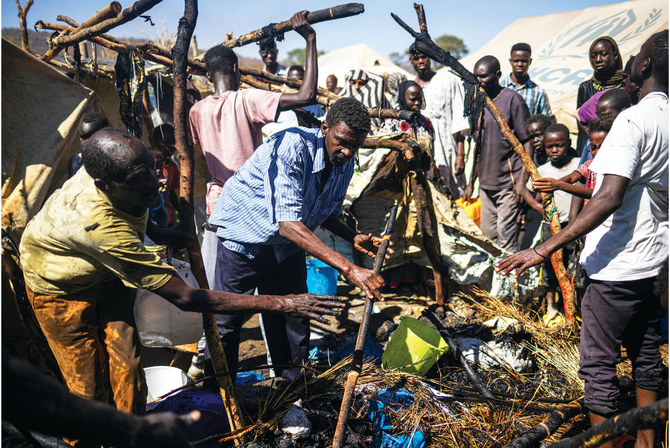
LONDON: Fires in western Sudan, reportedly set by militiamen, have torn through hundreds of settlements in recent months, forcing thousands of civilians to flee their homes, while those who remain live in constant fear of attack.
A recent report by the Sudan Witness project of the UK-based Centre for Information Resilience found that a total of 201 villages and settlements in western Sudan had suffered fire damage since the start of the war.
April was the worst month on record, with 72 communities impacted by fires set deliberately or as a byproduct of the fighting that has raged between the Sudanese Armed Forces and the paramilitary Rapid Support Forces since April 2023.
The report, published on May 12, highlighted a surge in the number of fires to the north and west of the city of Al-Fashir in North Darfur State, which has seen escalating violence.

Analysts believe the fires are being set deliberately to displace the population of these areas.
“When we see reports of fighting or airstrikes coinciding with clusters of fires, it indicates that fire is being used indiscriminately as a weapon of war,” Anouk Theunissen, project director at Sudan Witness, stated in the report.
He warned that “the trend is worsening and continues to lead to the mass displacement of Sudanese people.”
Sudan Witness investigators pieced together open-source NASA satellite imagery and social media content to map the pattern of fires since the onset of the Sudanese conflict more than a year ago. They primarily focused on Kordofan and the troubled Darfur region.
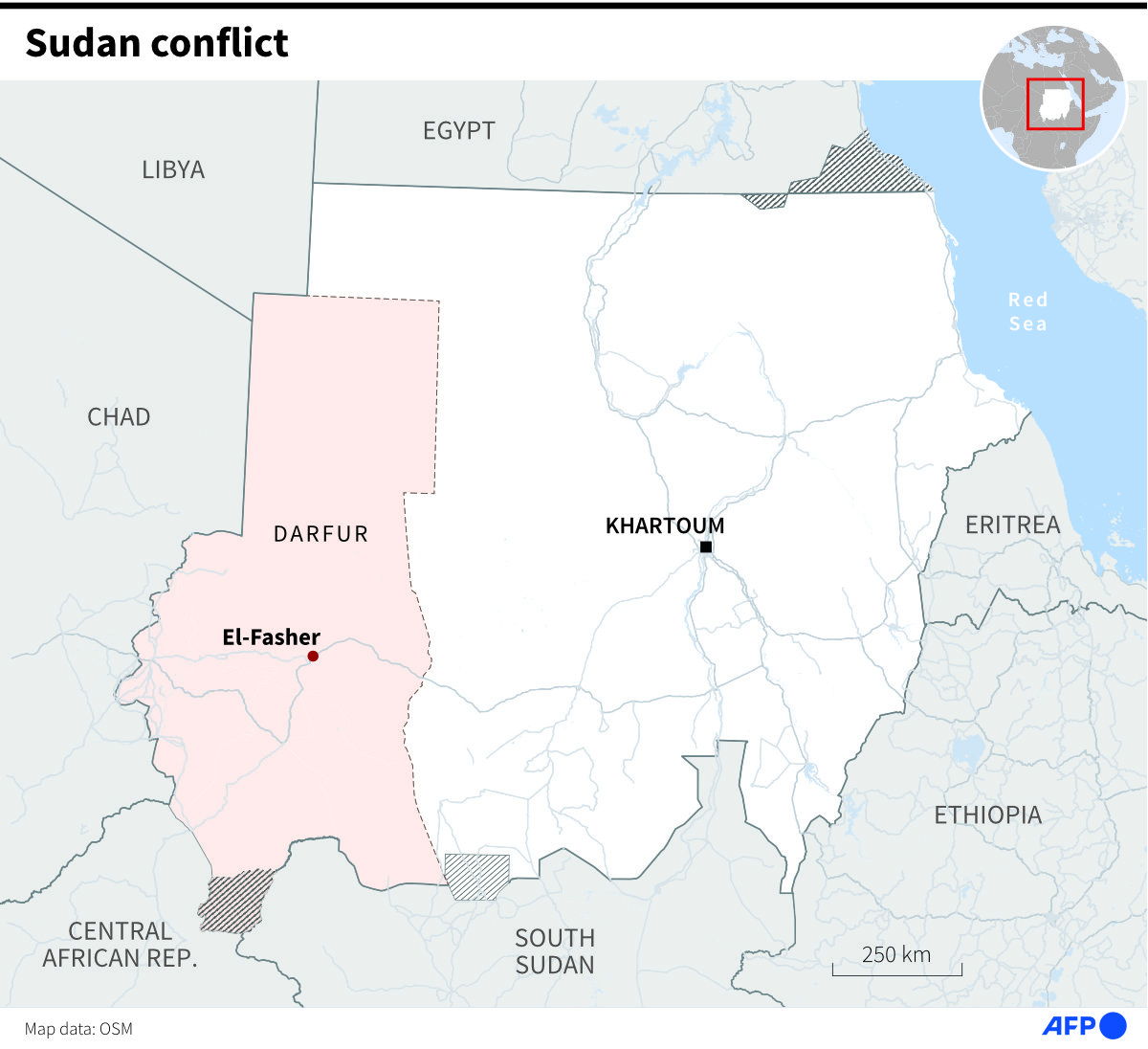
Until the end of April 2024, at least 311 individual fires broke out in the two provinces. The assessment also revealed that 51 settlements of various sizes have suffered multiple fires since the war began.
Expressing horror at the violence unfolding in Al-Fashir, UN human rights chief Volker Turk described the situation in the city as “hell on Earth” and renewed calls for the warring parties to end the hostilities.
Ravina Shamdasani, spokesperson for the Office of the UN High Commissioner for Human Rights, said at least 58 civilians had been reported killed and 213 others injured in Al-Fashir “since fighting dramatically escalated.”
During a press briefing in Geneva on May 17, she said “these figures are certainly an underestimate,” warning that the fighting between the two parties and their allied armed militias was taking “a deeply devastating toll on civilians.”
She said Turk had held phone conversations with both sides to urge them to cease hostilities, to ensure the protection of civilians, and to warn them that fighting in Al-Fashir “would have a catastrophic impact on civilians and deepen intercommunal conflict with disastrous humanitarian consequences.”
Al-Fashir, the capital of North Darfur, has been under siege by the RSF for several months, trapping an estimated 1.8 million residents and internally displaced people, according to UN figures.
Anticipating the worst, Linda Thomas-Greenfield, the US ambassador to the UN, warned in late April of a potentially imminent massacre in Al-Fashir.
“As I’ve said before, history is repeating itself in Darfur in the worst possible way. And an attack on Al-Fashir would be a disaster on top of a disaster,” she said during the UN Security Council Stakeout on the Situation in Sudan.
“It would put 500,000 internally displaced persons at risk, people who traveled from across Darfur to seek refuge. And that’s on top of the 2 million Sudanese who call Al-Fashir home.”
Cut off from the outside world, the people in Al-Fashir are now at imminent risk of famine. Yet the UN says it has received just 12 percent of the $2.7 billion it had requested from donors to head off mass starvation.
Since the outbreak of conflict in Sudan last year, at least 15,500 people have been killed, more than 33,000 injured, and some 6.8 million displaced inside the country, according to UN figures.
“Half of the population, 25 million people, need humanitarian aid,” Jens Laerke, a spokesperson for the Office for the Coordination of Humanitarian Affairs, told AFP news agency.
“Famine is closing in. Diseases are closing in. The fighting is closing in on civilians, especially in Darfur.”
Health infrastructure in Al-Fashir has also not been spared. On May 19, the RSF launched a barrage of artillery at the city’s Women’s, Maternity and Neonatal Hospital, injuring nine people and causing significant damage to the facility, according to the Sudan Tribune.
A recent report by the New York-based monitor Human Rights Watch accused the RSF and its allied militias of committing “crimes against humanity” and “genocide” in West Darfur.
The report, published May 16, emphasized that the hostilities in El-Geneina alone from April to November last year left thousands dead and forcibly displaced hundreds of thousands more.
The RSF has said it is not involved in what it describes as a “tribal conflict” in Darfur.
Even the use of fire as a weapon of war is nothing new in Sudan. The Sudan Witness project published a map in October last year plotting multiple fire incidents in the country since the start of the conflict.
The map revealed that the highest concentration of fire incidents was in the southwest of the country, with 68 villages in the Masalit-majority Darfur region having been set ablaze by the RSF and its allied militias, according to media reports.
Masalit tribes were among the rebel groups that fought the Sudanese government and the Janjaweed militia — the forerunner of the RSF — during the war in Darfur that started in 2003, leading to reprisals and ethnic cleansing.
Andrew Mitchell, the UK’s minister for development and Africa, warned in December that the latest reported targeting and mass displacement of the Masalit community in Darfur “bears all the hallmarks of ethnic cleansing.”
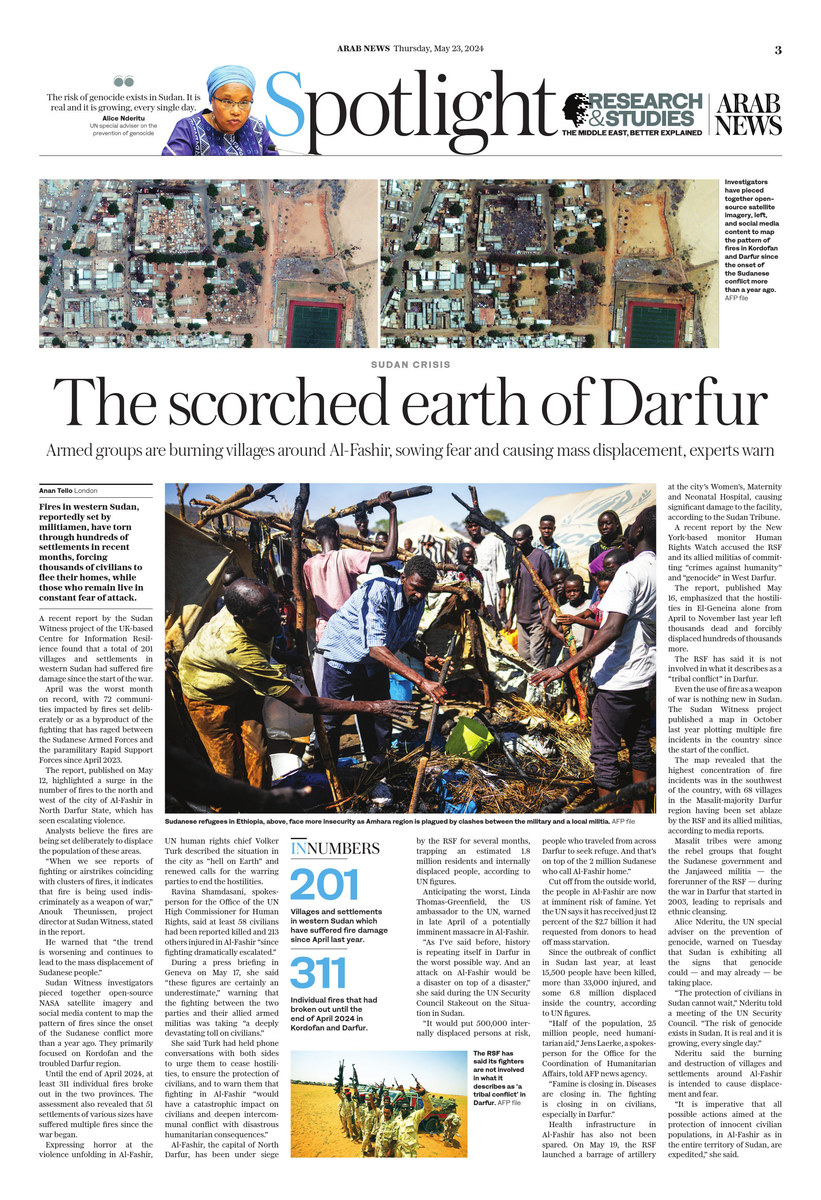
Alice Nderitu, the UN special adviser on the prevention of genocide, warned on Tuesday that Sudan is exhibiting all the signs that genocide could — and may already — be taking place.
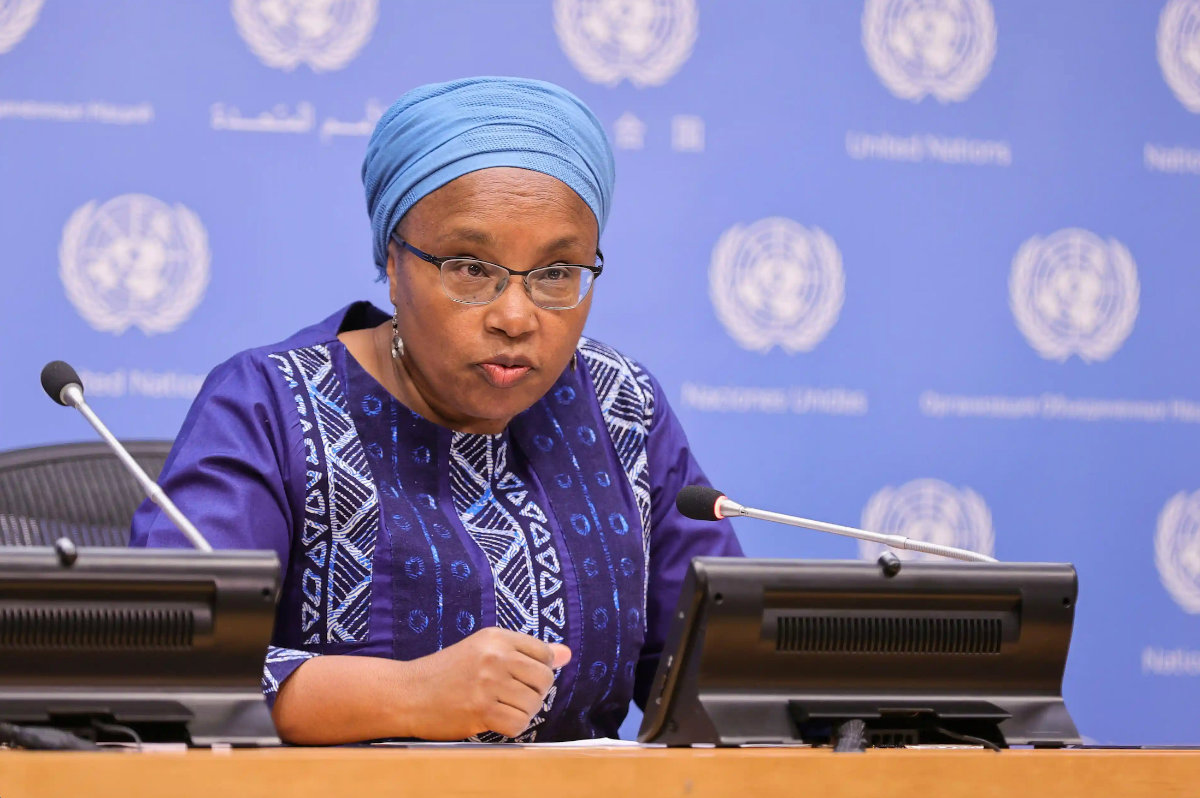
“The protection of civilians in Sudan cannot wait,” Nderitu told a meeting of the UN Security Council. “The risk of genocide exists in Sudan. It is real and it is growing, every single day.
“In Darfur and Al-Fashir, civilians are being attacked and killed because of the color of their skin, because of their ethnicity, because of who they are. They are also targeted with hate speech and with direct incitement to violence.”
Nderitu said the burning and destruction of villages and settlements around Al-Fashir is intended to cause displacement and fear, rather than accomplish any specific military objectives.
“It is imperative that all possible actions aimed at the protection of innocent civilian populations, in Al-Fashir as in the entire territory of Sudan, are expedited,” she said. “It is urgent to stop ethnically motivated violence.”
Arab League welcomes announcement by Spain, Ireland, Norway to recognize Palestine
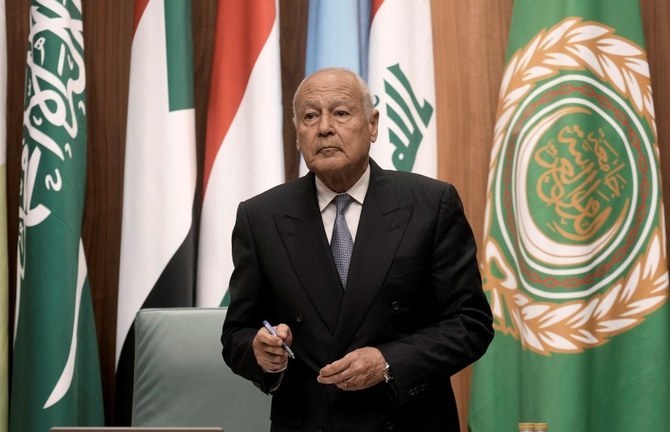
- Ahmed Aboul Gheit, Arab League secretary-general, said that this “significant move underscores a genuine commitment to the two-state solution”
- He urged countries yet to recognize Palestine to reassess their positions and align themselves with the course of history
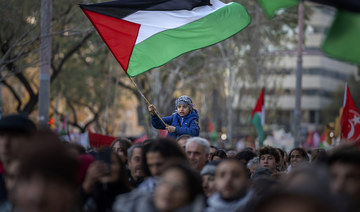
CAIRO: The Arab League has welcomed the official recognition of the state of Palestine by Spain, Ireland, and Norway.
The prime ministers of the three countries said on Wednesday they were formally going to recognize Palestine as a state as of May 28.
Ahmed Aboul Gheit, Arab League secretary-general, said that this “significant move underscores a genuine commitment to the two-state solution and reflects the sincere desire of these nations to safeguard it from those seeking to undermine or eradicate it.”
Gamal Roshdy, Aboul Gheit’s spokesman, said that “this important development follows the recent recognitions by Barbados, Jamaica, Trinidad and Tobago, and the Bahamas. These additions bring the total number of countries recognizing the Palestinian state to approximately 147, aligning with the overwhelming global consensus.”
Roshdy said such recognition “is a fundamental aspect of the state's standing in international law.
This step “embodies a principled political, moral, and legal stance. It marks a significant milestone toward realizing the Palestinian state based on the 1967 borders, with East Jerusalem as its capital,” he quoted Abdul Gheit as saying.
Aboul Gheit said that “recognition conveys a clear message to Palestinians: the world stands resolute in defending their right to self-determination and the establishment of an independent state.”
He stressed that “amid the current hardships, a political pathway leading to the realization of the Palestinian state is inevitable.”
Aboul Gheit urged countries yet to recognize Palestine to reassess their positions and align themselves with the course of history.
He highlighted that recognizing Palestine signifies a genuine commitment to the two-state solution, diverging from violent approaches, and fostering peace and security across the region.

Washington stepping up defense cooperation with GCC states: US official
- ‘The threats from Iran and its proxies are pervasive,’ Dan Dhapiro tells briefing attended by Arab News
- ‘The US has an interest in deepening the partnerships we’ve forged with our Gulf partners’
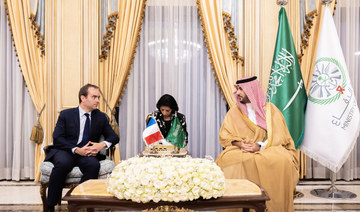
LONDON: The US is stepping up defense cooperation with Gulf Cooperation Council countries in a bid to address one of the region’s “most challenging periods in recent years,” Dan Shapiro, deputy assistant secretary of defense for Middle East policy, told a press briefing attended by Arab News on Wednesday.
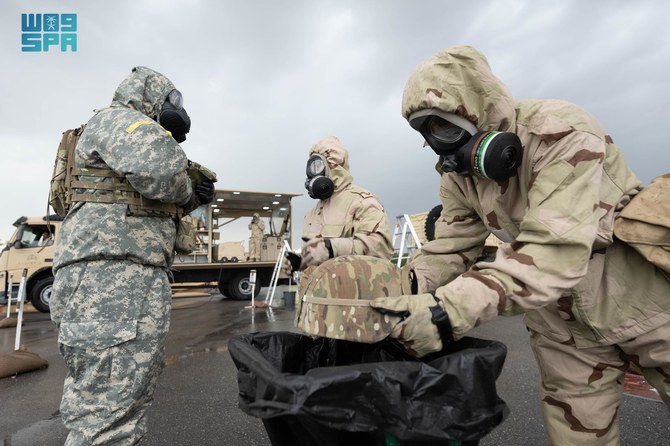
Gulf military representatives on Wednesday met senior US officials at the GCC headquarters in Riyadh as part of the partnership’s maritime and missile defense working groups.
It comes a month after Iran launched a massive drone and ballistic missile strike at Israel, and amid simmering regional tensions over the Gaza war.
Conversations between GCC and US officials are “more important than ever,” said Shapiro. “The US-GCC defense working groups are rooted in a strong US partnership with the GCC and our collective commitment to cooperating on regional security issues,” he added.
“For over a decade, we’ve worked together to address pressing threats and crises. The US has an interest in deepening the partnerships we’ve forged with our Gulf partners.”
Shapiro, who previously served as US ambassador to Israel and Abraham Accords envoy, warned that “the threats from Iran and its proxies are pervasive” in the region.
He said Yemen’s Houthi militia is carrying out “utterly illegitimate acts of terrorism” in its Red Sea campaign against civilian shipping.
The working group meetings saw US and Gulf officials explore ways to “bolster information sharing, counter proliferation, and increase the effectiveness of combined interdictions of illegal maritime shipments to the Houthis,” he added.
The April 13 Iranian attack on Israel, which Shapiro said was a “watershed moment in the Middle East,” also loomed large in the meetings.
“In the wake of Iran’s unprecedented attack and our successful defeat of this attack, the US and our Gulf partners agreed that taking steps to deepen the integration of our air and missile defenses across the Middle East is more important than ever,” he added.
“On April 13, we showcased what we’re collectively capable of when we work together on defeating regional security threats.
“It was a proof of concept of integrated air and missile defense, showing that our work to build this architecture isn’t theoretical.
“It has real-world, real-time impact. It saves lives and it keeps conflicts from escalating. And it showed we’re stronger when we act together.
“Ironically, Iran’s attack on April 13 was ultimately successful in sparking deeper cooperation on integrated air and missile defense.”
Shapiro said Washington’s Gulf partners, by increasing integrated air and missile defense in the near term, hope to lay the foundations for a GCC-wide air defense system.
US officials at the working group meetings also proposed joint military training “to ensure that our forces share a common operational language,” he added.
At the press briefing, a senior US defense official said on condition of anonymity that Washington’s Gulf partners are “laser focused” on understanding the nature of the Iranian threat, adding: “Having that conversation with the GCC in May 2024 is completely different from any conversation you could’ve had with any partner in the region before April 13, 2024.”
The Iranian strike produced a “galvanizing effect” across the Gulf, encouraging states to boost their commitment to building shared defense systems, the official said.
On the flare-up in the Red Sea, Washington does not view its campaign against the Houthis as a “purely military challenge,” instead accepting that “military solutions are necessary but not sufficient,” the official added.
“It’s a whole-of-government challenge from the US perspective. And it’s an international challenge from the world perspective.”
The working group meetings in Riyadh also saw discussions on “some of the non-military ways” to target the militia, including “delegitimization, sanctions and condemnation, and designation as a global terrorist organization,” the official said.

Drone war continues in southern Lebanon, Burkan missiles target Israeli sites
- Israeli hacks Lebanese phone network to book hotel in Beirut for 50,000 settlers ‘displaced by Hezbollah, Hamas and Iran’
- Israeli combat drones raided the towns of Mays Al-Jabal and an area between the towns of Alma Al-Shaab and Dhayra
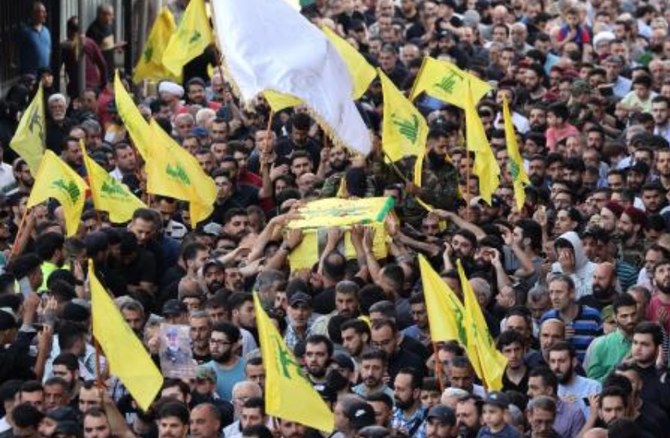
BEIRUT: Hezbollah mourned two of its members on Wednesday, the 228th day of confrontations between the group and the Israeli army in southern Lebanon.
The total number of Hezbollah fatalities, along with its affiliated medics and members of its ally, the Amal Movement, has reached 330.
Confrontations continued between the two sides through airstrikes, with both sides employing combat drones in addition to conventional warfare methods.
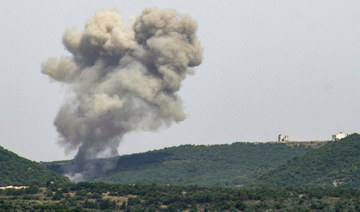
Israeli combat drones raided the towns of Mays Al-Jabal and an area between the towns of Alma Al-Shaab and Dhayra. Two missiles fired by an Israeli combat drone targeted the town of Aita Al-Shaab.
Israeli artillery shelled the town of Markaba, causing a large fire that civil defense teams worked to extinguish.
The town of Hula was also subjected to Israeli artillery shelling, as were the outskirts of the towns of Tayr Harfa and Alma Al-Shaab.
The two Hezbollah members were killed on Tuesday night in an airstrike by an Israeli drone that targeted the town of Odaisseh; Mohammed Ali Bou Taam (born in 2000) from the town of Taybeh in southern Lebanon, and Ali Hassan Sultan (born in 1991) from the town of Souaneh in southern Lebanon.
Hezbollah targeted several Israeli military sites, including the Ramim barracks, with Burkan missiles, and the Al-Sadah site, and said in a statement that it “directly hit it with artillery shells.”
Brig. Gen. Mounir Shehadeh, the former Lebanese government coordinator to UNIFIL and former head of the military court, said that the escalation on the southern front carried two messages from Hezbollah. The first, he said, was “a response to the repeated threats from Israeli officials to launch a major military operation in southern Lebanon to push Hezbollah to withdraw to the north of the Litani Line. The second message is that the party is ready to escalate if Israel decides to enter Rafah and commit more massacres.”
Shehadeh said that Hezbollah was using new tactics and weapons. He said that targeting the newly established Israeli military sites was an indication of the capabilities it possessed, especially in intelligence and reconnaissance. He added that repeatedly targeting the Meron base and downing two balloons had caused Israel to lose control and air superiority over the northern front, especially as Hezbollah said that it has so far used only 20 percent of its qualitative capabilities.
The Israeli army has rigged combat drones; on Tuesday, a small drone launched by the Israeli army exploded in the direction of a house in the town of Naqoura.
Meanwhile, Israeli Channel 12 website noted “an increase in the use of drones by Hezbollah,” considering that “its lethal capability has increased.”
The website reported that a study conducted by the Alma Center, which specializes in researching the security challenges facing Israel in the north, stated that “24 incidents of drones entering Israeli airspace occurred in March, the number increased to 42 incidents in April, and 20 incidents were recorded in May.”
The website quoted officials at Alma Center as saying: “There is a difficulty related to the way drones fly toward the target.”
Tal Barry, director of research at Alma Center, told Channel 12 that “Hezbollah is using the current battle to evaluate the offensive and defensive capabilities of the Israeli army, and also to compare its capabilities with those of the Israeli army.”
Amid the tension on the southern front and increasing protests by Israeli settlers who were evacuated from settlements in the north, a video spread across Israeli websites, shared on social media, showing an Israeli man appearing on Israeli Channel 12. In the video, the man calls what he claimed to be Caesars Park Hotel (in Beirut), demanding evacuation for himself and thousands of Israelis.
The Israeli caller, speaking in Arabic, asked the person who answered from the hotel: “I am calling from Israel. There are 30, 40, 50 thousand people who need to come to Beirut because of Hezbollah, Hamas and Iran. Do you have any available space?”
The hotel employee responded with surprise, “Where are you from?” The Israeli caller answered in Arabic, “We are from Israel, we are 50, 60 thousand people, we want to come to Beirut to your hotel.” The employee angrily replied, “Go to hell,” and hung up.
The Lebanese hotel employee’s response angered the Israeli caller, who insulted the person on air.
Arab News contacted the hotel on Hamra Street in Beirut to confirm the Israeli call. A hotel source confirmed that the call was received by the employee “through the landline.”
The Israeli caller claimed on the Israeli TV channel that he had previously visited Beirut and stayed at the hotel, but the hotel source strongly denied this.
This Israeli infiltration via phone call was preceded by a similar infiltration at the start of the confrontations. Israelis used the Lebanese phone network to contact dozens of southerners who had evacuated their homes in border regions, inquiring whether they were in their residences or had abandoned them, pretending to be from financial institutions or relief associations. It was later revealed that based on people’s responses, the Israeli side was tracking the movement of Hezbollah members in order to demolish their homes.
The Secretary-General of Hezbollah Hassan Nasrallah revealed these communications and urged people to avoid using the Internet in the border region and to remove external surveillance cameras from homes because of Israeli infiltration. The Israeli army managed to kill a significant number of Hezbollah members by this method.

Joy in Palestinian refugee camp in Beirut as European trio advances cause
- “We hope that the whole world will recognize Palestine, and we are happy with this decision... It is a beautiful feeling,” said Alaa Ghozlan
- Israel was enraged by the move announced Wednesday by Ireland, Norway and Spain, arguing that it amounts to “rewarding terrorism”
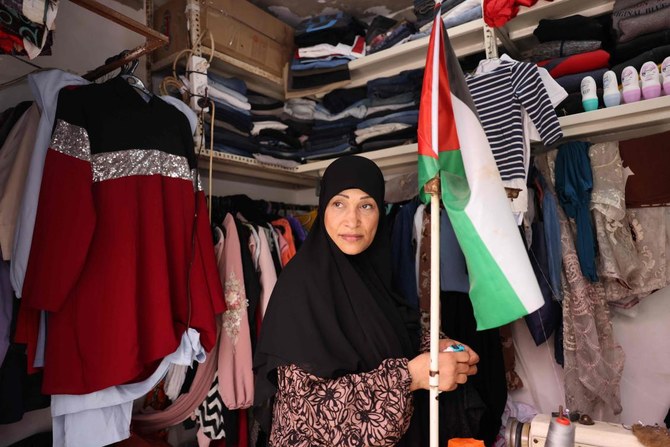
SHATILA, Lebanon: In Beirut’s impoverished Palestinian refugee camp of Shatila — a maze of alleyways where posters honor fallen martyrs — residents expressed joy Wednesday after three European countries said they would recognize a Palestinian state.
“We hope that the whole world will recognize Palestine, and we are happy with this decision... It is a beautiful feeling,” said Alaa Ghozlan, 26, whose family is originally from Haifa, now in northern Israel.
“We now have hope to return to our country — a country I was not born in and was deprived of but which lives inside me despite everything,” he told AFP on a winding street in the camp.
Israel was enraged by the move announced Wednesday by Ireland, Norway and Spain, arguing that it amounts to “rewarding terrorism” after Palestinian militant group Hamas launched its unprecedented October 7 attack on Israel that sparked the bloodiest ever Gaza war.
Seven other European countries including Sweden have already recognized Palestinian statehood.
Lebanon hosts an estimated 250,000 Palestinian refugees, many living in poverty in the country’s 12 official camps, according to the United Nations agency for Palestinian refugees (UNRWA).
Most are descendants of survivors of what Palestinians call the Nakba — the “catastrophe” — when about 760,000 Palestinians fled or were forced from their homes by the 1948 war over Israel’s creation.
Shatila resident Samah Omari, 50, a housewife, said she was “very happy” with the decision, and expressed hope that it would eventually impact her and her family.
“People are dying in Palestine. We demand our rights and defend our land so that our state can be recognized by all countries,” she said.
“We hope to return to our country and not be refugees anymore,” she added.
The camp’s tumbledown walls are adorned with Palestinian flags and posters in support of militant groups including Hamas and their leaders.
Men on motorbikes and tuk-tuks squeeze past women shopping and schoolchildren making their way through the streets.
Above, matted electricity wires and plastic water tubes are bound precariously with rope or cables, some weighed down by clothes that have fallen from washing lines.
The United States and most Western European nations have said they are willing to one day recognize Palestinian statehood, but not before agreement is reached on thorny issues like final borders and the status of Jerusalem.
But Israel’s war against Hamas militants in Gaza, with its mounting death toll, has given the issue new impetus.
Suliman Abdel Hadi, 70, an official at the camp, said the timing of the decision was “important after October 7 because of the massacres carried out by the brutal Zionist enemy.”
“We see a bright future for the Palestinian cause,” said Abdel Hadi, whose family is from the Acre area, now in northern Israel.
“What happened today is the result of sacrifices made by the Palestinian people over 76 years of persecution, killing and destruction,” he added.
Hamas’s October 7 attack resulted in the deaths of more than 1,170 people, mostly civilians, according to an AFP tally of Israeli official figures.
Militants also took 252 hostages, 124 of whom remain in Gaza, including 37 the army says are dead.
Israel’s retaliatory offensive has killed at least 35,709 people in Gaza, most of them civilians, according to the Hamas-run territory’s health ministry.
On another street in Shatila, a man who gave his name as Abu Majdi, and whose father originally hailed from Haifa, called the decision “great” and said it was “baptised in the blood of martyrs.”
“This recognition will change the future of coming generations and the future of the Palestinian cause,” said the 63-year-old man, a Palestine pendant hanging from his neck.